


Disclaimer: Vox Populi, IIT Kanpur, is the exclusive owner of the information on this website. No part of this content may be duplicated, paraphrased, or interpreted in any other way without written consent from Vox Populi. If you want to reproduce any of the content on this page, please contact our chief editors directly or reach out to us by email at voxpopuli@iitk.ac.in.
This investigative piece reflects the views, documentation, and findings of Vox Populi. The reporting and analysis presented here are the result of sustained engagement with the affected campus worker communities, field observations of campus utility frameworks, and documented student experiences. This article is part of an ongoing commitment to examine institutional practices, record structural transitions, and create a transparent space for informed dialogue on issues that directly impact campus welfare, worker livelihoods, and student life.
This piece is written in good faith and with deep respect for the complexities of campus governance and modernization efforts. It does not seek to assign individual blame or target specific administrative bodies maliciously. Instead, it critically examines operational patterns, economic balance sheets, and publicly observable institutional decisions regarding essential campus utilities.
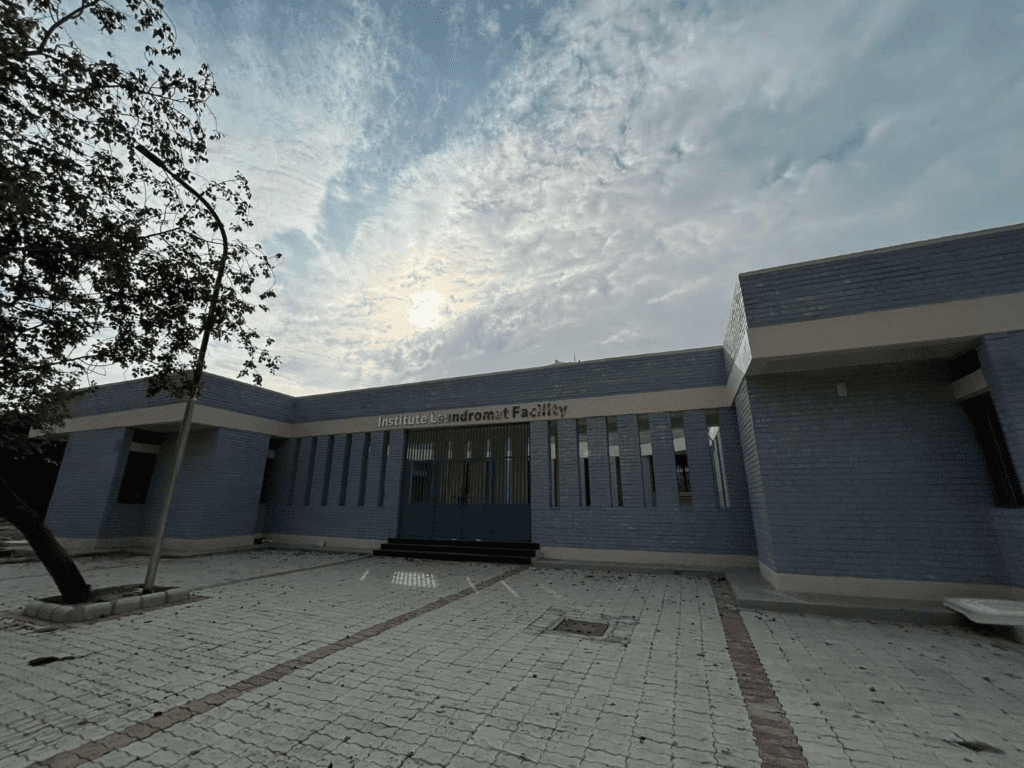
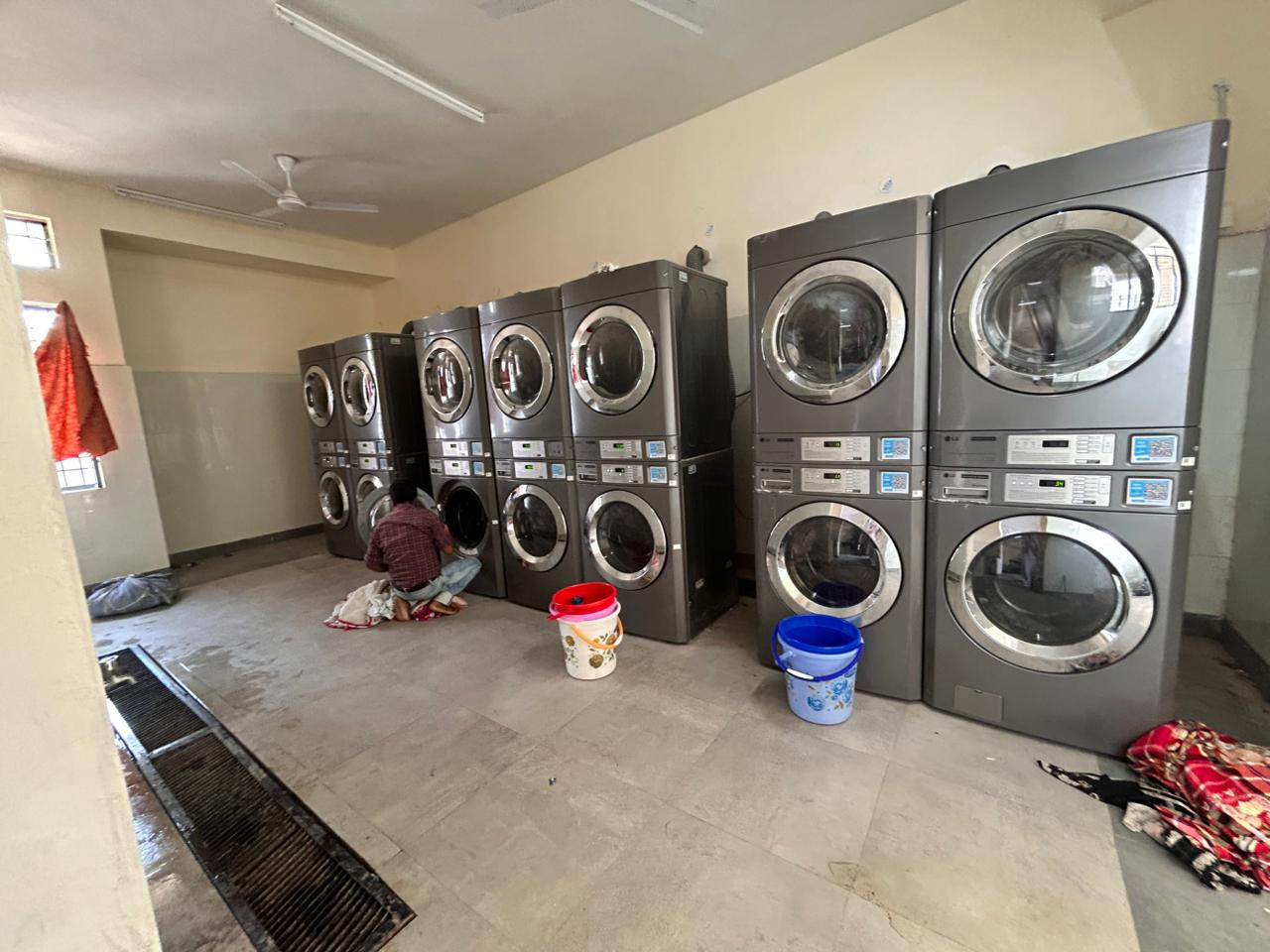
A sleek, one-storey building housing industrial washing machines now stands on our campus, hailed by the administration as a technologically sophisticated upgrade to the manual laundry systems of the past. But more than a year after the sudden demolition of IIT Kanpur’s historic Dhobighat on March 19, 2025, we seek to observe the timeline over which the subsequent happenings have unraveled, how dhobis continue to survive and how the laundromat is not turning out to be the dream solution, it was once promised to be.
Why Students can’t turn a blind eye to the Dhobi Crisis
For over sixty years, the Dhobi Families have been an indispensable, self-sustaining anchor of the IITK ecosystem. Initially established by invitation from our founding Director, Prof. Kelkar, who allotted houses and provided all washing supplies to the original 13 foundational families, this dhobi community has selflessly served the campus community for generations.
By offering door-to-door collection, washing, drying, and ironing for a modest flat rate, they spared thousands of students the daunting “time tax” of laundry. This traditional framework ensured that virtually no student time was lost, a crucial necessity given our rigorous academic and research schedules.After the demolition of dhobighat, some of the dhobis were forced to quit their jobs. Those who stayed are currently working in the laundromat and are facing systemic deprivation. They are struggling to make ends meet and are working under extremely poor conditions.
Other washing facilities which we would have to turn to if this community is lost are grossly insufficient, such as the domestic washing machines inside our halls.They are inadequate in number to serve hundreds of residents, and are constantly succumbing to inevitable faults under relentless daily loads.
In halls with no washing machine operators,there is the persistent trouble of not finding an empty machine and extended waiting time for loading clothes into machines. Many times, people don’t use the machine correctly and damage the machines.Even in halls with washing machine operators, machines stop working due to heavy load.And even after getting the clothes washed, the burden of drying and ironing is still on our shoulders.Meanwhile, if the campus moves to a self-service model for the laundromat, students would be forced to handle all laundry duties themselves.The logistics involved in a student loading a heavy laundry bag and using the centralized building is bound to waste valuable time.
Unless meaningful interventions are implemented immediately, this bleak future is inevitable. Over thirty traditional dhobi families who have called this campus home for decades face imminent financial collapse. This trade has been their only source of livelihood for generations, and the crisis has upended lives with little else to fall back on.
Inside the Centralized Facility: The Laundromat Infrastructure
To get a better idea of this modernization, understanding its infrastructure becomes imperative. The designs of the Institute laundromat were finalised in March, 2025 and it was inaugurated on August 15, 2025. It became fully operational on October 21, 2025.
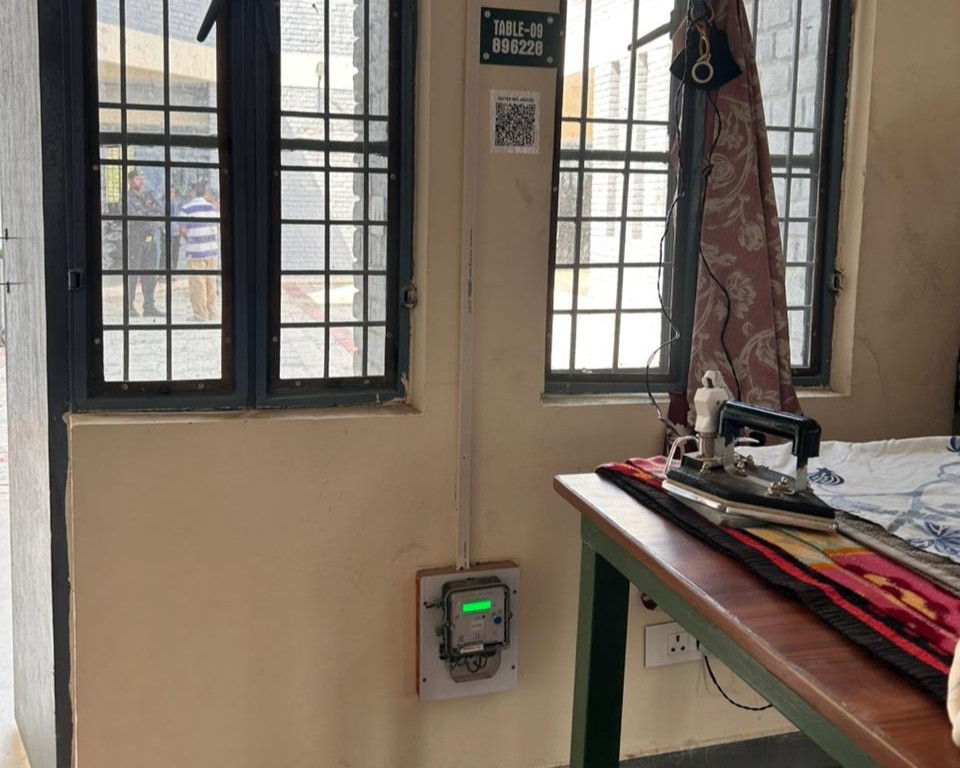
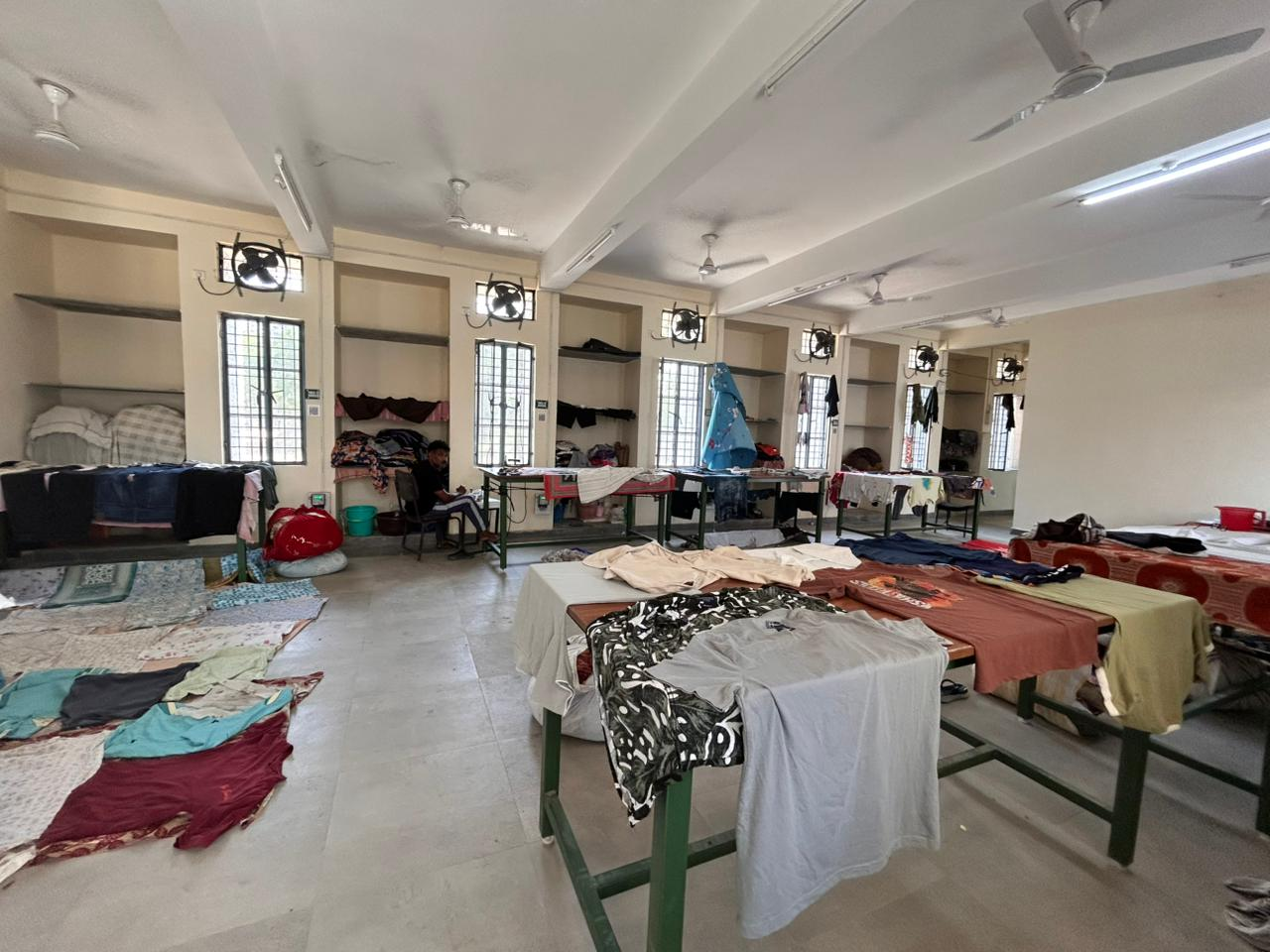
The facility is currently outfitted with 13 industrial-grade washing machines and 13 industrial dryers, operated by two on-site personnel hired to oversee day-to-day operations. The facility also contains 16 ironing tables, with each table shared by 2 dhobis. To power the heavy irons, the institute has installed prepaid, payment-based electricity meters. The dhobis are required to fund these upfront, with the proceeds routed directly to the institute. Meanwhile, payments for operating the primary washer and dryer towers are processed via digital UPI systems, with the revenue flowing directly to the industrial machine operating company, K&B Associates Laundry Solutions.
Despite the polished industrial infrastructure, basic civic conditions inside the building for the workers remain flawed. While the facility includes separate washrooms for men and women, infrequent maintenance has rendered them virtually unusable. Furthermore, access to clean drinking water remains a persistent daily challenge for the dhobis spending their entire working hours there.
A Timeline of Controlled Displacement
To understand how the current laundry crisis reached this point, we must look at the chronological sequence of administrative actions and shifting frameworks:
June 2023: The Prelude
Long before the decision of demolition, the traditional Dhobighat area was subjected to systematic administrative neglect, characterized by half-ruined buildings, overgrown grass, and dimly lit surroundings. Despite serving over 5,000 to 6,000 campus residents, the dhobis were subjected to subtle coercions, including a persistent refusal by the administration to install a basic workplace toilet, forcing workers to resort to open spaces. While the administration argued that the dhobis held invalid residential leases (passed down from their deceased fathers, to read more about the history of this issue please refer to Vox’s previous article Dhobighat: A Laundry List of Injustices – Vox Populi), and that the structures at Dhobighat were in an allegedly (as the reports of the surveys were never made public) dilapidated condition by two surveys conducted by the Structural Engineering Laboratory of IIT Kanpur and the Department of Civil Engineering at HBTU, they simultaneously cited the expansion of campus infrastructure, such as the developing nearby medical college, as justification for reclaiming the land.
November 2024: The First Eviction Notice
The administrative push crystallized into formal coercion when the first official eviction notice was served to the dhobi community on November 27, 2024. This marked the transition from structural neglect to active, institutional displacement.
March 19, 2025: The Sudden Demolition
Amidst protest towards the demolition by students, alumni, faculty and talks of mediation, large parts of the Dhobighat’s stores and residences were demolished under heavy police supervision, leaving the site in ruins. Despite public emails from the Director committing to safeguard the dhobis’ livelihoods, no written agreements or concrete action plans were provided.
November 2025: Ground Realities
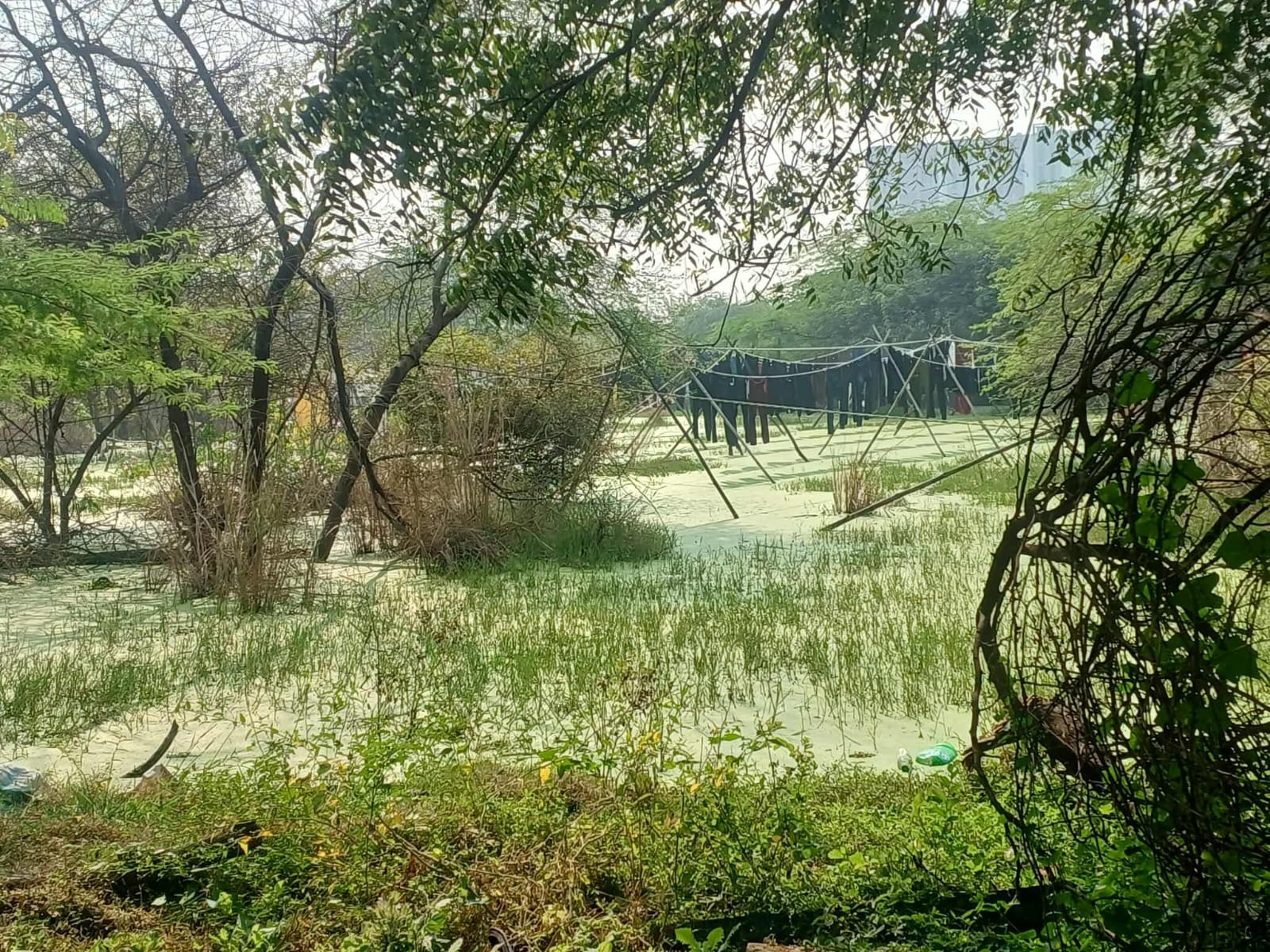
Following the March demolition, the dhobi families immediately returned to work, driven by their dedication and the fear of losing their student patronage. Because the main cemented water tanks and primary washing platforms of the old Dhobighat had not yet been razed, they continued to use the remaining open air structures.
We found the physical state of the remaining workspace to be highly precarious when we went to visit the site and noted the following:
- Severe Waterlogging: The initial demolition process had severely broken a major water supply pipe as explained by the dhobis, causing massive, continuous water wastage and leaving the entire working area heavily waterlogged.
- Rampant Health Risks: Dhobis were forced to hang clean clothes above stagnant, insect-ridden water that regularly attracted snakes. This severe environmental hazard caused rampant foot and leg infections, forcing the workers to purchase protective boots out of their own pockets just to work safely.
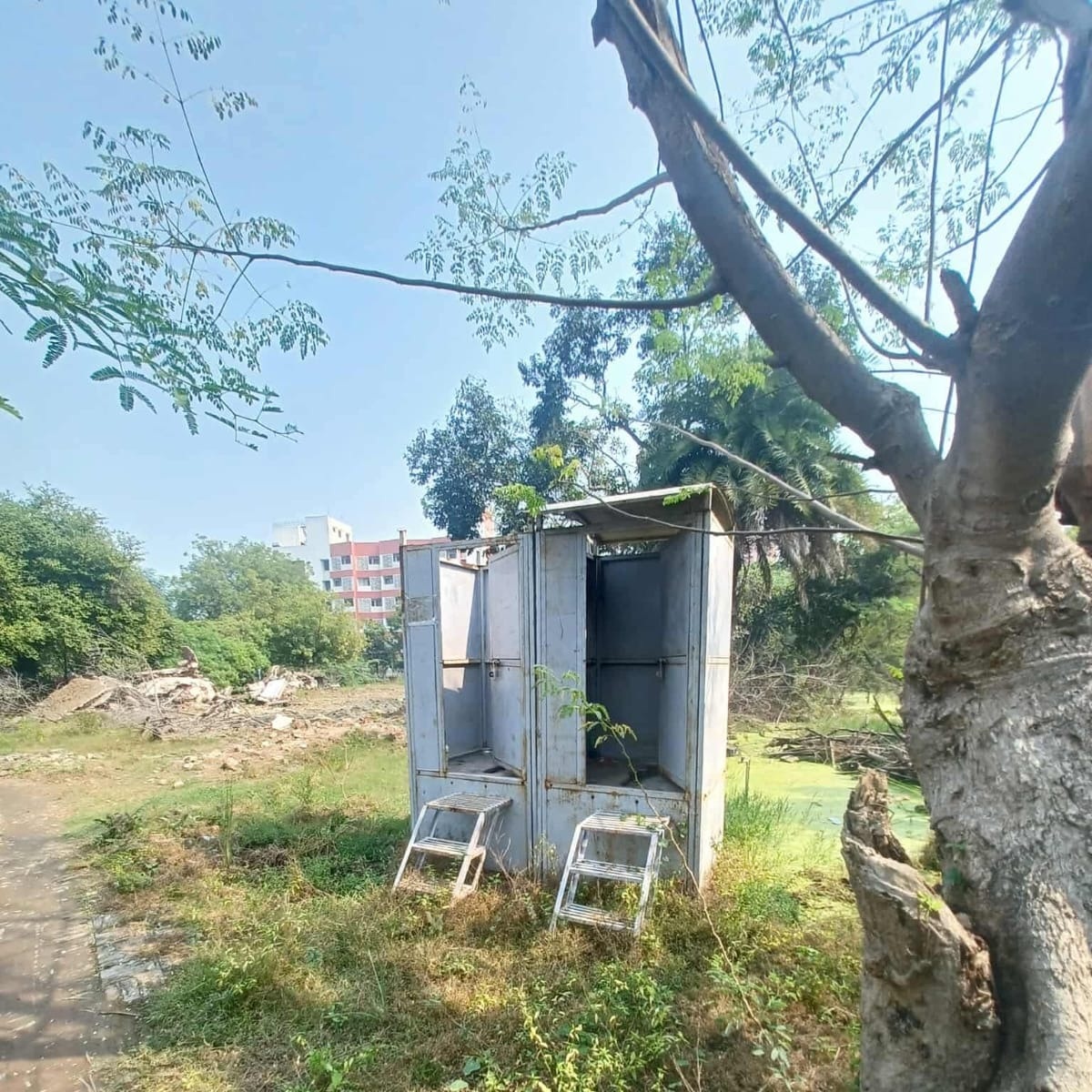
- Unserviceable Washrooms: For decades, the dhobis had petitioned for proper toilets. Instead, the two movable metal toilets installed by the institute lacked any water supply, flush, or regular maintenance, rendering them entirely unusable.
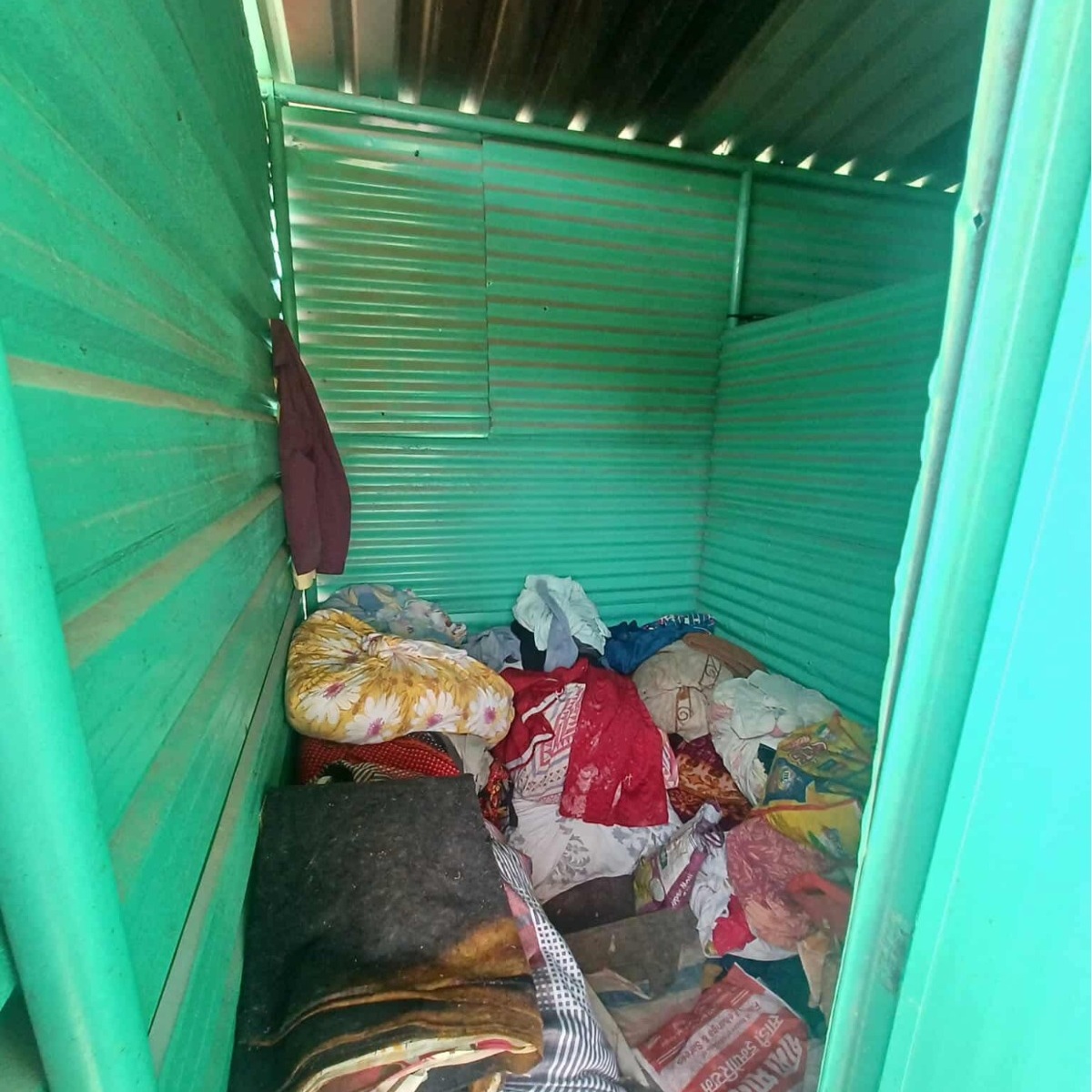
- The Storage Shed Crunch: Furthermore, rather than setting up the 32 tin sheds promised to accommodate every single family, only 16 sheds were constructed at the site. To compound this spatial crisis, three of these sheds remained locked because their assignees worked elsewhere in the institute, and the administration ignored repeated requests to open them for extra storage.
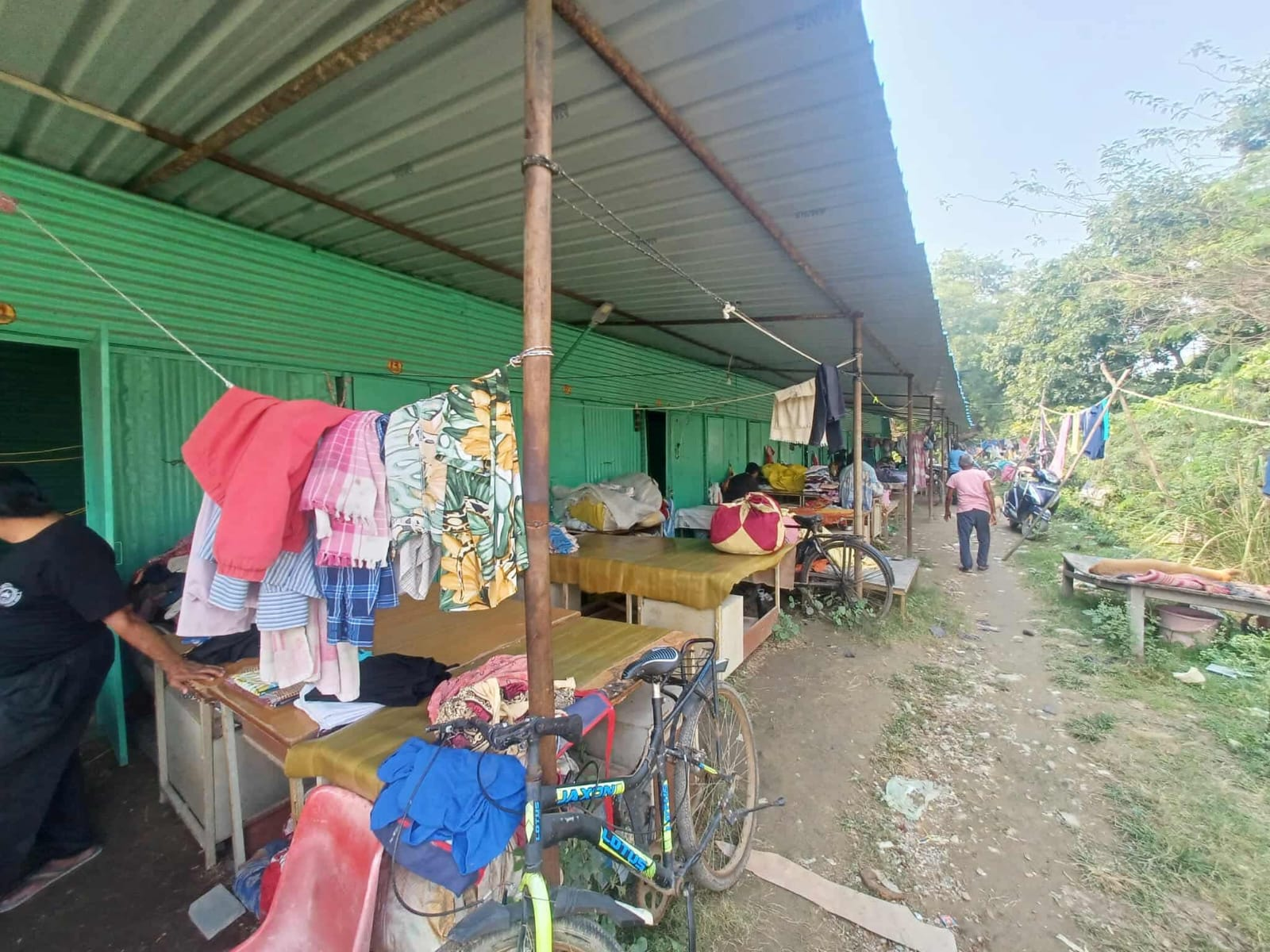
Shift to the Laundromat: The centralized laundromat facility was opened on October 21, 2025. At this stage, some of the dhobis were provided passes to transition into using the automated machines.
The Burden of New Overhead Costs: Routing operations through the automated facility introduced financial and logistical friction:
- The Financial Outlay: The machine settings introduced a strict charge of ₹70 for washing and another ₹70 for a baseline drying cycle per load for 36 minutes.
- The Logistical Tax: This new centralized model forced the dhobis to make four to five trips daily between their living spaces and the centralized building, incurring severe petrol expenses. As the dryers weren’t drying properly as stated by the dhobis and the old dhobighat area was waterlogged, they had to take clothes home to dry.
- Fear of Pricing Out Customers: Supporting families of four or more members, the dhobis worked in constant fear of raising their prices, terrified that students operating on tight academic budgets would completely stop using their services if rates went up.
December 20, 2025: The Final Demolition
On December 20, during the end-semester break when most of the student community had gone home, the administration brought back the bulldozers. The remaining accessible areas of the Dhobighat including all traditional washing platforms and the remaining tin storage sheds were completely demolished, rendering the historic facility entirely non-functional. The dhobis were left with no choice but to route all operations through the automated laundromat.
February 2026: The Facility Impasse
Operating purely out of the centralized facility, the dhobis started to face operational bottlenecks. The machines did not wash heavily grimy clothes properly and they had to be washed in the laundromat sinks before loading in the machines. The machines made it impossible to properly scrub out deep stains or isolate clothes that bleed color. As before, since the standard machine dryer cycles failed to dry clothes completely, they tried to adapt by using open spaces around the laundromat or taking damp clothes back to their homes to dry, maintaining a baseline of satisfactory service until the end of the month.
March 2026: The Enforced Regime
In March, the administration stopped all these manual workarounds by introducing a series of arbitrary rules:
- Pre-Wash Scrubbing Ban: The administration explicitly banned all hand scrubbing or manual stain removal in the facility sinks before loading clothes into the washers. After immense pushback, they were permitted to scrub a completely arbitrary and unspecified number of clothes per cycle, leaving the dhobis in constant fear of being hauled up by management for simply trying to deliver clean clothes.
- Solar Drying of Clothes was banned: The administration locked the doors to the terrace and banned sun-drying anywhere on the premises, forcing reliance on the dryers.
- Discriminatory Gate Control: To stop dhobis from taking damp clothes home to dry, the administration banned them from moving any laundry across campus gates, providing a security blacklist to gate guards.
April 7, 2026: Hall-Level Office Order
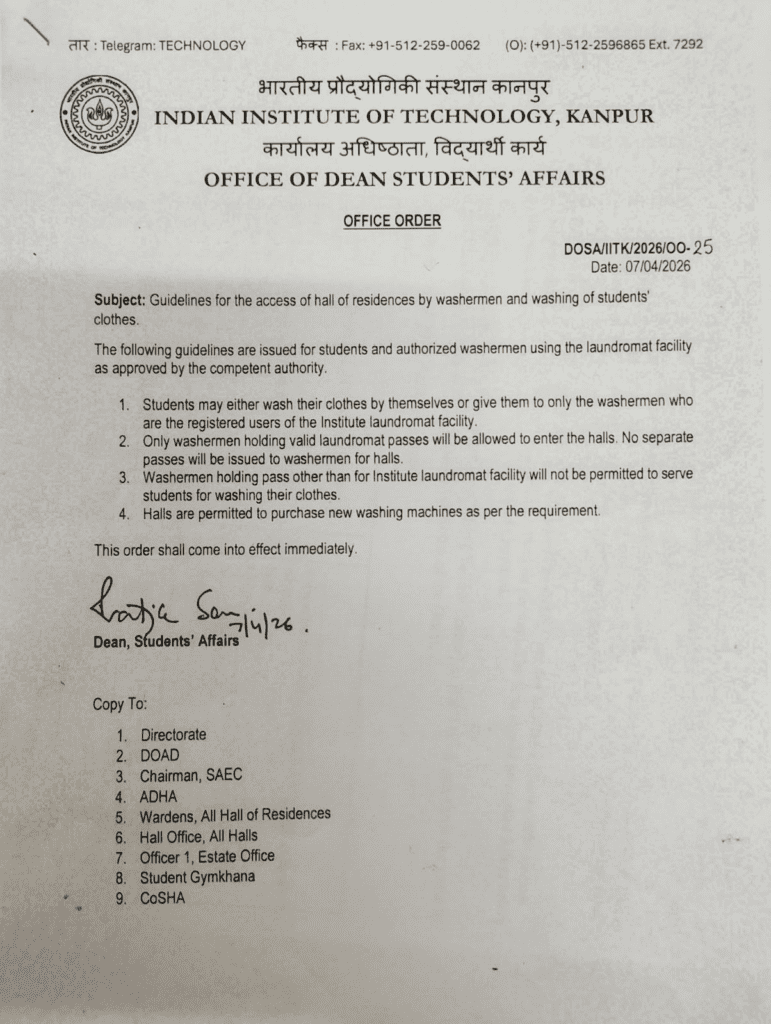
An Office Order issued by the Office of the Dean of Students’ Affairs (DoSA) on April 7th, 2026 strictly mandated that students could only give clothes to washermen holding valid laundromat passes and barred all non-laundromat washermen from entering the halls. Understandably the term “washermen” did imply dhobis, but left a question on whether hall washing machine operators, which some halls take the service of, would also fall under this office order.
Historically, the employment and management of washing room operators fell entirely under individual halls’ jurisdiction. When the CoSHA ,at the time,was later questioned about this policy formulation, it was revealed that during the official meeting called to finalize this office order, the washing machine operators were unconsidered by the administration while drafting the notice.
The implementation was handled with disregard for the livelihoods of these overlooked workers. Following the order, one hall operator mentioned that they were abruptly turned away at the campus gates, and their access passes were flatly refused renewal. Left stranded without employment or clarity, they remained locked out until further notice.
The worker noted that despite receiving a modest monthly wage of 7,000 rupees, the loss of this income was deeply significant, and the prospect of unemployment caused them immense distress.
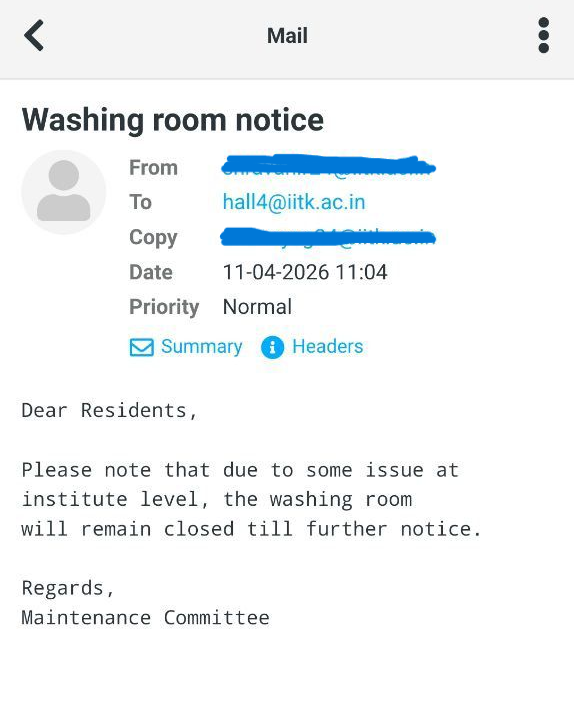
In a sudden decision, the operators were called back to campus one day, but instead of stability, they were met with further precarity. Their passes were renewed with a strict, short-term expiration date of April 30th. During this period of confusion, the washing rooms of multiple halls remained closed for days.
May-June 2026: Administrative Changes
Following a month of institutional paralysis, short-term pass extensions, and administrative damage control, the office order finally crept into effect in early May. In an effort to correct the initial oversight, a transition began moving these washing machine operators out of hall jurisdiction entirely, employing them directly under the institute through the DoRD as formal institute employees.
This centralized bureaucratic overhaul remains actively ongoing. When questioned about this structural shift, the CoSHA, stated that this was an initiative designed to standardize the workers’ wages across the campus and to improve safety by documenting information about these workers. He mentioned that this hiring transition has officially been completed for the specific halls of residences that formally requested it.
According to the former President, Students’ Gymkhana, under standard DoRD protocols, these workers are now hired for a fixed term of 3 years. Post which, the term can be restarted by the institute.
Regarding the Dhobis, there is still no clarity on how they will be employed and how many of them have been given passes so far. The current dhobis continue to live on the income which they earn from their customers, which is a minimal amount as described in the following section.
The Economics of Subsistence: Behind the Profit Margins
When the administration commercialized the campus laundry service, it promised a sustainable livelihood model. However, an analysis of the real financial balance sheet compiled by the Forum for Critical Thinking (FCT), IITK, based on their conversations with the dhobis, reveals that the corporate-designed structure forces these families into hand-to-mouth margins.
The absolute baseline expenses incurred collectively by the 38 registered dhobis operating within the laundromat facility break down mathematically as follows:
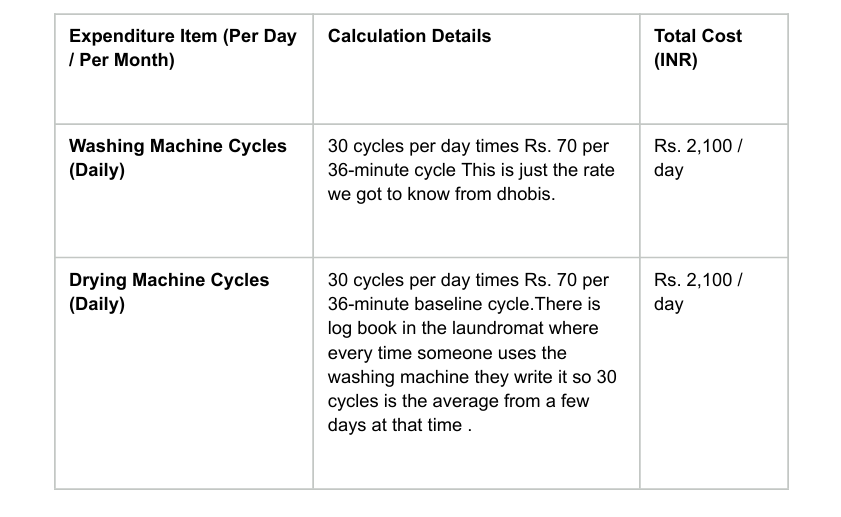
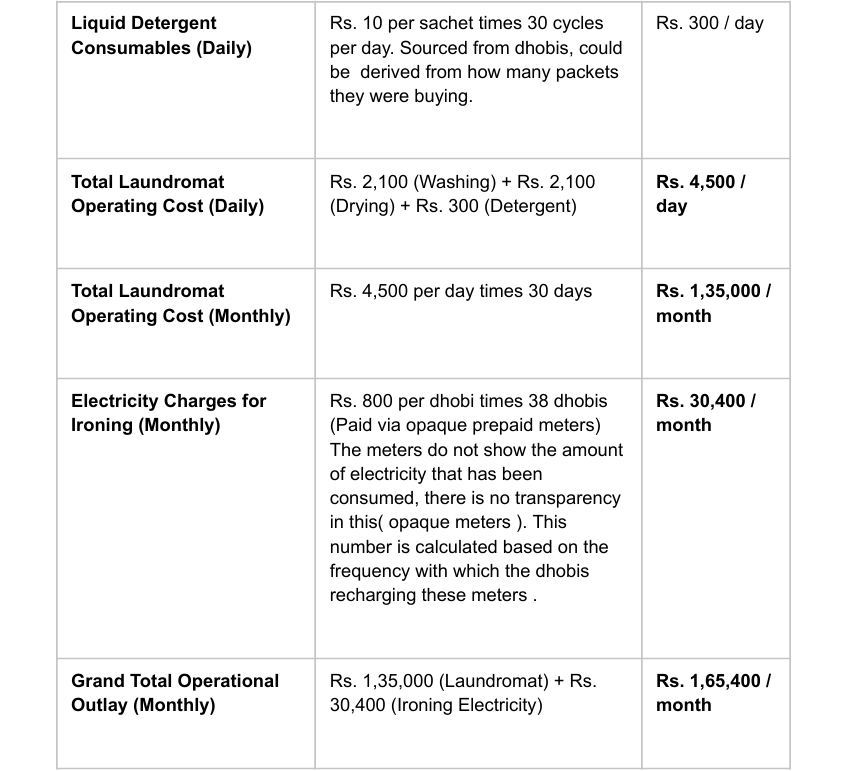
To map this against collective revenue, the total processing volume must be quantified under the optimized machine guidelines:
- Total clothes processed daily: 30 cycles times 40 articles of clothing per load = 1,200 clothes / day
- Total clothes processed monthly: 1,200 clothes times 30 days = 36,000 clothes / month
- Gross revenue collected from students: 36,000 clothes times Rs. 10 current standard rate per article = Rs. 3,60,000 / month
After subtracting the fixed operational cost of Rs. 1,65,400 from the gross revenue of Rs. 3,60,000, the remaining pool is Rs. 1,94,600. Shared equally across the community, the average monthly earnings of each dhobi stand at just Rs. 5,100. Crucially, this calculation only holds if a dhobi uses a single 36-minute drying cycle. As proven by daily operations, the clothes emerge dripping wet from a 36-minute run. The structural reality forces alternative, devastating financial choices upon the dhobis:
- The 50-Minute Cycle Margin: If dhobis scale up to the longer 50-minute dryer setting at Rs. 100 per load to get clothes closer to dry, the increased operating cost causes their individual monthly take-home income to drop to Rs. 4,400.
- The Dual-Cycle Impasse (100 Minutes): Because even a single 50-minute cycle fails to fully dry the fabric, a proper, professional finish requires running two full 50-minute cycles back-to-back,raising the drying cost to Rs. 200 per load. If the dhobis use the laundromat effectively as designed by the administration to return clean, fully dried clothes, they make only Rs. 2,000 per month. To make ends meet under these hostile economics, most dhobis try to completely bypass the dryer or ironing infrastructure inside the laundromat to protect their margins. If completely unhindered by mechanical restrictions, they could scratch out Rs. 7,580 per month – a sum that remains substantially too low to comfortably sustain a family.
The dhobis stated to us that before the laundromat system, their earning used to be about 15,000-17,000 rupees a month.
The Administrative Blueprint vs. Reality
The Director, in an Open House conducted in April, 2026, had stated that each dhobi would earn around 8 rupees of profit per cloth, but did not specify further details. We got to know from the then COSHA that this calculation was discussed in an official meeting. We tried to obtain the minutes of this meeting for the calculations by contacting the DOSA, but got no reply.
Considering the 8rs calculation, with a monthly capacity of 36,000 clothes, a flat profit of Rs. 8 per item yields a total net pool of Rs. 2,88,000 per month for the facility (without considering other costs). When divided equally across the 38 working dhobis, the administration projects an average monthly income of Rs. 7,579 per dhobi.
Even under their idealized blueprint, Rs. 7,580 a month is an incredibly low amount to support an entire household.
Why the Dhobis Cannot Simply Leave
Faced with such hostile economics, a detached observer might ask: Why don’t the dhobis simply seek alternative livelihoods outside the institute? This question ignores the deep social realities of systemic displacement.
The structural crisis is compounded by a profound occupational trap. Most of the dhobi companions living and working on campus barely attended school. Having mostly taken over their fathers’ occupations, this profession is quite literally everything they know. This is a specialized craftsmanship passed down since ages, an entire lifespan spent perfecting a generational skill. They do not possess the external capital required to buy or rent land, let alone construct a new independent workspace outside the campus boundaries.
By stripping them of their autonomy and restricting their livelihood to a corporate-mandated building, the administration has placed an inescapable burden on individuals who lived and worked on this campus since their birth. If evicted or squeezed out by the laundromat’s operational costs, they face a complete loss of their means of subsistence, with absolutely nowhere else to go.
Implications for the Student Body and Institutional Consumers
- Because clothes cannot be pre-scrubbed and are packed away damp due to the prohibitive cost of multiple dryer cycles and ban on sun drying, students are increasingly receiving ironed clothes that bear a distinct, musty smell and persistent stains.
- When dhobis attempted to raise their prices even slightly to survive the double-drying tax, they faced immediate resistance from students operating on tight academic budgets.
- As the quality drops and rates become untenable, the dhobis are losing their customer base. While the campus holds over 10,000 students, the dhobis’ reach has been heavily restricted to just 1,200 users. Major institutional accounts have broken down entirely; the Visitor’s Hostel (VH) refused to adjust its service charges to accommodate the machine costs, forcing the dhobis to surrender the business.
Critical Questions That Remain Unanswered
Why has an institute of technology, which promotes ecological activities, actively banned drying clothes in sunlight? Despite asking multiple student representatives, this decision of the administration remains unclear. The most plausible explanation that comes to mind is an effort to increase the usage of dryers, and hence revenue.
Why is scrubbing of stains in the laundromat before loading of clothes into the washing machines banned?
Why are large sinks installed in the laundromat if hand washing is banned?
Why an MOU instead of a tender? For matters of public interest, the insitute usually carries out a tendering process, but in this case an MoU was signed. The rationale behind this decision is still unknown.
Why isn’t the MOU public? Considering that this is an MoU for a public use facility for a task of daily necessity, the hindrance to make the document freely available seems odd. We reached out to the DoSA for the document but received no reply.
The Path Forward
The current situation forces a community known for its dedicated service to provide lower-quality work while they face financial and job instability. This laundry crisis highlights a major gap between bureaucratic rules and the difficult realities faced by the workers.
Ultimately, both the student population and the dhobi community are impacted by these administrative choices. Addressing the existing challenges necessitates transparent dialogue and a value-based system that balances the need for dependable service with the fundamental respect for the individuals providing it.
“It is certain, in any case, that ignorance, allied with power, is the most ferocious enemy justice can have.”
— James Baldwin
Researched and Written by: Akash Baudh, Riddhi Shingte, Shriya Suravarapu, Harsh Ashok Kumar
Edited by: Manya Dixit, Kushagra Srivastava
Designed by: Krishna Khetre