![[Not So] Little Women](https://voxiitk.com/wp-content/uploads/2026/09/WhatsApp-Image-2026-09-28-at-19.21.06-240x300.jpeg)

Disclaimer: Vox Populi, IIT Kanpur, is the exclusive owner of the information on this website. No part of this content may be duplicated, paraphrased, or interpreted in any other way without written consent from Vox Populi. If you want to reproduce any of the content on this page, please contact our chief editors directly or reach out to us by email at voxpopuli@iitk.ac.in.
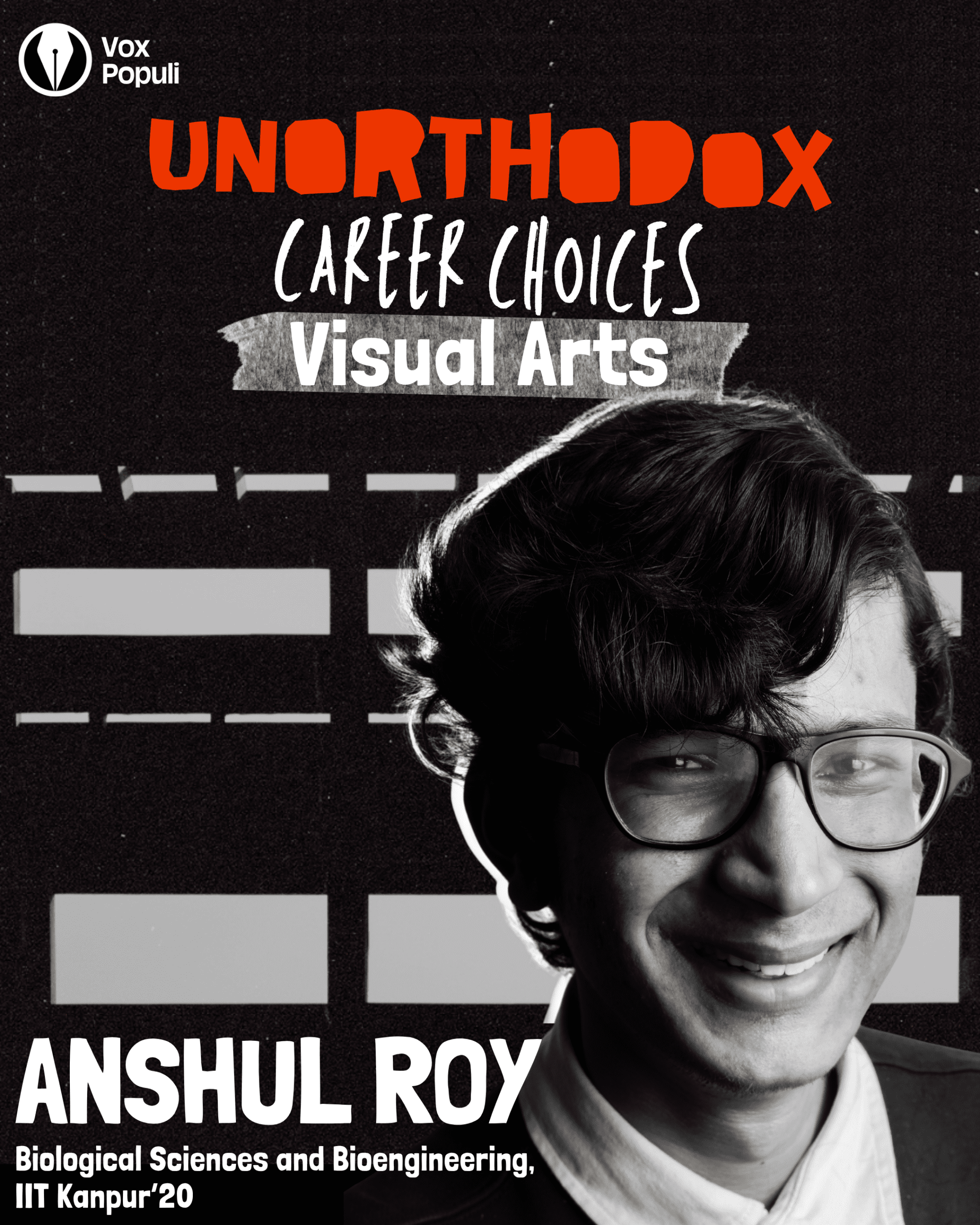
In this edition of Unorthodox Career Choices, we sit down with Anshul Roy, an IIT Kanpur alumnus whose journey to the evolving world of contemporary art challenges every conventional notion of success. From arriving at IIT Kanpur with no particular interest in photography to becoming a “photographer without a camera,” his story is one of curiosity and reinvention. Leading campus initiatives like Humans of IITK to exploring “networked image culture” and pursuing artistic research, Anshul reflects on the decisions, doubts, and defining moments that shaped his path.
Before IIT Kanpur, how did you imagine your future career? And where did photography fit into that picture?
I had the same conventional idea, get into a good college, secure a high-paying job, and move on with life. Photography wasn’t even a hobby. I had not done any photography before coming to IITK. My Dad gifted me a camera when I first left for college, but I didn’t have any specific inclination towards photography as a hobby, let alone a career at that time.
Was creativity something you were actively attracted by, or did it enter your life much later?
I wasn’t really a creative person before, it entered much later in my life. I had the notion that arts is done by intellectually inferior people who can’t handle integral calculus and probability and all the real stuff. In school, I used to look down on it. I was so uninterested that I used to have my sister do my art assignments for me because I thought that they were a total waste of my time. I regret that now so much. It wasn’t until I came here in IITK and was pulled into the photography club and the world of “creativity”.
Do you remember what first drew you to photography: the technical side, the storytelling, or simply the act of observing?
I think photography teaches you a very important skill in life, that is to look at the world with conscious attention. Photography, of all artforms, teaches you to look for profound beauty in the mundane, everyday existence. Photography begins with the world as it is, which is overflowing with information. Instead of an act of creation, it’s more like an act of selection. The idea of fighting the flux of the world and to find a very beautiful moment from that—that feeling was so addictive that nothing could beat that.
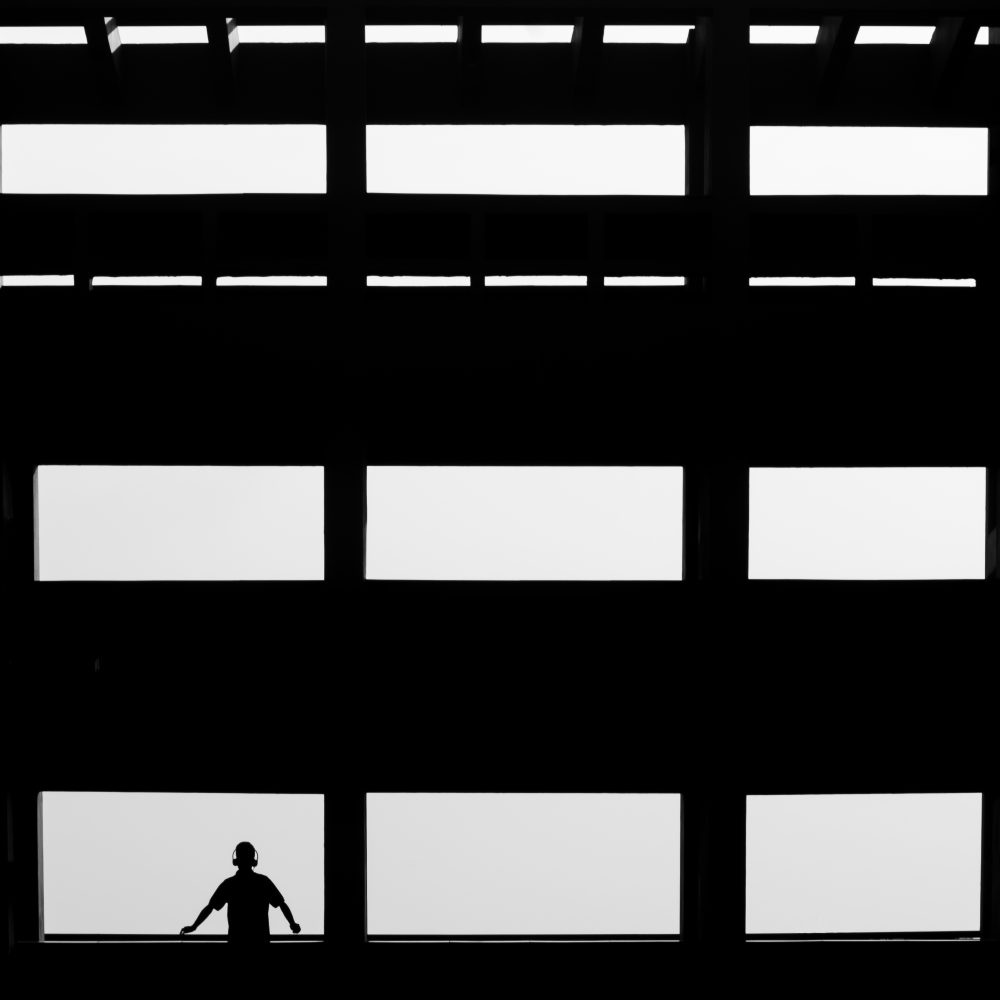
A student stands inside Hall 13 [2019]
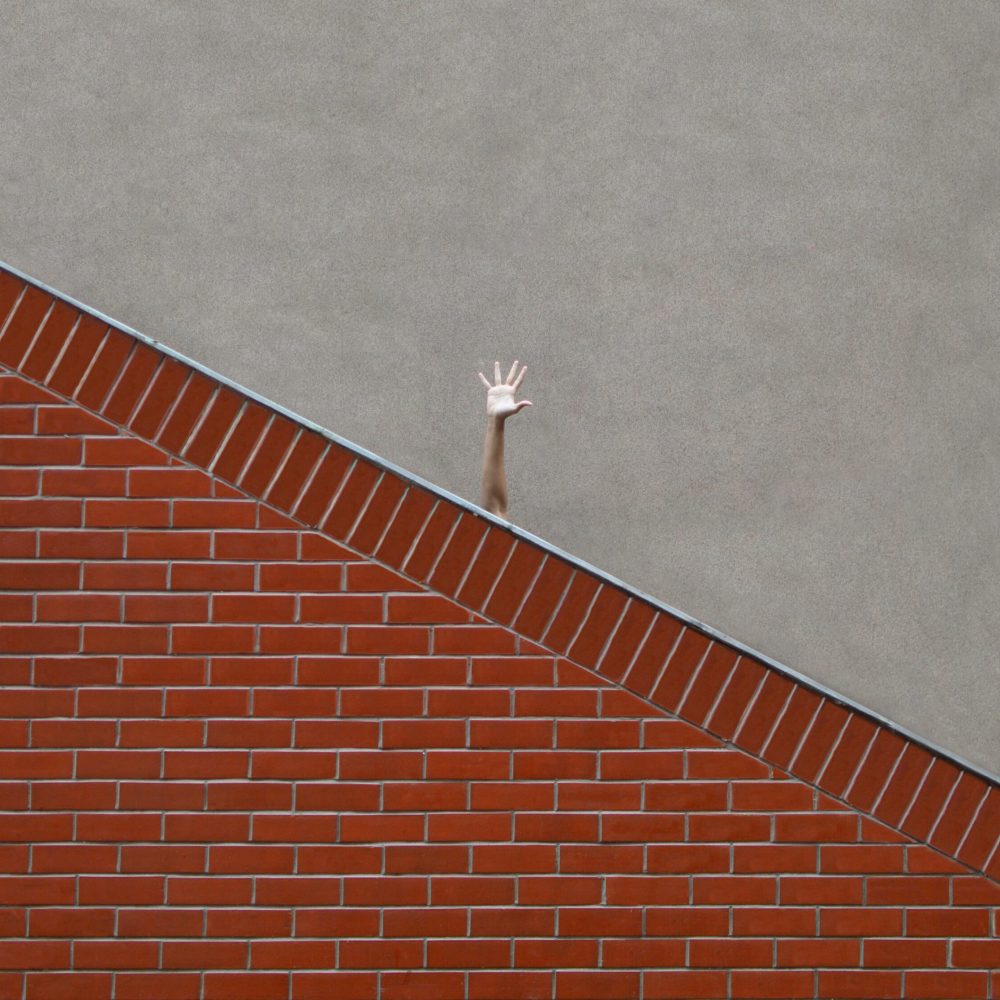
A hand reaching out near Lecture Hall 20 [2018]
You were the coordinator of the Quiz club and not the Photography club. Did you find your interest in photography much later or quizzing was something you were just passionate about?
I’ve been quizzing since I was seven years old – it’s like a childhood hobby. When I was in college, I had two options – since I was interested in quizzing and photography – I wanted to be a quizmaster, which now seems like a more stupid dream because to make a living out of quizzing is quite hard. I do know some people who are trying to do that also, but it’s very hard to make a living out of making questions. But yes, I had great fun quizzing during my time at IITK. I even represented IITK multiple times on TV shows and used to earn lots of money just going around different quizzes. Nowadays, I have been exploring Lecture-Performances as an art form, and this interest also stems from my experience of conducting numerous quizzes at IIT Kanpur.
How did your time at IIT Kanpur influence your engagement with photography?
Being the Secretary of the Photography Club and wandering the campus for hours helped me develop my eye. The campus also was so beautiful and I was very much interested in architecture photography in the initial days. I loved the brutalist architecture in IIT Kanpur. Projects like “Humans of IITK” forced me to overcome my introversion and use the camera to connect with people I otherwise wouldn’t have talked to.
Academically, a Modern Art course taught by Prof. Koumudi Patil was a big turning point in my life because she taught me how photography was used as an imperial tool during the British Raj, which changed how I viewed the power of the medium.
I was also very fortunate to take Film Studies courses by Prof. Ritwij Bhowmik which changed the way I perceived art and its relation to sociopolitics. I also did my UG Project under his guidance which helped me make my creative portfolio for graduate school admissions.
Did you ever feel a conflict between academic expectations and your creative inclinations? How did you manage to make space for both?
I prioritized my creative pursuits over my academics, which meant I skipped a lot of classes to roam around and take photos. This led to bad grades and academic probation. I didn’t “manage” it in a traditional sense; I simply chose the “high” of photography over the expectations of the institute.
When did the idea of pursuing photography full-time first feel serious?
It became serious when I realized I wanted a career that didn’t feel like a chore. I wanted to be in a position where I could say, “I can’t believe I’m getting paid for this.”
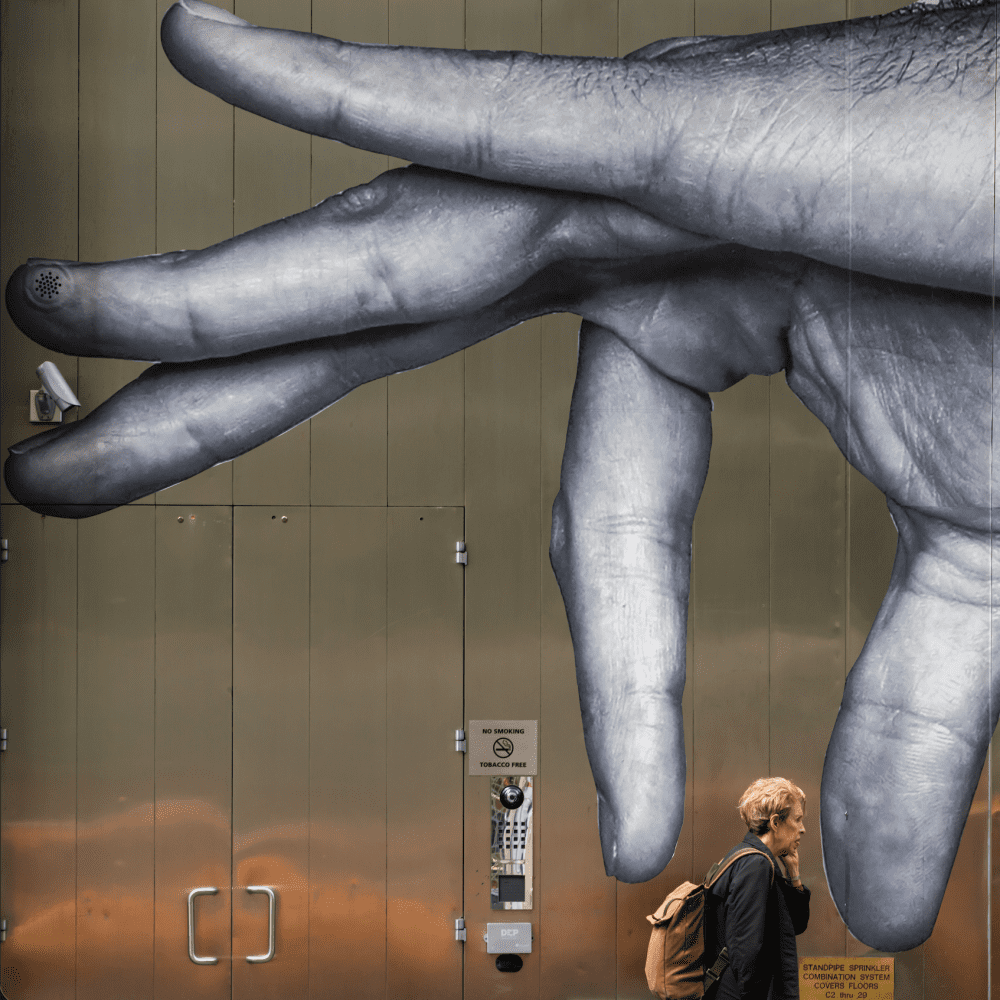
Hand of God (Fifth Avenue) [2022]
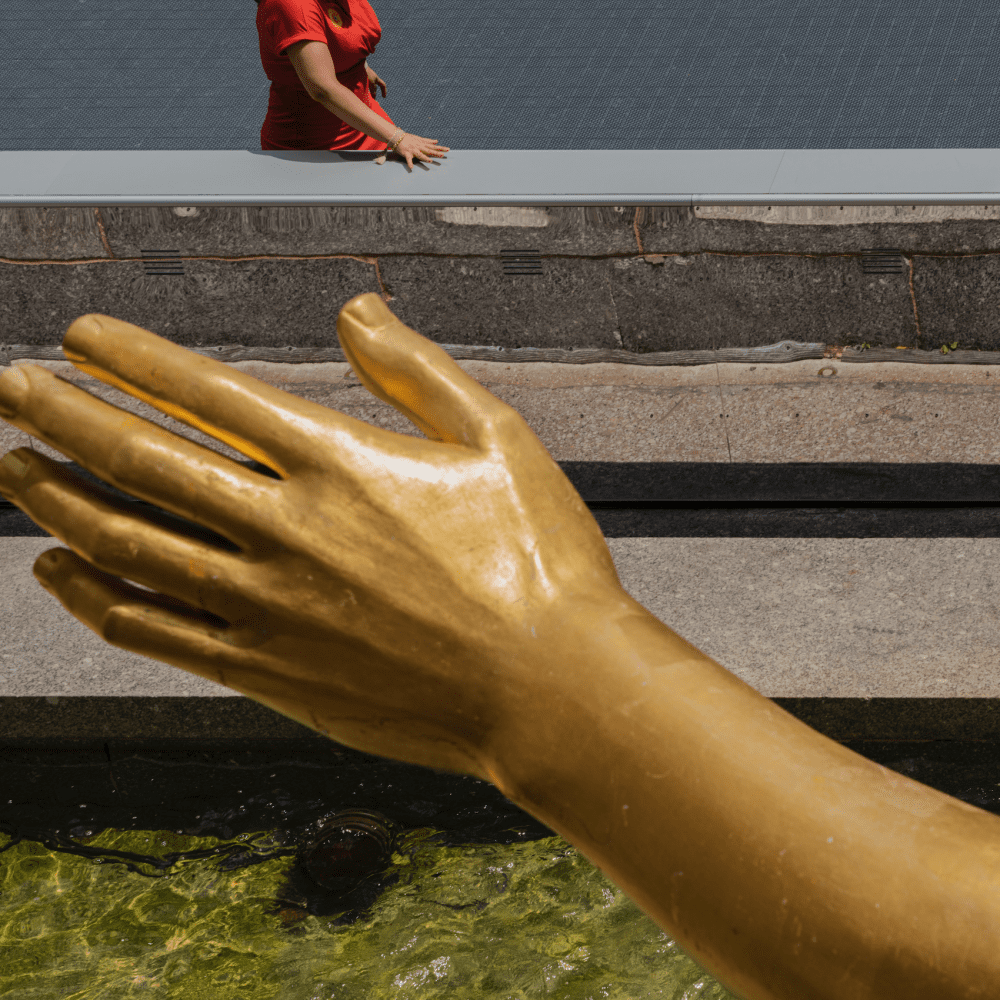
Hands (Real and Fake) [2022]
How did conversations with family, friends, or mentors shape (or challenge) your decision?
Seeing an article in Vox Populi about an IITK alum, Vishnu Sreekumar, who pursued music despite a low CPI was very inspiring it showed me that other paths were possible. You can read that article here:
https://voxiitk.com/i-am-doing-what-i-love-and-i-was-once-a-three-point-nobody/
My father also played a huge role; as a professor, he encouraged me to pursue knowledge for its own sake rather than just as a means to a paycheck.
During my Masters, I was interning under a famous Architecture Photographer based in NYC, and I remember how taxing this job was and my boss used to say to me that, “This has become a business and the creativity and fun have diminished over the years.” That was the moment I decided never to be a commercial photographer, because the whole point of becoming an artist was not to do a boring job.
How do you understand photography compared to other art forms, and what makes it different from other art forms?
Every other artform that I can imagine always starts with a “Tabula Rasa” (a blank canvas). A painter goes into a studio and they find a canvas in which they can fill whatever they want. Photography on the other hand begins with the world-as-it-is, overflowing with information. Instead of an act of creation, Photography is more like an act of selection. You’re basically cropping out a view from the flux of Time. There are only two decisions the photographer is making, what to include in the frame and what moment do you press the shutter. So there are only two variables that you control, because of which it is such an interesting medium. This ridiculous-seeming activity of walking along the street and lifting up a camera is so powerful, so complicated, and so resistant to being mastered. If I had the choice between doing that and sitting in an office somewhere…it’s not even a debate.
What I like the most is how the world seems to be like a jigsaw puzzle to me and it keeps falling apart and it keeps falling in places. And there are those brief ephemeral moments in which everything falls into its place compositionally. Catching that decisive moment is such an addictive feeling that nothing comes close to that.
You had an Instagram page called Humans of IIT Kanpur. Could you talk about that?
During my time at campus, I used to run a page called Humans of IIT Kanpur. It was a great experience. It had around 27–28 posts. And now, when I reflect on that, I think what Humans of IIT Kanpur taught me a lot about was what I now believe to be the role of art. I have always felt that the role of art is to dissolve boundaries between unrelated people. I think good artwork can put you in the shoes of someone whose experiences you could never know yourself. And the camera allowed us to enter the lives of people whom we would never have imagined entering, like talking with a SIS guard. I remember the moment when we talked for over four hours with the SIS guard at the RA Tower, which is right opposite to this swimming pool. He talked with us about his hopes and dreams and his family and all those things. And it was a great learning experience as well. Since then, it has stuck to me that the role of art was to make you see the perspective of someone you would never know.
Do you believe photography serves a deeper purpose beyond its commonly perceived role?
This is something I learned at IIT Kanpur. I remember taking a modern art course by Prof. Koumudi Patil, and she talked about how the British colonizers used photography as a way to show people their place — “If you rebel against us, this is what we would do.” These were war-trophy images. The camera was used like a gun, basically. People were stripped of their dignity and made to pose in studios where anthropological and anthropometric recordings of the Indian body were being made to create this idea back in London that these people were strange. There has been so much written from the British perspective about these people — that they are primitive, that they are savages, and so on. What is missing in this history is their own interaction with the medium. I have always felt that it is a very one-dimensional history of the victors. And I have been thinking a lot about how art can fill this silence in history. How can we, through speculative fiction, storytelling, and even doing strange things like making memes, give voice to those who were voiceless? How do you rewrite history? How do you give voice to the voiceless? How do you fill in these hidden stories of history? How do you build a bridge to history and make people think about the perspective of these people?
How did your work at IIT Kanpur help you explore the intersection of science and art?
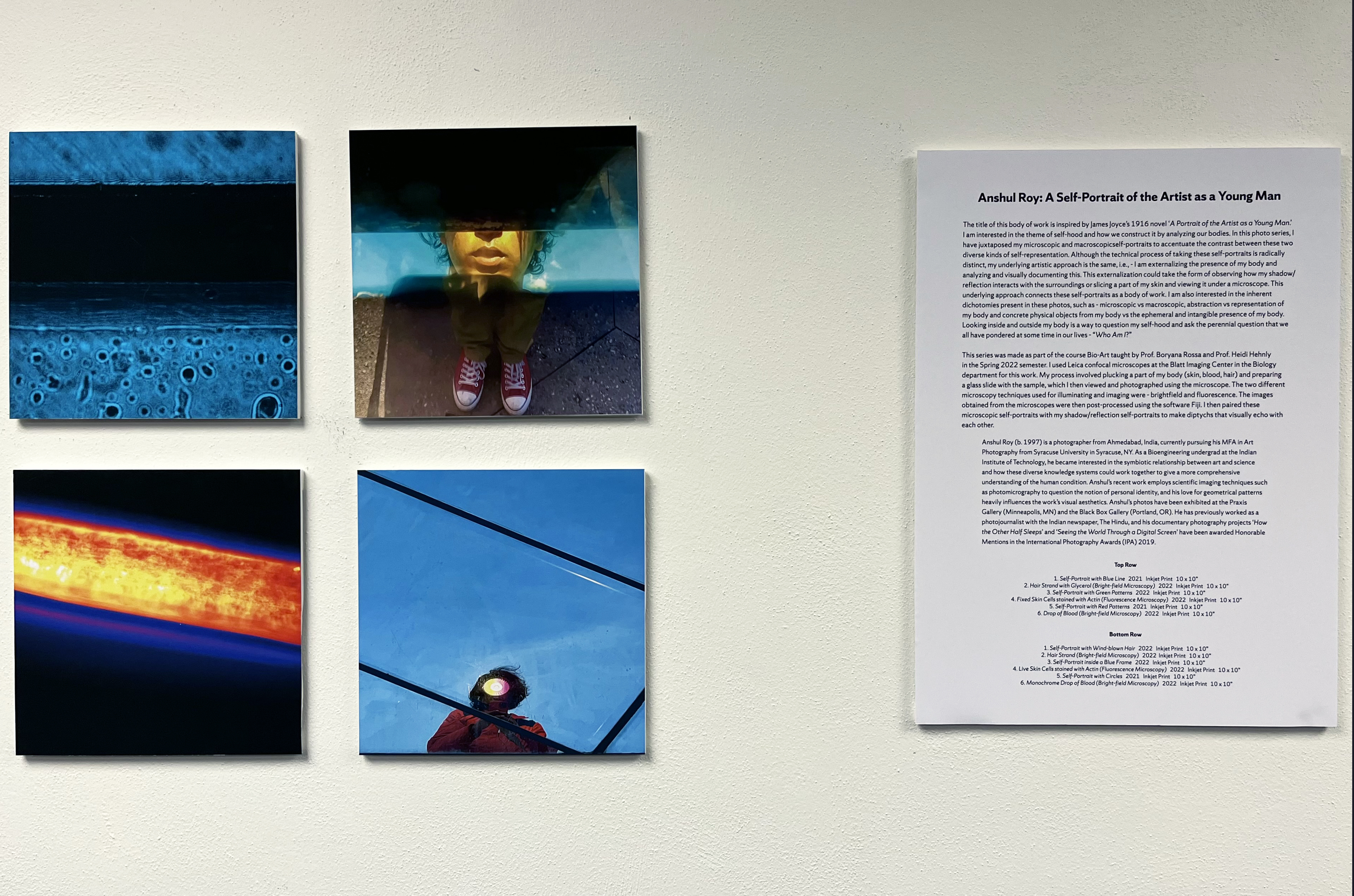
A few years back, I was working on a self-portrait series in which I made Photomicrographs of my different body parts. I was using the knowledge I learnt in my BSBE labs to make art. For example, this is a microscopic self-portrait of my Blood, and I was pairing them with macroscopic shadow and reflection self-portraits. My aim was basically to find visual similarities between the microscopic world and the macroscopic world. This was an initial foray into making creative work that sits at the intersection of science and arts.
Lately, I am highly motivated to do work that lies at the intersection of Arts and Technology. In my opinion, artists play a crucial role as devil’s advocates in exploring society’s relationship with emerging technologies. Having studied engineering at IITK and immersed in STEM environments, I have observed a prevalent techno-positivist mindset and a deep, sometimes irrational reverence for scientific reductionism. Technologists are often enamored by their work and approach it with unwavering enthusiasm, which can overlook nuanced ethical or societal implications.
As artists, we offer a contrasting perspective and play the role of a “canary in the coal mine.” Our inclination to view the world through a lens of critical inquiry and creativity allows us to identify and articulate concerns that may escape conventional technological optimism. We have the luxury of time to ponder and explore scenarios that others might not consider. Some of the most dystopian and prophetic visions of technology have been given by artists and writers such as Aldous Huxley, Michael Crichton, William Gibson etc. This role as a devil’s advocate is essential because it ensures that technological progress is scrutinized from diverse angles by challenging assumptions. By questioning the unintended consequences of untrammeled technological advancement, artists contribute to a more comprehensive understanding of their impact on the broader society and culture. (*https://anshulroy.myportfolio.com/a-self-portrait-of-the-artist-as-a-young-man)
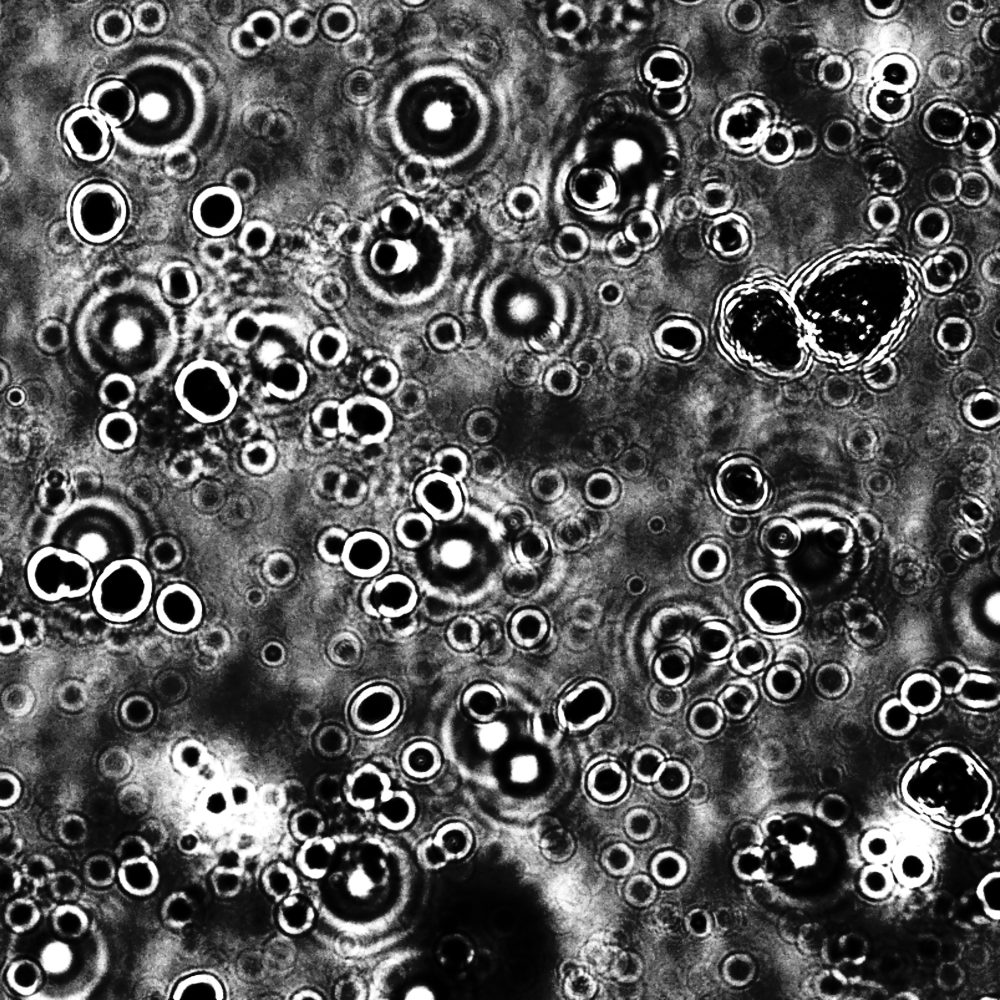
Photomicrograph of my blood, taken using Bright-field Microscopy [2022]
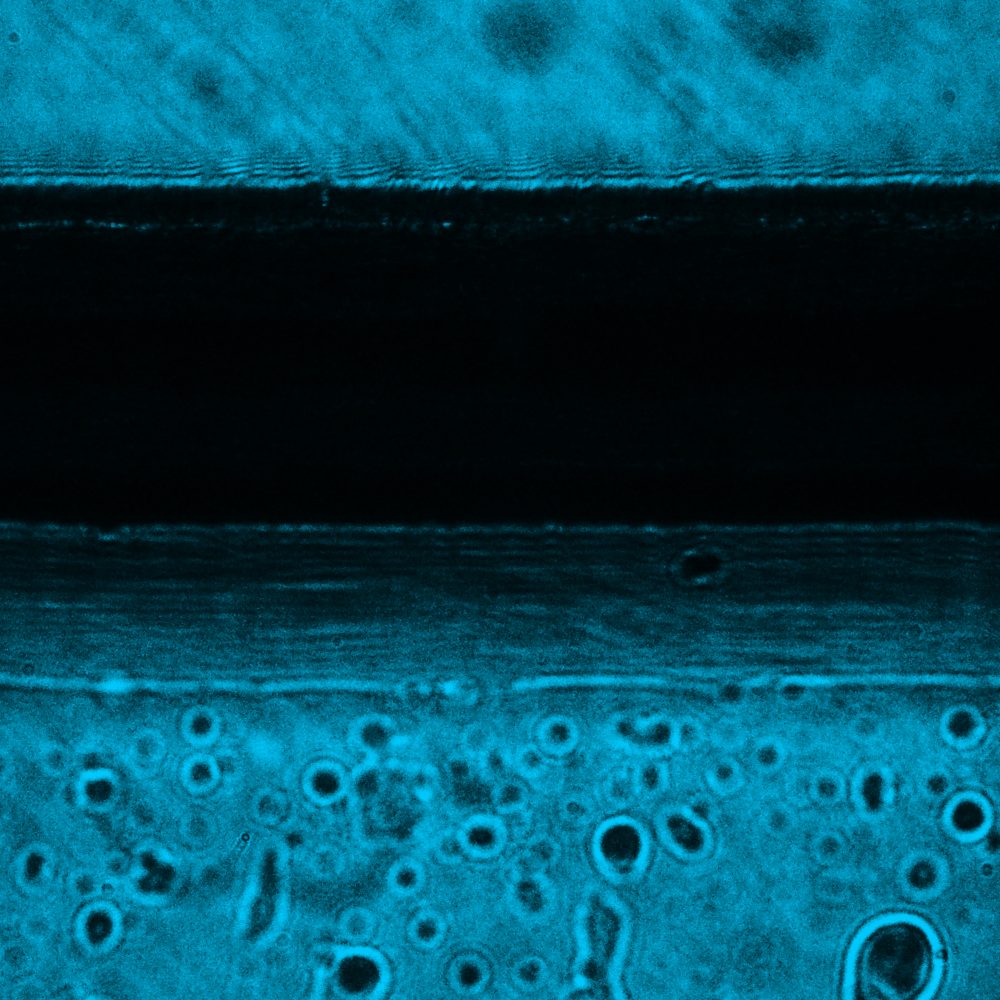
Photomicrograph of Hairstrand stained with Glycerol, taken using Bright-field Microscopy [2022]
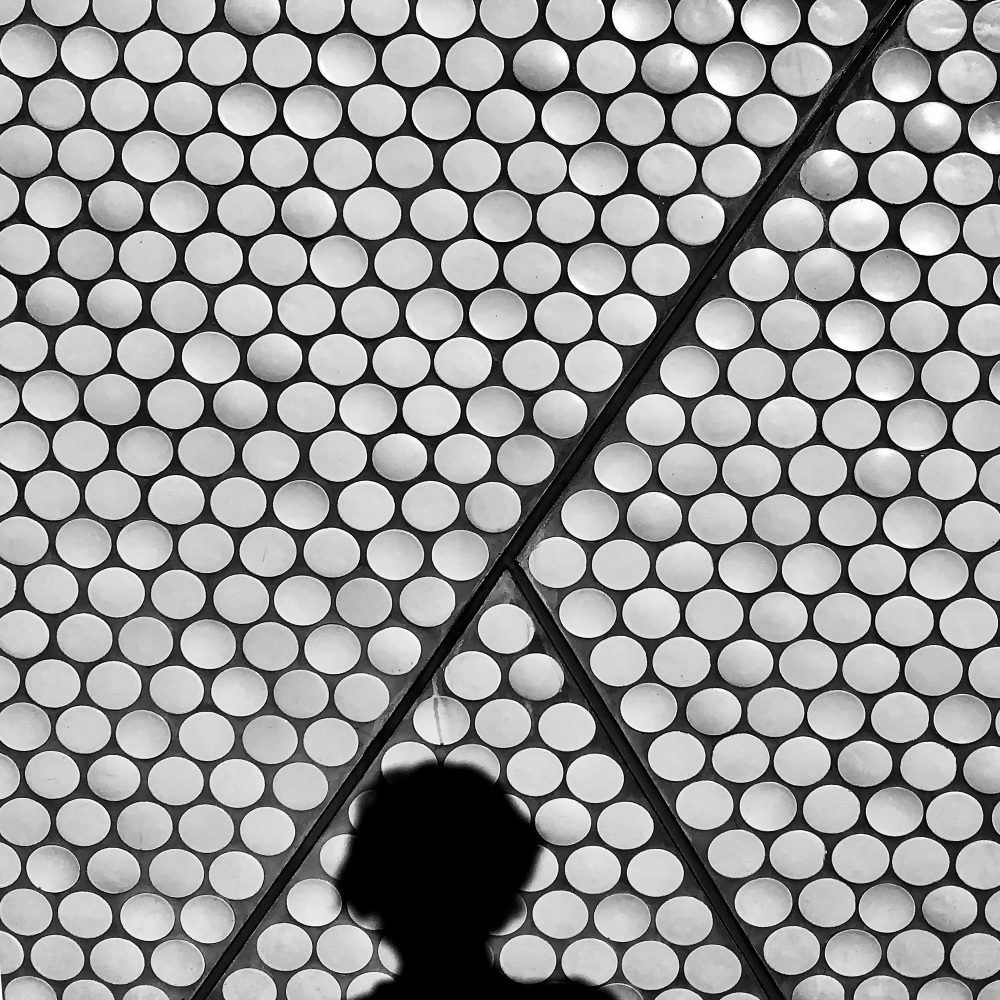
Shadow self-portrait with Circles, Miami, FL [2022]
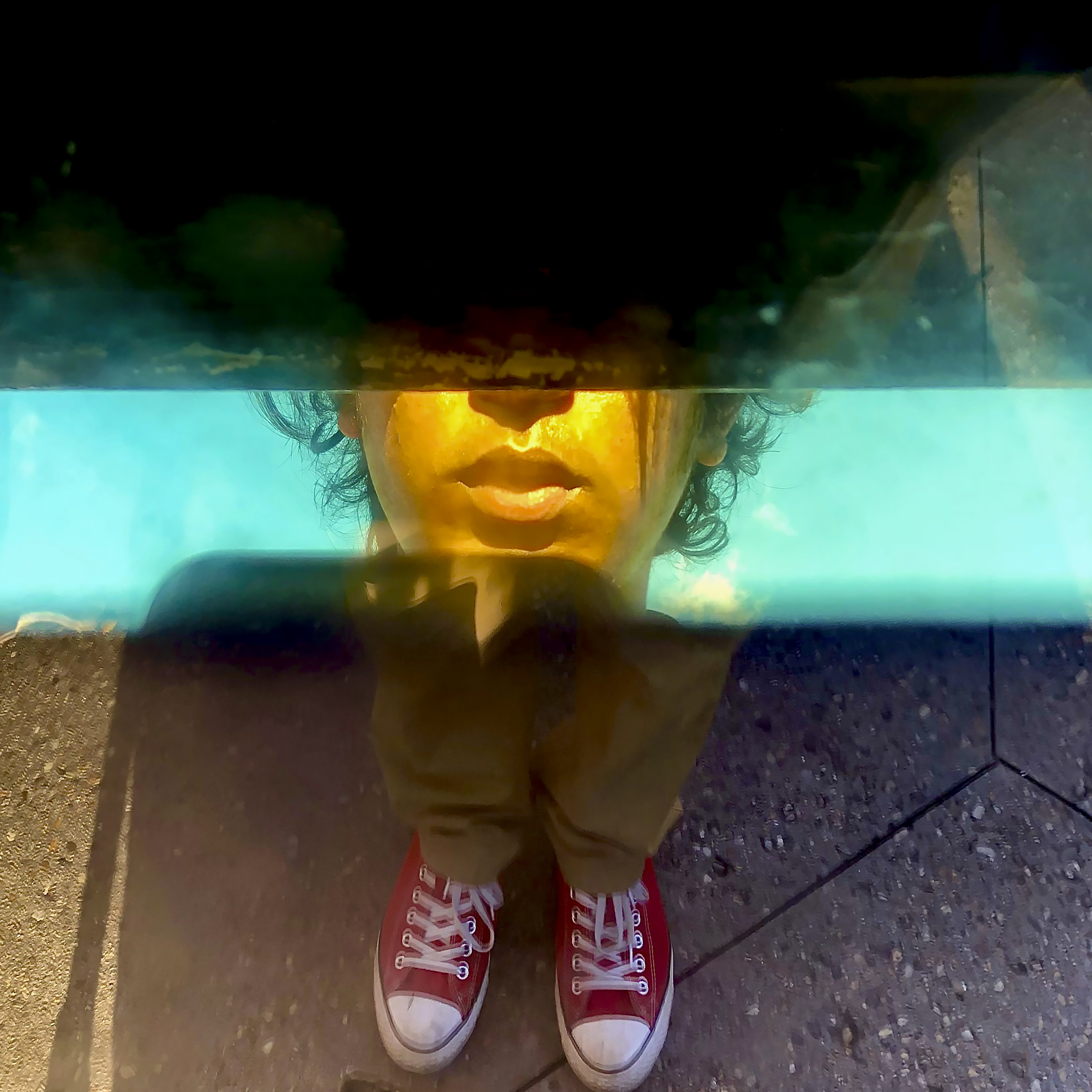
Self-portrait with a Blue line, Orlando, FL [2022]
How has the rapid digitization of photographs, from images on paper to digital formats, transformed the nature and practice of photography?
If we trace photography’s evolution since 1839, we often encounter the assertion that photography has now been “digitised.” However, I keep pondering whether it actually makes sense to call photography “digital” when what we’re still photographing is still the physical world. Yes, digital cameras now convert light into numerical data, but the subjects in front of them are still analog. Hence the term “Digital Photography” (in the way that it is practiced currently) seems like a misnomer to me.
As a digital native, I am aware that my own experience of the world has drastically transformed. Even though my corporeal body resides in a physical space, I spend a significant part of my day looking at screens, navigating the virtual world. If photography is a way of capturing your environment, what happens to photography when we live our lives in front of a screen?
There came a point in my life where working with photography meant that I spent most of my time on a computer. I eventually realized that the screen could itself be an artistic canvas, and that the Internet holds within it an abundance of interesting material that I could appropriate. When I take a screenshot, I’m still capturing a visual moment, but the subject is from the digital world. In that way, to me screenshots seem to be the logical endpoint of photography’s digitisation – where both the image and its subject are fully embedded within the virtual environment.
Since this realization my art practice has completely transformed, and I now think of contemporary images as existing within a networked system, in the form of HTML <img> tags that circulate, detach from their original context, and take on new meanings. My earlier project “Rage Against the Archive” was a browser-based artwork which exists as Screen-recorded videos and a Google Chrome extension. I was fortunate enough to exhibit this work at technical conferences organized by Association for Computing Machinery (ACM) and Institute of Electrical and Electronics Engineers (IEEE).
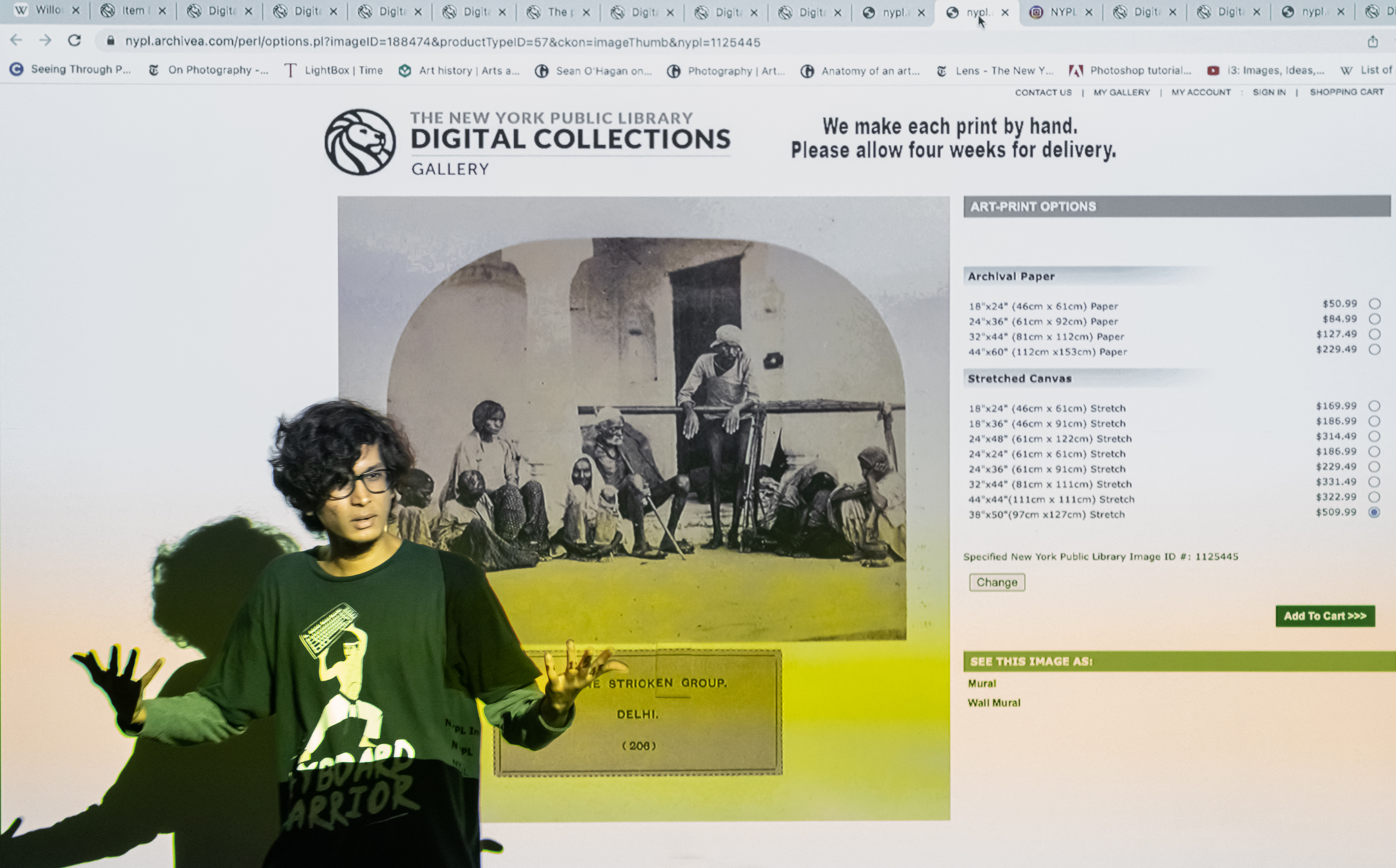
Lecture-Performance as a visiting artist at the North Dakota State University in 2025
In your perspective, how do work and priorities differ for a non-commercial artist than a commercial one?
Being a non-commercial artist lets you do whatever you want. I have also done work where I worked with a studio assistant as an architecture photographer in New York City. One time, for an Apple Store interior shoot we had to wake up at 2 a.m., go to the store, and keep shooting until the store opened at 9 a.m. It was very hectic, with the client constantly telling you what to shoot.
When I worked as a photojournalist at The Hindu, the photo editor would call and assign things like a press conference or sporting event. For example, while covering tennis, the editor did not want artsy photos where you experiment with composition or long exposure. They just wanted simple, standard photos of the player. It becomes a very mundane job with clear deliverables, and the fun aspect gets lost.
Since my time at IIT Kanpur, I always wanted a job that would not make Mondays feel terrible. I have been proud to do jobs where I felt like, “I can’t believe I’m getting paid to do this.” But that aspect can get lost once you start doing commercial photography. The complete freedom to experiment and do whatever you want gets limited. The thing I love about art the most is that it has no rules. There is no one way to make a good painting or take a good photograph. You make your own rules.
As I worked more in this field, I realized that for me photography, as such, is not necessarily fascinating. It is more interesting as an art medium when it intersects with other broader socio-political questions. I wanted to spend more of my time thinking about the ontological status of photos, rather than doing photography. And being a non-commercial artist lets me explore these creative impulses.
What current project or work have you been working on?
Lately, the work which I’ve been doing is at the intersection of photography and internet culture. The technical term for this research area is “Networked Image Culture.” Recently, I just started a PhD program at the University of Colorado Boulder, and here I worked on an experimental Video art project titled “जो दिखता है वो बिकता है” that explores how we all convey our status and craft our identities through Instagram. With around 500 million users, the most of any country in the world, the Indian Instagram space presents an interesting case study on the nature of the networked image in our contemporary society. This project focuses on a recurring visual trope I describe as “Starbucks-core,” in which photographs of Starbucks cups circulate widely as markers of an elite lifestyle. Drawing from an archive of publicly posted Instagram images from India, this work recontextualizes these images to examine how the logic of the feed influences composition, repetition, and self-presentation.
Last year, I was commissioned to do an online Lecture-Performance by The Photographers’ Gallery, London and Fotomuseum Winterthur, Switzerland as part of their series “Screen Walks.” The idea was to use the digital screen as my artistic medium. In this Screen Walk, I explored how the phenomenon of Orientalist imagery has evolved since “the other” gained more control over their representation. Has this shift led to more nuanced visual documentation of regions like India, or has it merely amplified the Colonial Gaze? A particular image of India that has existed since colonial times—like the land of snake charmers, babas, and sadhus, and this still is quite prevalent in contemporary times. In this Lecture-Performance, I examined the proliferation of Instagram images from within India, focusing on photographic activity taking place in key locations like Pushkar Mela and Varanasi, where the Colonial Gaze is now perpetuated by Indians themselves.
https://thephotographersgallery.org.uk/whats-on/watch-screen-walk-anshul-roy
Could you explain more about the “networked image culture”?
In simple words, a Networked Image is the image which is primarily made to be circulated and seen by others. The networked image does not necessarily need to be printed out to be viewed. Instead, it mostly remains in the virtual space and on screens, where it is created, shared, modified by others, and redistributed. According to me, circulation in a network has become the paramount feature of the image in the 21st century. This new ontological status of the image has had a profound impact on our culture and rapidly changed the purpose of photography.
Recently, I became fascinated by this visual trope in India where people go to Starbucks and take photos with their cups. Everyone wants to take the same photo they have already seen before—almost like everyone wants their own copy of that Starbucks image. For me, this is a good example of what I call networked images. These are images created specifically to circulate on social media platforms like Instagram rather than to be stored in albums.
This is one of the biggest changes since the advent of social media – we now make images to show others rather than to preserve memories. Photography has become a form of social communication—it signals where you are and what your social status or lifestyle is.
If someone goes to the Eiffel Tower, they want to take a photo and post it online. Even at IIT Kanpur, students often take photos at the main gate after getting admission and post them on social media.
Specifically, India now has one of the largest numbers of Instagram users, and image culture has become deeply embedded in everyday life. Something as simple as a front-facing smartphone camera has changed the way people see themselves and how they present their identity to others.
So I’ve been very interested in how people use such images to construct their identities online.
You mentioned the idea of “artistic research.” What does that mean in your work?
The idea is that the research output does not have to exist only as a traditional academic paper. It can also be an artwork that appears in a gallery show, a lecture performance, or another creative medium.
When I was making my portfolio after IIT Kanpur for my master’s applications, the term artistic research sounded very strange to me. I thought art simply meant making a painting or taking a photograph.
But contemporary art has evolved a lot. Now artistic practice often combines theory, research, and creative production, where the work can exist both as research and as an artwork that people engage with.
You describe yourself as a “photographer without a camera.” What does this idea mean in your practice today?
During my Masters, I realized that my passion was not actually photography, but browsing the internet. Eventually my desire to press the camera shutter was replaced by a direct interest in images – not necessarily in making my own images. Hence, right now, my artistic practice relies on finding images online that already exist and intervening with them in interesting ways to create a new meaning. That is basically the idea of “Image Appropriation” — creatively intervening with found images and making you think differently about the source image.
I haven’t picked up my camera in almost two years, to be honest, which is funny because I actually have a photography degree. So, I think of myself as a “Photographer without a Camera”—my interest lies in studying, collecting, and reinterpreting the immense mass of images that already exist online.
You also mentioned working with memes and how your approach connects them with image appropriation. How do memes fit into your artistic practice?
I love Memes because they are the prototypical Networked Image. I feel Memes are the best example of cutting-edge Contemporary art, in which numerous people participate and modify an original image to fit different contexts. Lately, I have been thinking about Meme-making as a form of socio-political critique.
In December 2025, I exhibited a Meme that I made at the Serendipity Arts Festival in Goa, one of India’s biggest art venues. “Under the Influence (Colonial Eyes)” is a series of memes made by appropriating 19th-century ethnographic photographs taken by Maurice Vidal Portman of the tribes in the Andaman and Nicobar islands, sourced from the British Museum’s digital archives. My paradigm for reading colonial photos is inspired by a line from Scarface: “The eyes, Chico, they never lie.” I have always been drawn to the haunting eyes in these images — eyes that look back at the photographer defiantly. Bell Hooks termed this “The Oppositional Gaze”: a silent look that sees, endures and refuses to look away. By inserting these images into a meme format — the quintessential “Networked Image” — I seek to disrupt their promise of a static, objective truth. The meme’s malleable nature becomes the conceptual antithesis of the ethnographic image. Through this series, I aim to repurpose the silence existing in a colonial image as a form of enduring resistance.
Edited by: Shri Vaishnavi A
Interviewed by: Akash Baudh, Anikait Dixit, Mahi Mittal


![[Not So] Little Women](https://voxiitk.com/wp-content/uploads/2026/09/WhatsApp-Image-2026-09-28-at-19.21.06-768x960.jpeg)