

Disclaimer: Vox Populi, IIT Kanpur, is the exclusive owner of the information on this website. No part of this content may be duplicated, paraphrased, or interpreted in any other way without written consent from Vox Populi. If you want to reproduce any of the content on this page, please contact our chief editors directly or reach out to us by email at voxpopuli@iitk.ac.in.
Have you ever wondered how we think? Make decisions or even feel our emotions? Most importantly, how machines are beginning to mimic these processes with surprising resemblance. With the advent of AI and its rapid advancement, along with neuroscience uncovering deeper insights into the brain, there’s never been a better time to understand and explore how the mind truly works. This is exactly what goes on in the emerging Cognitive Science Department at IIT Kanpur.
Motivation
According to Dr. Devpriya Kumar, the HOD of the Cognitive Science Department, the intention to establish such a program goes back to the early 2000s. In his own words, “ The initial idea goes back a long time before I joined. Some faculty members at IIT Kanpur, including Professor Harish Karnik from Computer Science and Engineering, an expert in machine learning, Prof. Achla Raina, from HSS and Professor Amitabh Mukherjee, from CSE along with others, proposed setting up a Cognitive Science program in the early 2000s.”
According to him, the idea was to combine expertise from different disciplines, such as linguistics, computer science, and biological sciences, to gain a better understanding of the brain.
Also when he first joined the institute in 2015, he observed that a lot of students were already interested in problems such as understanding human memory and attention but the term ‘Cognitive Science’ wasn’t widely used, inspired by this interest of students in the field, it looked promising to believe that such a program would be well-received and be really beneficial for the student community.
How was the Department formed?
In 2017, the Interdisciplinary Program (IDP) initially started with a PhD Program and an MS by research program, followed by a minor in Cognitive Science in 2018. In 2020, just before COVID-19 lockdown, the Department of Cognitive Science was officially established under the headship of Professor Narayan Srinivasan, who is one of the key figures in Cognitive Science in the country. This marked the foundation of the program and led to its official establishment based on the positive feedback of the IDPs.
Challenges in Establishing and Growing the Department
Leadership was an early challenge. It’s essential for all departments to have someone as the flag-bearer to guide the department in the right direction and act as the face of the program. Without any representative, it was difficult to raise awareness about the department and promote it until Prof. Narayanan Srinivasan filled this gap.
IIT Kanpur is traditionally an engineering-focused institution and was not familiar with EEG (electroencephalography) and TMS (Transcranial Magnetic Stimulation) labs that conduct human experiments. Hence, the department had to deal with quite a lot of reluctance in establishing the lab since it not only required huge infrastructural resources but also a shift to recognize such experiments.
The department attracts students from diverse academic backgrounds, some from pure psychology, with no experience in coding, while others from mathematics and technical fields, with no prior knowledge of psychology. This heterogeneity makes it difficult to design a curriculum that meets the needs of all the students and brings them to a common ground. As a consequence, student diversity is one of the biggest challenges the department faces.
In addition, attracting experienced faculty was very challenging. Most of them were either working abroad or already affiliated with Indian institutions. This made recruitment highly competitive. On top of that, the department had yet to build its reputation to attract faculty members.
Another critical problem that the department faced was the need to rapidly expand by admitting students and hiring faculty. However, the department chose to favour long-term growth instead of simply expanding. This decision to not rush, highlights the department’s commitment to excellence and timely growth.
Student Participation
Student participation has played a vital role in the evolution of the Cognitive Science department at IIT Kanpur. Since its establishment in 2020, the department has emphasized creating a collaborative environment where students contribute not only academically but also to the broader culture and identity of the program.
Currently, the student body contains around 50 students who are highly diverse, with backgrounds ranging from psychology to engineering. This heterogeneity brings both challenges and opportunities. While extra effort is needed to bridge academic gaps, it also leads to rich, interdisciplinary discussions and research. Students have presented their work on international platforms, winning recognition, including best paper awards, and have actively contributed to lab development supported by institutional and alumni funding.
Beyond academics, the department encourages strong community building. Events like carrom competitions, cricket tournaments, and faculty-led cookouts help foster camaraderie and break down formal barriers among students and faculty.
This active participation helps students feel invested, not just in their own learning, but in the success of the department as a whole. It builds a collaborative, inclusive, and dynamic academic community that is crucial for a young, fast-growing field like Cognitive Science.
Research
The research covers various interconnected topics, including Perception and Attention, Social Cognition, Learning and Technology, Consciousness and Self, and Translational Neuroscience. It also includes important areas like Emotion, Language, Action and Decision-making, and Memory.
Despite being newly established, the Cognitive Science department at IIT Kanpur has already made notable progress in research and academic impact.
Prof. N. Srinivasan and his collaborators have published important work on visual perception and consciousness. They conducted a study on how flicker frequency influences visual awareness through continuous flash suppression. This research was published in Neuroscience of Consciousness. Read the research paper here.
Prof. Srinivasan wrote a chapter titled “Consciousness and Cognition: A Personal Journey from Functionalism to Phenomenology” for an MIT Press volume. In this chapter, he reflects on the changing field of consciousness studies.
Bhartiya Bhasha Parivar Symposium was a two-day symposium held on 16th February 2025. It was organized by Dr. Ark Verma and Dr. Himanshu Yadav, in collaboration with Bhartiya Bhasha Samiti to support research on Indian languages and cognitive science.
Infrastructure
The Department of Cognitive Science is a dynamic and interdisciplinary unit with students from various conventional academic disciplines enrolled in different programs. It is currently staffed by eight core faculty members with diverse research interests, along with contributions from Dr. Arjun Ramakrishnan and Sruti Srinivasa Ragavan, who serve as joint faculty members, and Dr. Ganesan Venkatasubramanian, who is affiliated as a visiting professor.
The department offers five comprehensive academic programs: a PhD program, an MTech program, an MS program, an Undergraduate Minor, and an integrated BS-MT/BT-MT Dual Degree program. These programs are underpinned by cutting-edge research infrastructure and training facilities that support both foundational and applied work in cognitive science.
Language & Cognition Lab
The Language and Cognition Lab studies language (visual word recognition and bilingualism), social cognition, driving, and mental health using surveys, experiments, simulations, and computational models.
Additionally, eye-tracking is used to study where people look while thinking, based on something called the “eye-mind hypothesis,” which suggests eye movements reflect thought processes.
SAC Lab
The Social & Affective Cognition (SAC) lab is interested in how emotional and social contexts influence our actions and decision-making. These questions are addressed using a combination of behavioural, pharmacological, neural, and computational approaches.
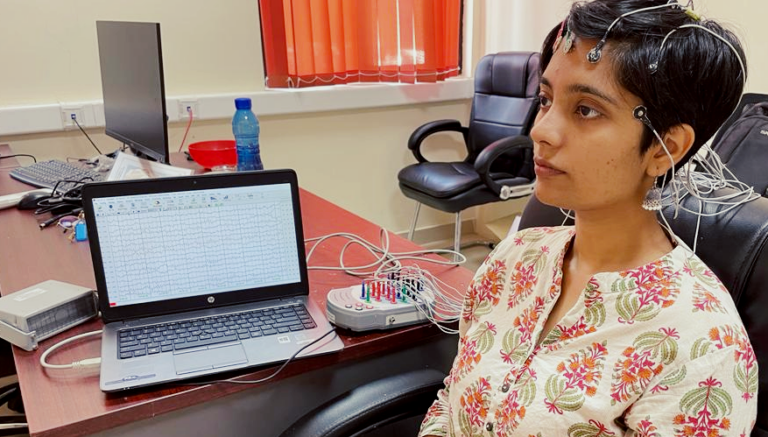
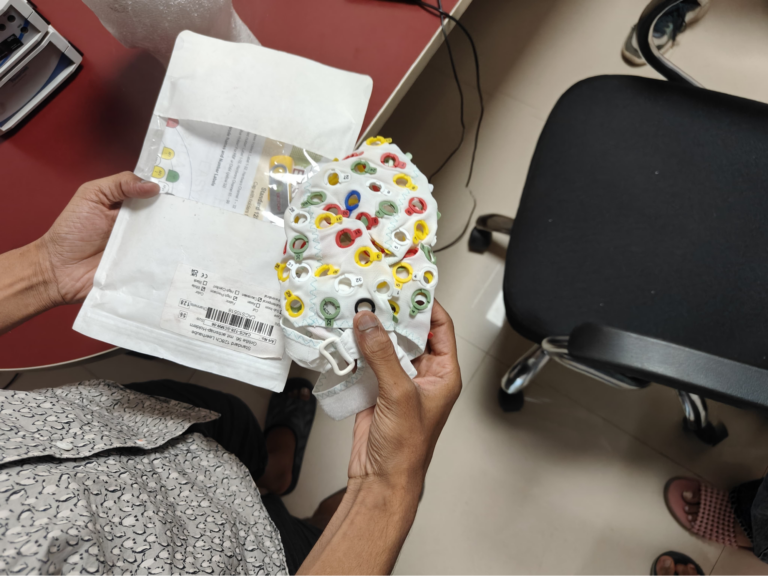
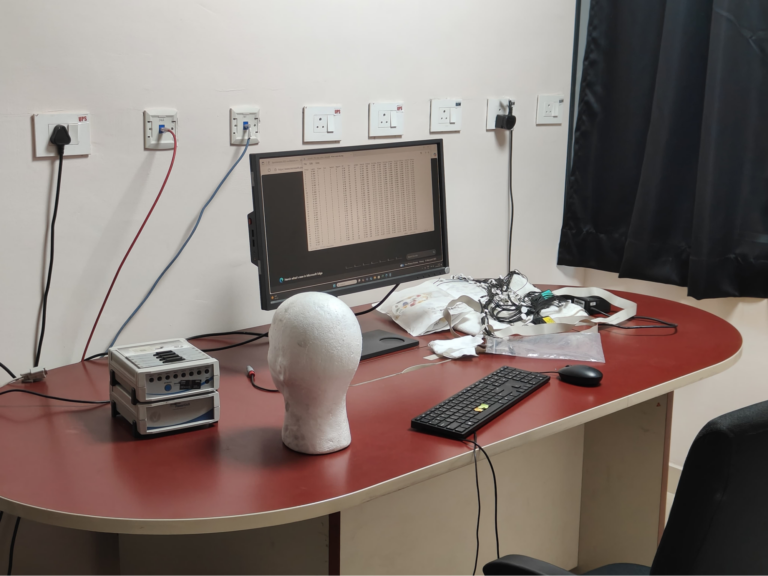
A 128-electrode EEG system and an 8-channel electrogastrogram, facilitating research into brain-body-gut connectivity.
PLATIPUS Lab
The PLATIPUS (Probability Logic And Theories of Information Processing Used Serendipitously) lab uses computational approaches to study behavior, and cognition embedded in organized systems, following the philosophy of ‘serendipity’.
PAC Lab
The PAC (Perception Action Cognition) lab investigates the cognitive processes of perception and action, how they are linked with each other, and how this interaction influences our experience of events occurring in the environment. The lab uses motion sensing and VR tracking to study the various behavioural connections.
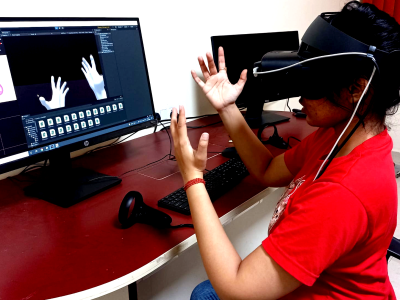
A 2D projector-based setup, Oculus Rift S HMD, with Ultra Leap motion sensors for hand tracking, and a Kinect sensor for facial tracking, enabling immersive studies in perception and motor control.
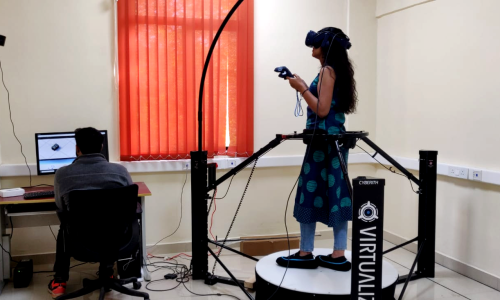
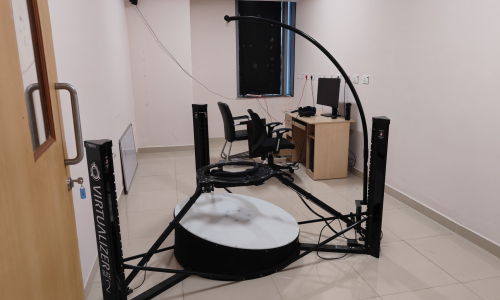
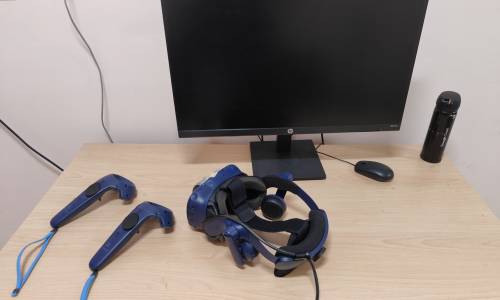
A VR treadmill (Virtualizer Elite 2) (fig. 3) along with the HTC Vive Pro Eye HMD, allowing simultaneous tracking of eye, head, limb, and torso movements in virtual environments, assisting in full-body inspection.
Jay Pullur Noninvasive Brain Stimulation Lab/TMS Lab
The Jay Pullur Noninvasive Brain Stimulation Lab, established with support from alumnus J. Pullur, houses a MagVenture R30 TMS system with a figure-of-eight coil (fig 5). This setup enables advanced stimulation protocols such as burst and paired-pulse, offering insights into causal brain-behavior relationships.
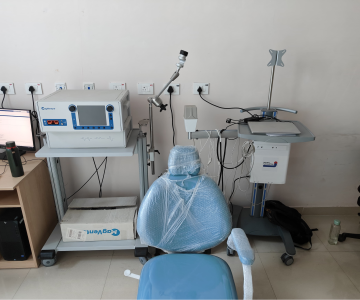
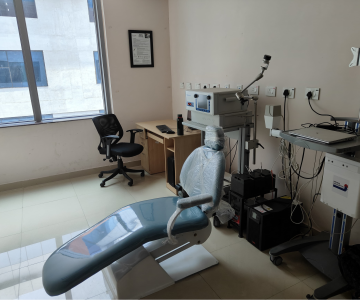
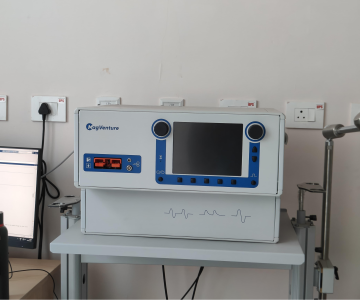
Other Labs include the Kanpur Language Processing (KaLP) lab, the Cognition, Learning, and Innovation in Pedagogy (CLIP) Lab, Consciousness Lab and the TRANSIt Lab. They use various principles of cognitive neuroscience and machine learning to investigate neural functioning and human consciousness.
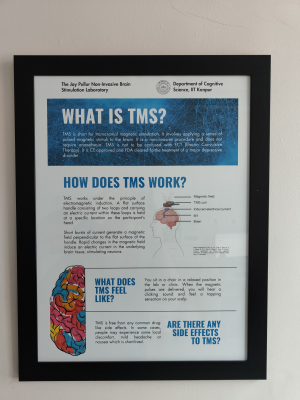
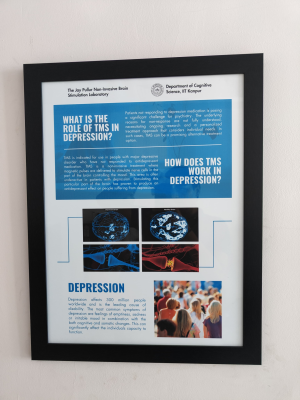
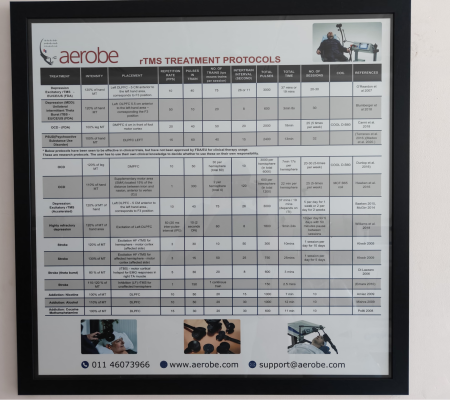
Frames displaying information about TMS (Transcranial Magnetic Stimulation) technology
Conclusion
The Department of Cognitive Science at IIT Kanpur brings together psychology, neuroscience, artificial intelligence, and linguistics to explore how the human mind thinks, learns, and interacts with the world. What began as an interdisciplinary idea has evolved into a thriving academic hub powered by visionary faculty, advanced research facilities, and a diverse student community. Together, they are fostering a culture that values curiosity, collaboration, and long-term innovation over rapid expansion.
As the boundaries between human cognition and machine intelligence continue to fade, the department remains committed to deepening our understanding of the mind while shaping the next generation of researchers and thinkers.
Written by : Aarzoo Yadav, Mahi Mittal, Anandan Iyer, Nazhar Bekinalkar, Siddharth Mahar
Edited By : Sanchit Arora
Designed by : Abhinav Kumar Chaudhary