
On 1 October 2025, the IIT Kanpur community was jolted by the death of a final year B.Tech student during the mid-semester recess. The institute’s immediate response, led by the Students’ Gymkhana, was one of solidarity. An online GBM was called, creating space for students to share their concerns and seek redressal. The message from the President, Students’ Gymkhana emphasized collective responsibility, and said that “we believe it is our collective responsibility to come together, hear out each other and work towards addressing concerns that may be causing distress to any of us.“
Less than three months later, on 30 December 2025, the campus lost another undergraduate, Mr. Jai Singh Meena. Much of the campus population could not congregate in solidarity due to the winter break. A candle march was organized, but remained inaccessible to most students. An offline GBM was planned for when students returned, but the Code of Conduct made organizing such a space difficult.
This is not new. Between 19 December 2023 and 18 January 2024, three students died by suicide. In response, the campus community united then to make demands for a safer environment for students.This collective action prompted calls for change and the institute acknowledged the need for more transparent grading, ombudsman committees and other correctional measures. Collective action translated into policy. This remains our greatest strength as a community. However, collective action does not arise in a vacuum. It is enabled through spaces where students are allowed to speak, listen, reflect, and question.
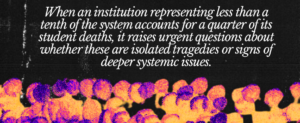
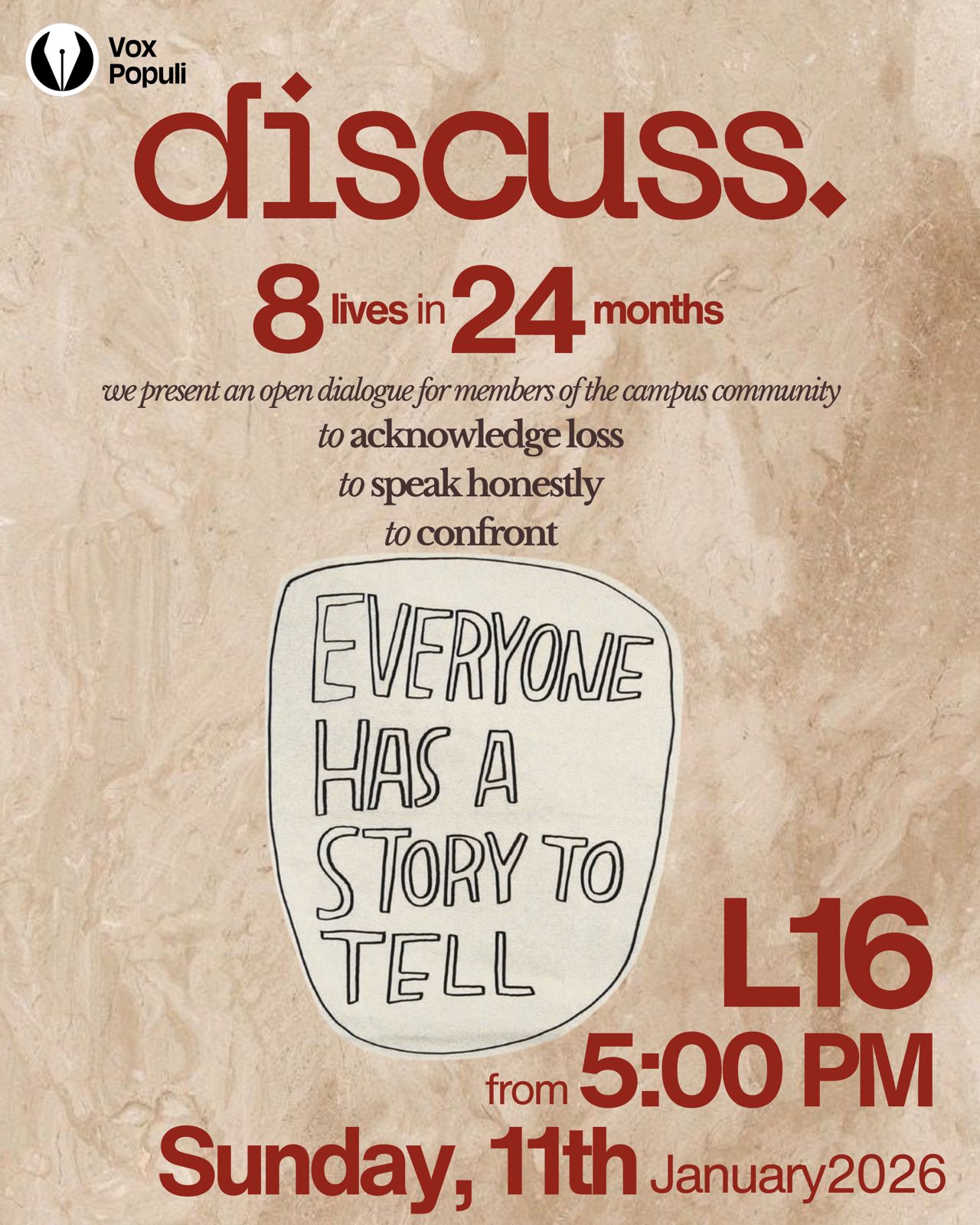
In the past roughly 24 months, we have lost 8 lives on campus. The loss cuts across all levels, Undergraduates Postgraduates and Project Staff. There is nothing normal about such a pattern. Yet with each loss, there is a risk we grow quieter. More numb. More accustomed to grief.
One of the most disturbing consequence of repeated suicides around us is not just the loss of the life, but the way in which such deaths begin to feel routine. When such tragedy passes our everyday life, without provoking conversations and collective reflections, it signals a dangerous normalisation.
When suicides begin to seem like regular occurrences, the danger is twofold: institutional failure and collective indifference. We cannot solve what we do not first acknowledge. Before demands, before policy, before action there must be acknowledgment. Of loss. Of pain. Of what repeated tragedy is doing to us as individuals and as a collective.
Taking cognisance of this we at Vox Populi are organising an open dialogue for members of the campus community. A forum to acknowledge loss, to speak honestly, and to confront what repeated tragedies are doing to us as individuals and as a collective. This is a space to sit with what has happened. To speak honestly about how it has affected us. If you have felt disturbed, unsettled, angry, numb, or unsure how to process what has happened and if you believe the campus must do better than move on quietly, we invite you to join us.
The first step to solving a problem is acknowledging it exists. We invite you to join us in that acknowledgment.