Disclaimer: Vox Populi, IIT Kanpur, is the exclusive owner of the information on this website. No part of this content may be duplicated, paraphrased, or interpreted in any other way without written consent from Vox Populi. If you want to reproduce any of the content on this page, please contact our chief editors directly or reach out to us by email at voxpopuli@iitk.ac.in.
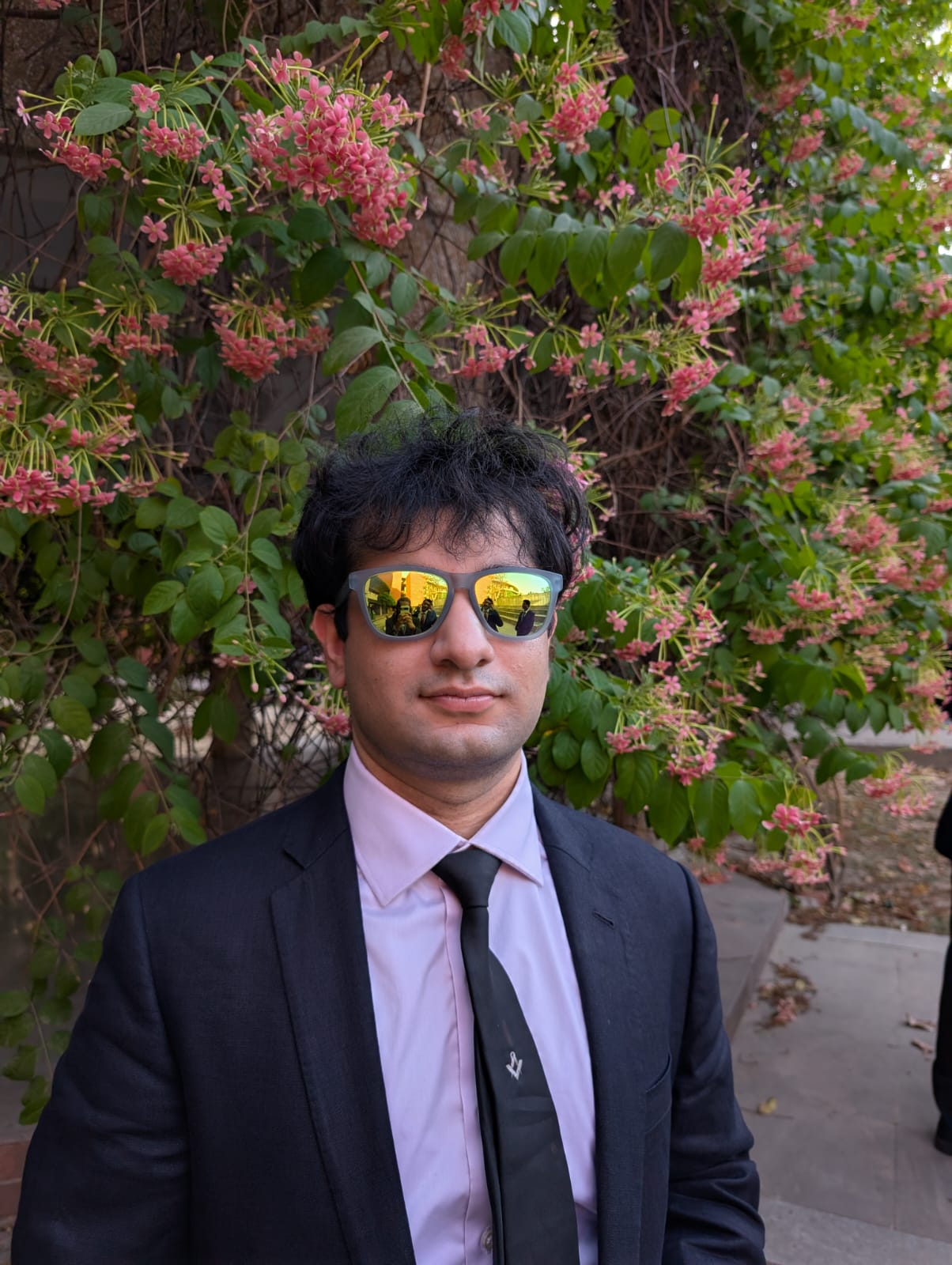
In the 42nd edition of As We Leave, Ridhav Arora, a Y21 student graduating from the Department of Materials Science and Engineering, shares a story of quiet persistence and rediscovery. What began with hesitation and early setbacks slowly transformed into a pursuit of purpose—fueled by curiosity, hands-on learning, and a growing passion for clean energy. Through research, racing, and resilience, he built not just a profile, but a path shaped by grit, growth, and a quiet, unwavering drive to keep moving forward.
Disclaimer:- The views presented below are the author’s own and are not in any manner representative of the views of Vox Populi as a body or IIT Kanpur in general. This is an informal account of the author’s experiences at IITK
Back in high school, I was just a clueless kid. I knew the IITs were prestigious, but I had no real idea what they were about. I chose PCM because I enjoyed Maths, but it wasn’t until my uncle nudged me to seriously think about my future that I began preparing for JEE. To be honest, science didn’t fascinate me much during school—but topics like climate change and the environment did catch my attention. At the time, I had no clue that this budding curiosity would eventually shape my research interests. Like most students, I followed the herd and began my JEE journey. With relatively little struggle, I secured a decent rank.
I was aiming for Energy Engineering at IIT Delhi, drawn by its clean energy focus, and narrowly missed out on getting Materials Science and Engineering there. Initially, I was disappointed. But when I landed in the Materials Science and Engineering program at IIT Kanpur, I found hope again. I discovered that IITK had recently launched a new department: Sustainable Energy Engineering. It had been established just that year, in 2021—and instantly, I knew this was the path I wanted to pursue.
Our first semester began in December 2021, still in online mode, with Covid lingering in the background. As a big-time introvert, I found it difficult to connect with people—even virtually. That semester was a harsh reality check: the JEE days were over, and now, everyone around me was an IITian. The competition felt real and constant.
One of the first roadblocks I hit was ESC101. I struggled with it from the start and quickly convinced myself that coding just wasn’t my thing. I took things lightly, unaware of the consequences this attitude would bring later. I performed terribly that semester—partly due to my own mindset, and partly because I stuck to my values. I’ve always been someone who steers clear of dishonest practices, especially during exams, which made the whole experience feel even more isolating at times.
Right after the semester ended, we received news that we’d finally be heading to campus. Unlike the Y20 batch, we were lucky to start our on-campus journey in the second semester itself, even though that meant we’d only have three years to experience life at IITK. The initial part of the semester remained online, but post-midsems, we transitioned into classroom teaching, and the real campus experience began to unfold.
I got along well with my wingmates—many of whom I had already connected with during the online semester. However, the academic struggle continued into the second semester, largely because the first-year curriculum was still common for everyone. Despite my efforts, I couldn’t pull my grades up, and I ended my first year with a disappointing CPI. I was disheartened but hopeful. With department-specific courses starting in the second year, I saw a real chance to turn things around.
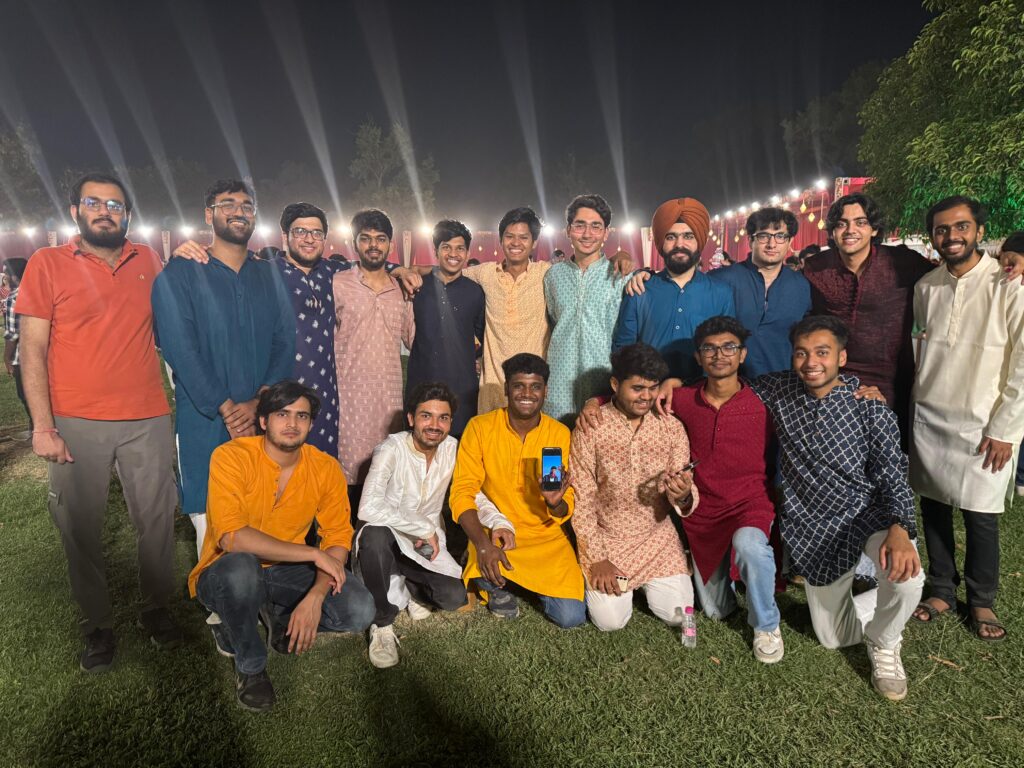
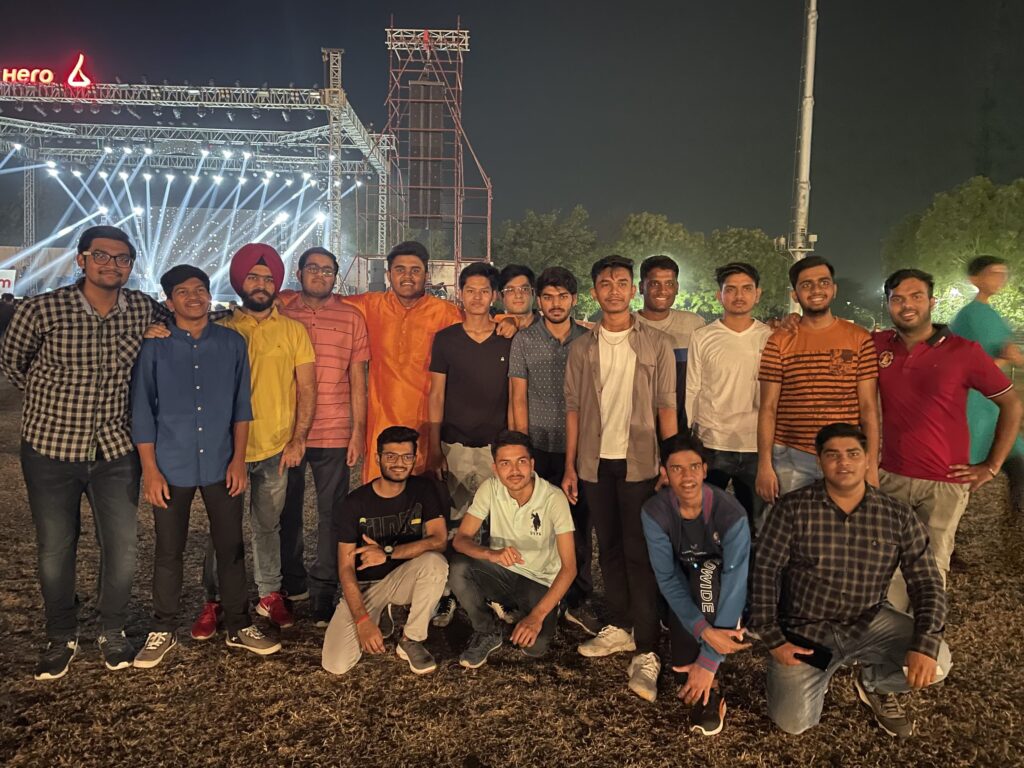
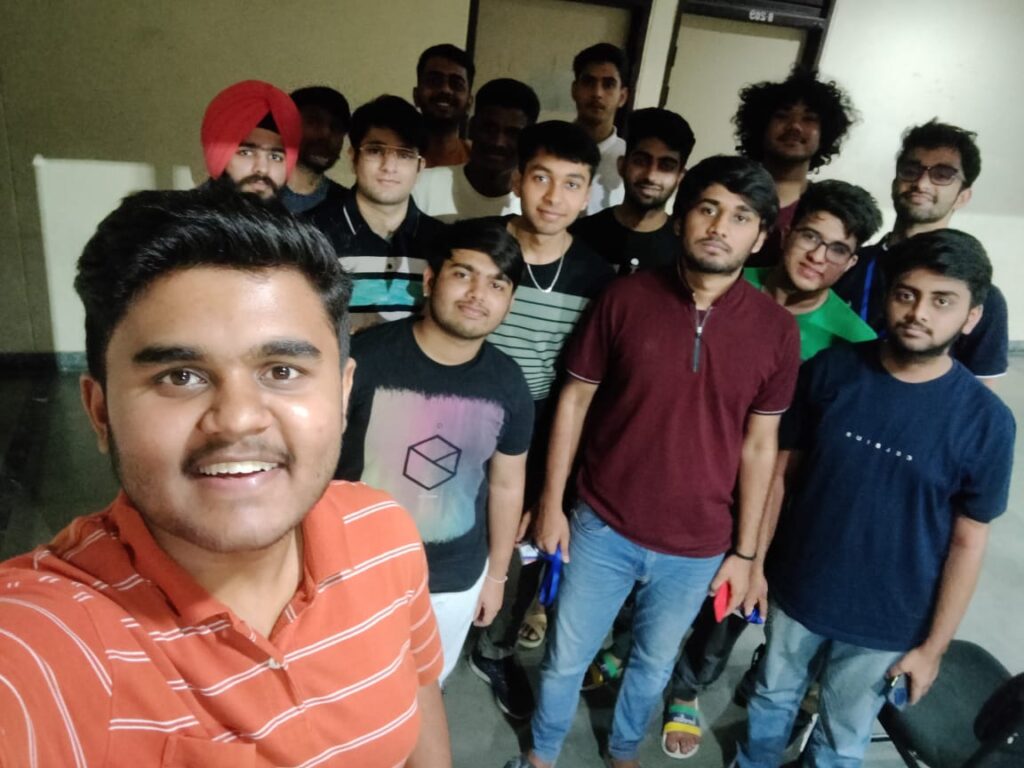
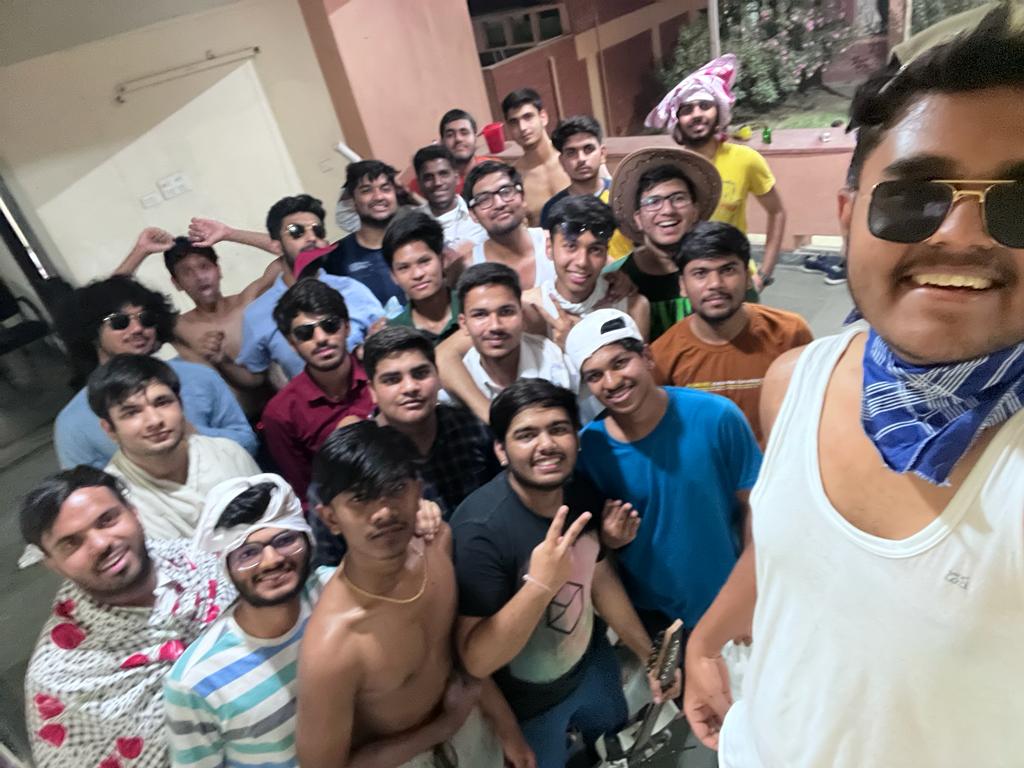
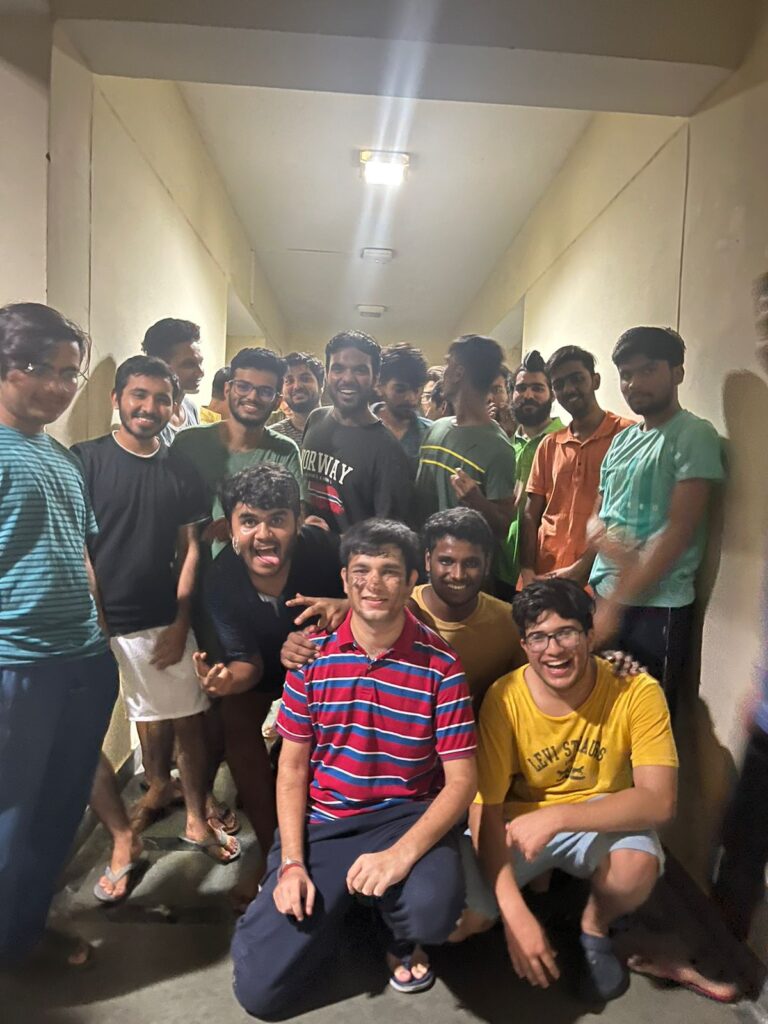
The end of my first year marked a major turning point in my journey at IITK: I became a part of IITK Motorsports. Initially, I was hesitant to join. The team had a reputation for intense work hours, and I was already grappling with a low CPI. But the idea of building an electric formula vehicle was just too exciting to pass up—and I hadn’t committed to any other club. I took the leap.
Over time, IITK Motorsports became an integral part of my life. I genuinely enjoyed the learning process—hands-on work, technical brainstorming, late-night discussions—it all felt meaningful. Our team participated in the Virtual Competition of Formula Bharat 2023, India’s version of Formula Student racing. I led the Business Plan Presentation sub-competition alongside four other Y21 members, and we bagged 1st prize among nine competing teams. We also secured 4th place in Design and won 1st place in the Virtual Electric category of the event. This experience was a huge confidence booster—not just for the team, but for me personally. It was the first time I felt like I was truly contributing to something impactful at IITK, and it ignited a fire within the team to set bolder goals, push our limits, and prove that with passion and perseverance, even a first-time electric team could make a mark. Initially, managing classes on campus was a bit challenging. I often found myself dozing off during lectures, still adjusting to the routine. But with some effort and persistence, I gradually found my footing. By the end of the third semester, my performance had improved, and so did my CPI—though it still wasn’t where I wanted it to be, it was a step in the right direction.
Around this time, we began working on the design of our first electric formula vehicle for Formula Bharat 2024, scheduled for January. I joined the Battery Subsystem team without hesitation—my interest in energy storage made the choice obvious. It was during this phase that I first met the late Prof. Nalwa to discuss the battery pack design. That meeting turned out to be another turning point for me.
I took the opportunity to express my interest in research and asked if I could work on a project under him. To my delight, he readily agreed and shared his vision of developing sodium-ion and fully solid-state batteries. I was thrilled. For the first time, I felt I was about to contribute to something I had always dreamed of—research in clean energy and battery technologies.
My introduction to lab work began with training sessions, where I became familiar with the functioning of various equipment. The lab consisted of a newly joined postdoctoral researcher and two first-year PhD students. Soon, I started working on solid electrolytes for sodium-ion batteries, which marked the beginning of my journey into research. I gradually began to understand how research is actually carried out—its pace, its challenges, and the patience it demands.
At the same time, things were picking up on the Motorsports front as well. The design phase was in full swing after our PoR transitions, and responsibilities were intensifying. Academics were going okay, but I found myself becoming increasingly invested in both my research and Motorsports work. Balancing all three—academics, research, and Motorsports—was a real test of time management.
I managed it for the most part, but then came a setback I hadn’t anticipated—typhoid. It struck me right around the end-semester exams. I knew the illness would prevent me from appearing in the re-exams later, so despite the fever, I attempted the regular exams while my symptoms were still somewhat manageable. But things worsened rapidly. I was in a terrible condition during the exams, and it reflected in my performance. What had been a promising fourth semester ended on a disappointing note.
I spent most of the summer break recovering from typhoid, which prevented me from taking up summer courses and completely cut me off from both research and Motorsports. I was consumed with guilt for not being able to contribute during a crucial phase when the team was transitioning from design to manufacturing. I had missed out on key decisions regarding the final design of the vehicle and the battery pack, which left me lagging behind in terms of understanding the finer details of the design and manufacturing process.
I returned to campus in July. Professor Nalwa wanted me to begin independent research on Li-O₂ batteries—a niche and highly specialized area in battery research. Although I had initially agreed to start work on it during the summer, my illness had prevented me from doing so. Upon returning, I found that the sodium battery project I had been working on was now taken over by newly joined research staff and postgraduate students. So, I began fresh with my new research direction.
Starting with an extensive literature survey—something I hadn’t done in such depth before—I slowly began building my understanding. Since Li-O₂ batteries aren’t conventional in design, I had to set up a completely new experimental system in the lab from scratch. Around this time, my third year began, which is often considered academically intense due to the complexity of core departmental courses. Simultaneously, the manufacturing phase of our electric vehicle began to pick up. The early part of the semester was relatively manageable, as we were still waiting on the delivery of the battery cells.
In the lab, my initial experiments with the Li-O₂ battery were met with repeated failures for several weeks—each time due to a different issue. But I persisted, and finally, towards the end of the semester, I successfully built my first functioning Li-O₂ battery. That moment was incredibly fulfilling. Reflecting on my past experience of poor balance between academics and extracurriculars, I had promised myself not to let academics suffer again. I stayed committed to that resolution, managing my time more effectively. Despite taking on eight courses—including several highly demanding ones—I performed well and ended the semester with relatively strong grades.
Most of the manufacturing for our vehicle took place in November and December—these were the most intense and demanding months for us in Motorsports. Our battery cells had arrived, and we had to build the entire battery pack in-house from scratch. With the competition approaching fast, I decided to pause my research work through November, December, and most of January to fully dedicate myself to the team.
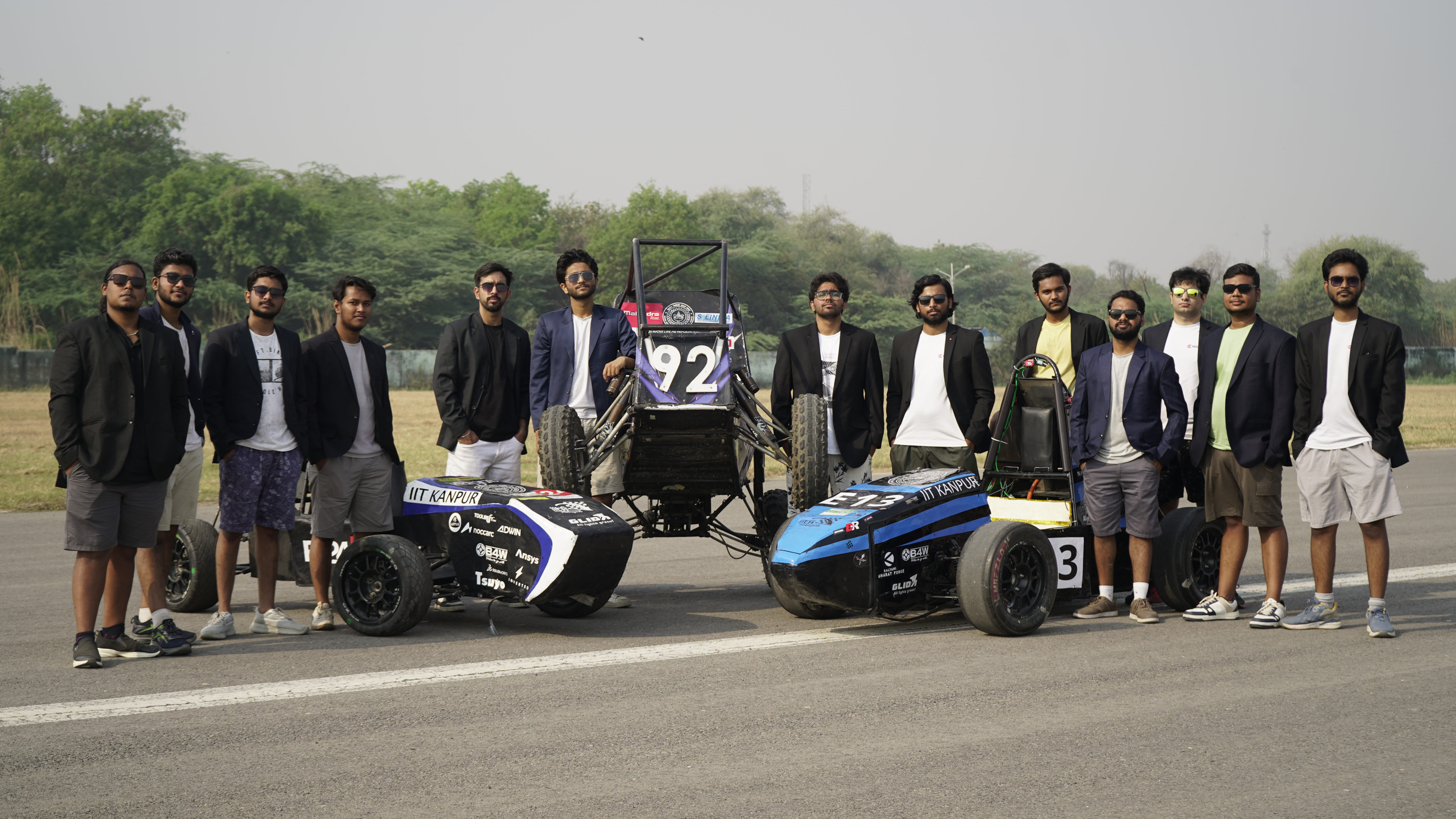
Everyone gave their all to get the car ready in time. I felt incredibly proud of what we achieved together, especially considering it was our first attempt at building an electric vehicle. We managed to finish the build just before the competition.
The sixth semester had just begun when our team (the Y21 batch) headed to Coimbatore to participate in Formula Bharat 2024, taking an SUGC-approved 10-day leave. The experience was immensely enriching. The judges reviewed our vehicle and provided valuable feedback, and we had the opportunity to interact with other teams, learning about their journeys and designs. Although we didn’t win, it was a great learning experience and something we’ll carry forward with pride.
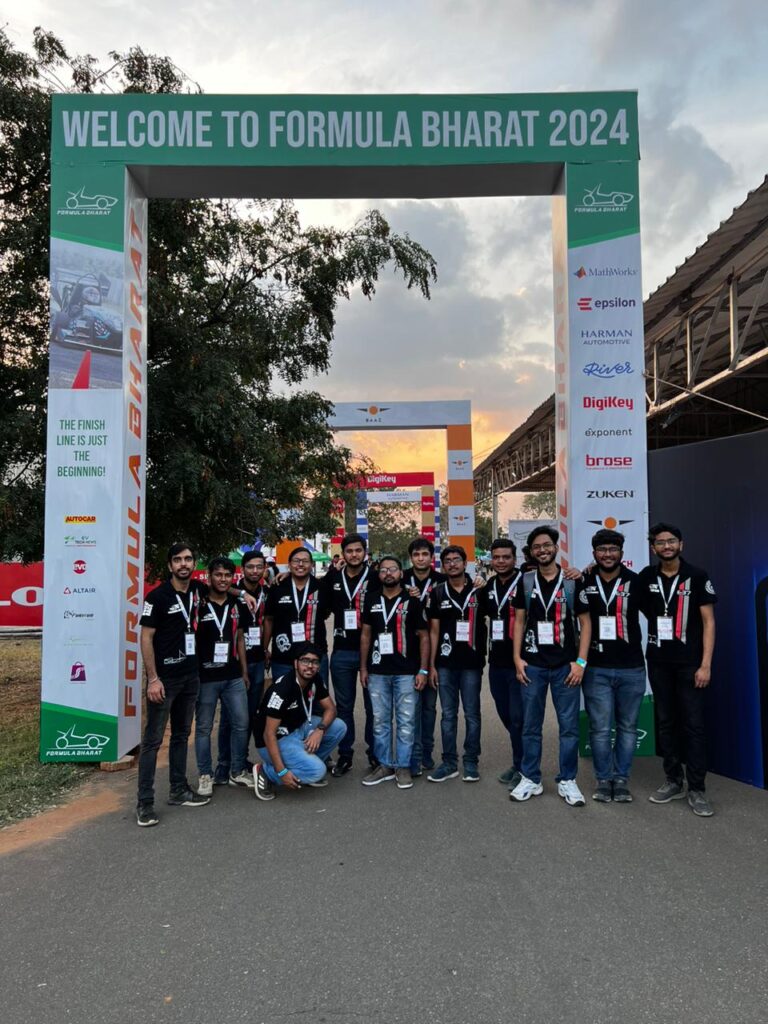
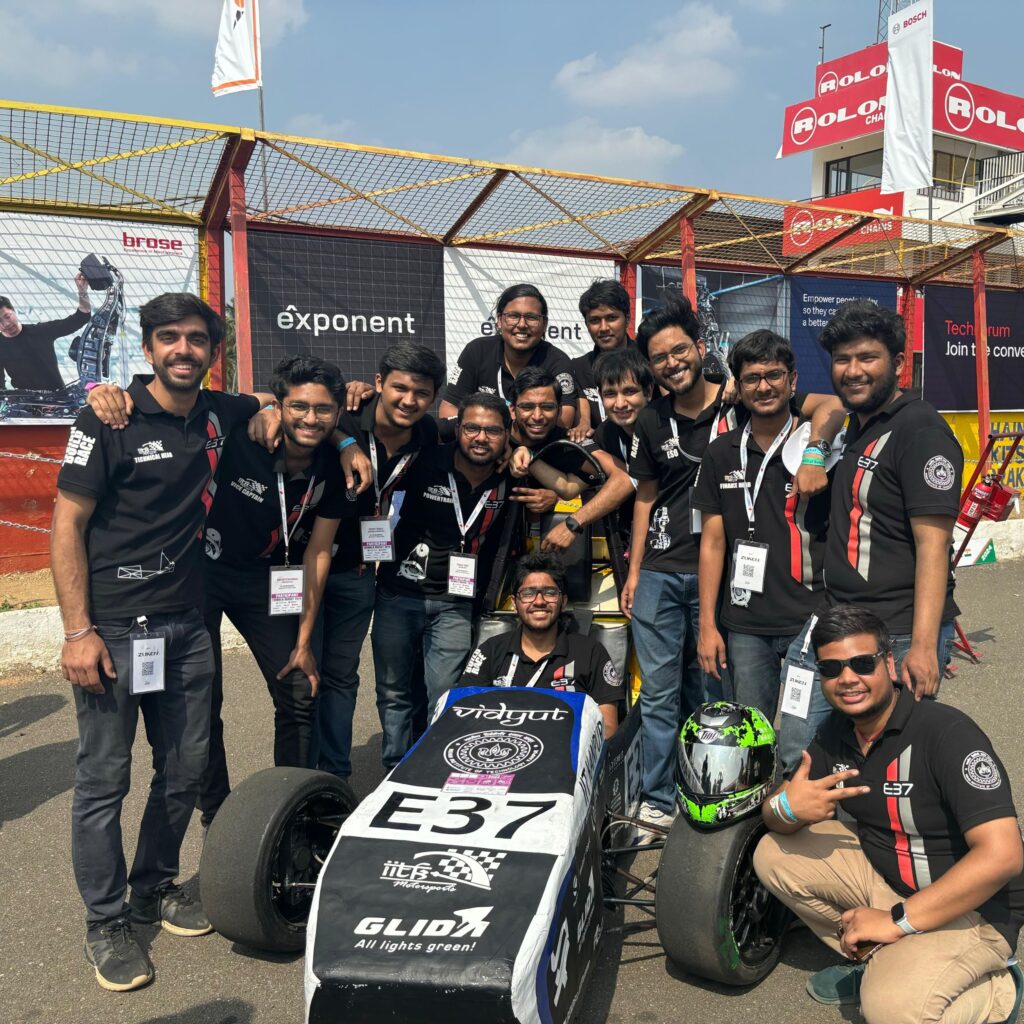
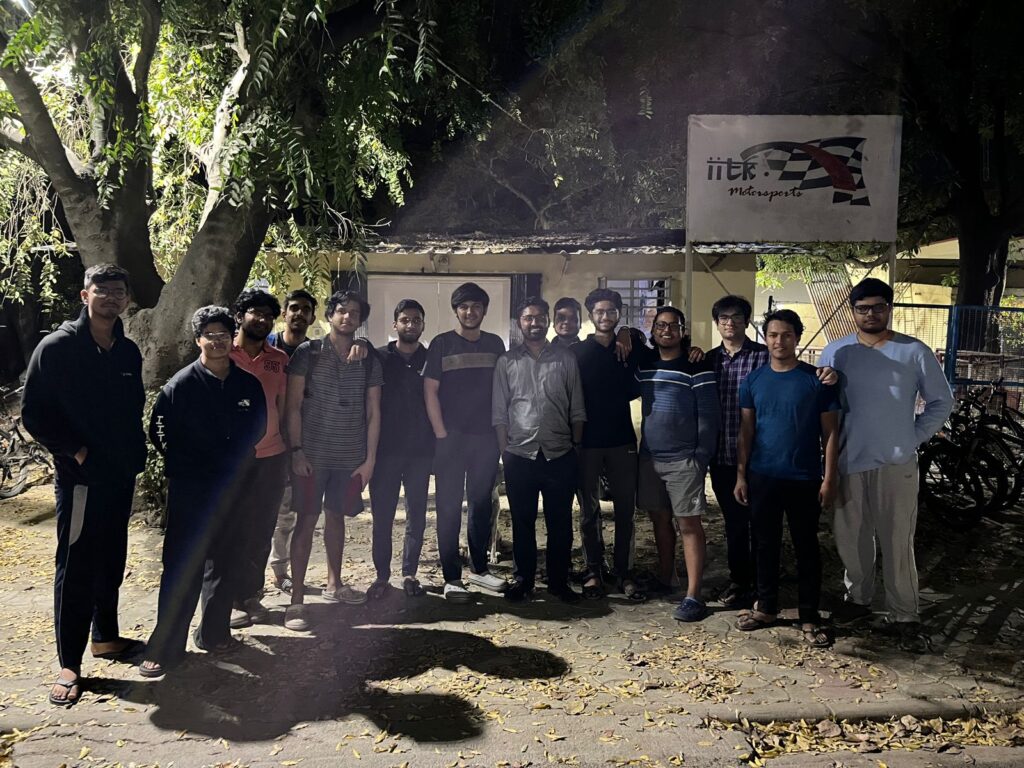
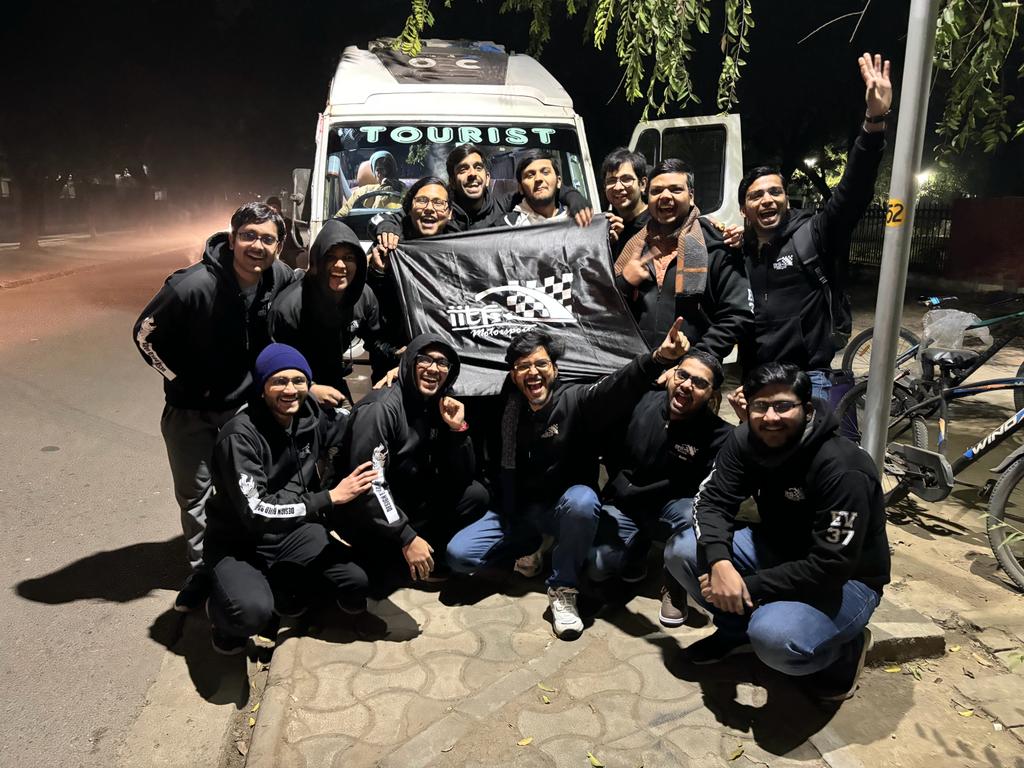
After returning to campus, we took some much-needed rest and gradually shifted our focus back to academics, which had taken a backseat during the competition phase. We concluded our journey as the core team by showcasing our vehicle in an open presentation to the campus community—an event that felt like a fitting closure to months of hard work.
With the project wrapped up, I resumed my research work after a three-month break. Around the same time, I was also serving as the Manager of MatSoc. Alongside the other managers, I helped organize several initiatives, including informative sessions for juniors, an orientation program for the Y23 batch, and the farewell for the Y20s.
Surprisingly, the semester went well academically—even though I felt I hadn’t given it my absolute best. It was a welcome boost after the challenges of the previous term.
From the middle of my fifth semester, I began trying hard to secure a research internship abroad for the summer break after my sixth semester in 2024. I explored several opportunities but faced repeated rejections, mostly due to my relatively low CPI—despite having meaningful research experience to show. I was so determined to get an international internship to strengthen my CV for graduate school that I ended up declining some decent off-campus offers that came my way, something I later came to regret.
Eventually, I decided to stay back on campus and focus on my research, which I hadn’t been able to pursue with full dedication in the recent past due to my other commitments. Things were going smoothly until tragedy struck in June—our lab mentor, Prof. Nalwa, passed away due to a cardiac arrest during a holiday trip. It was devastating. I had been very close to him and even traveled to his hometown to attend his last rites. The entire lab was in shock, and we were left uncertain about the future of our research and the lab itself.
After a period of silence and grief, most members of our Battery Lab, including me, continued their work under Prof. Sudarshan. Meeting him was a refreshing experience—he is calm, kind, and an outstanding researcher. I consider myself incredibly fortunate to have had two such mentors during my undergraduate journey.
Under the guidance of Prof. Sudarshan, my research took a new direction and gained significant momentum. As my final year began, I made a conscious decision to take the maximum number of credits possible to improve my CPI. At the same time, I aimed to publish my research, knowing how crucial it would be for strengthening my profile for higher studies.
With my involvement in Motorsports having concluded, I was finally able to focus entirely on academics and research. My research pace picked up again as I experimented rigorously to develop something novel and impactful from my battery project. The seventh semester turned out to be a personal milestone—I performed exceptionally well, achieving an SPI of 9.72 and raising my CPI to 7.7.
After months of trying different cathode materials and configurations to improve battery performance, I finally arrived at a promising result. The progress allowed me to prepare both a patent and a research paper. I wrote the entire patent draft, had it reviewed, and successfully submitted it by the end of December. Alongside this, I was also writing the manuscript for journal submission. However, the paper’s progress slowed somewhat as the lab’s attention shifted toward relocating from Sustainable Energy Department near Kargil Chowk to DJAC between December and February. The paper is currently under review.
Since my publication was still under review and my patent had only been submitted at the end of December, I knew I couldn’t apply for a PhD in the US with a strong enough profile—most US PhD deadlines are in early December. I considered mentioning the ongoing publication and patent work in my applications, but I also knew that merely stating “in progress” doesn’t always carry weight.
At the time, I didn’t anticipate that delays would prevent my paper from being sent for publication for quite a while. Regardless, now my main focus was on securing a postgraduate admission from the UK, Germany, Singapore or Australia. Looking at the current situation in the U.S. regarding visa uncertainty and research funding cuts, I now feel that missing out on U.S. university deadlines may have been a blessing in disguise which my supervisor also agreed to.
Although I received an offer of admission from Oxford, the project did not come with departmental funding, and I chose to decline it rather than pursue the financially demanding self-funded route. I was also offered admission to Imperial College London for a fully funded PhD project. While my supervisor was supportive and nominated me for departmental funding, I was informed that the department chose not to move forward with the nomination, likely due to my undergraduate status. I am still exploring any possibility of resolving this, but unless alternative funding becomes available, the likelihood of joining Imperial remains uncertain. In parallel, I have also applied to graduate programs in Germany, Singapore, Ireland, and Australia for both Master’s and PhD opportunities. If the Imperial position does not materialize, I plan to pursue one of these options to continue my academic journey in energy storage research.
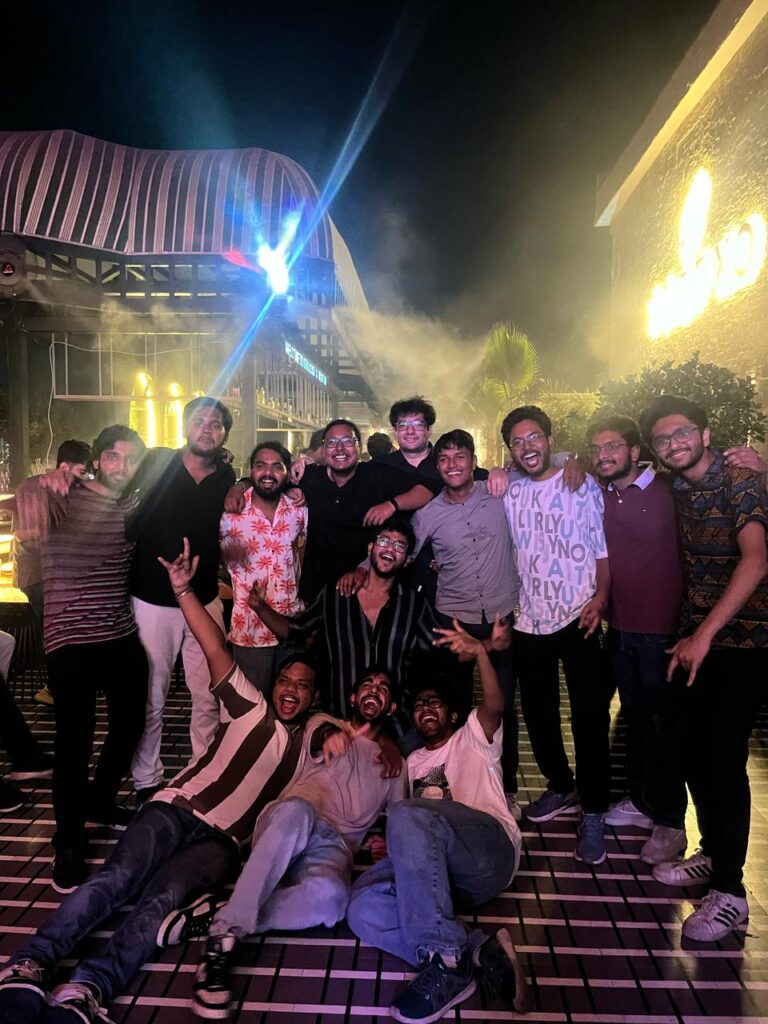
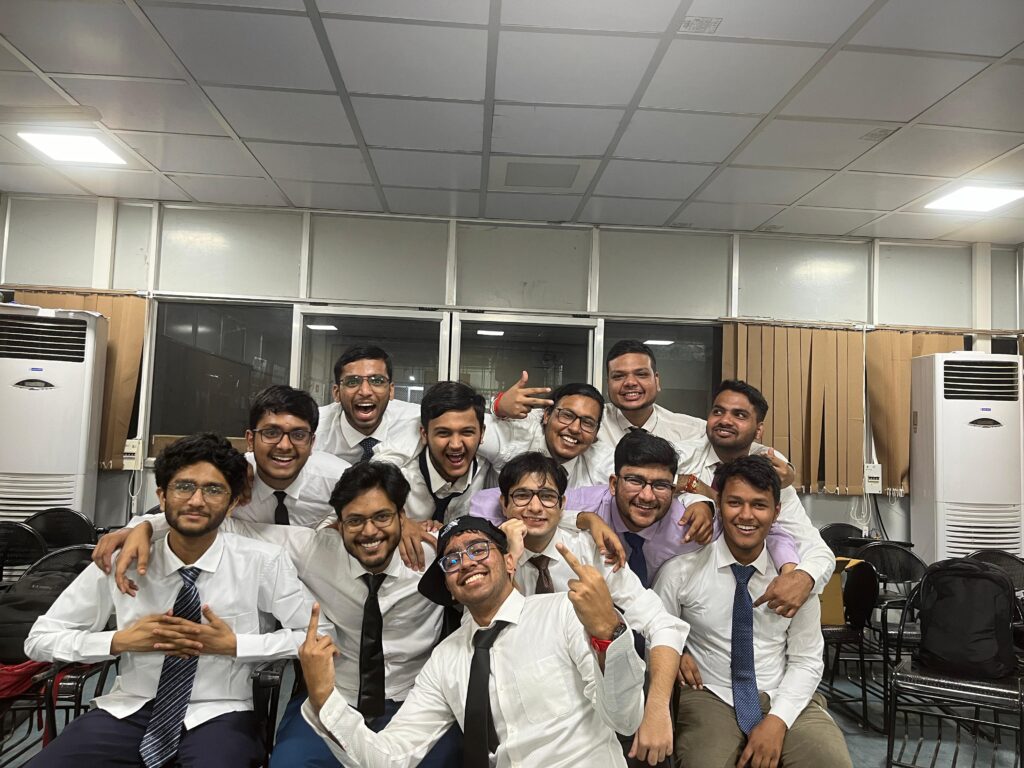
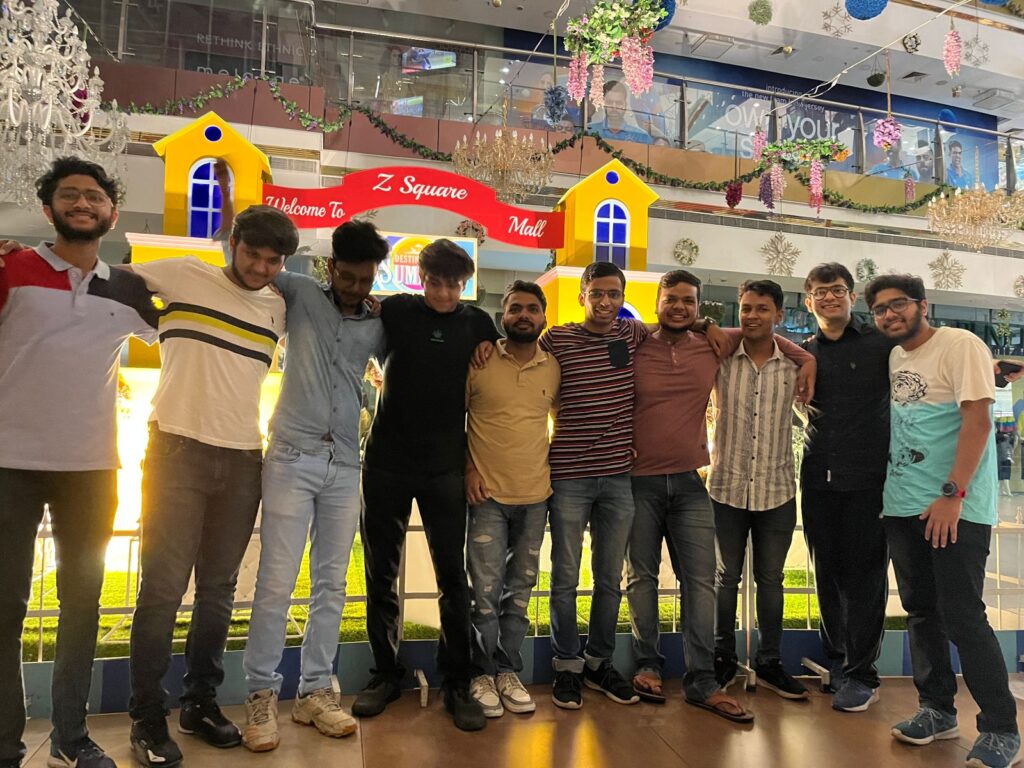
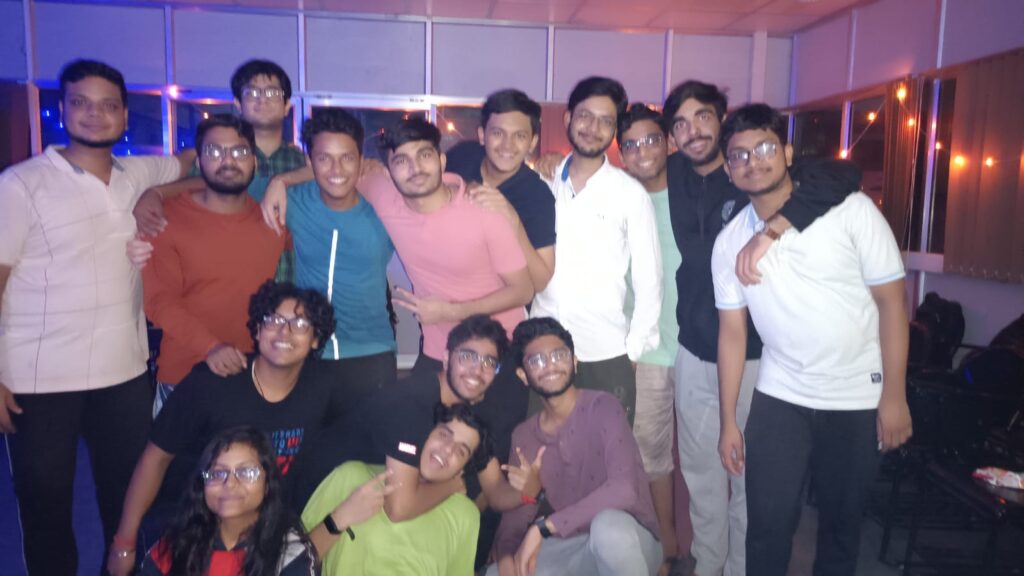
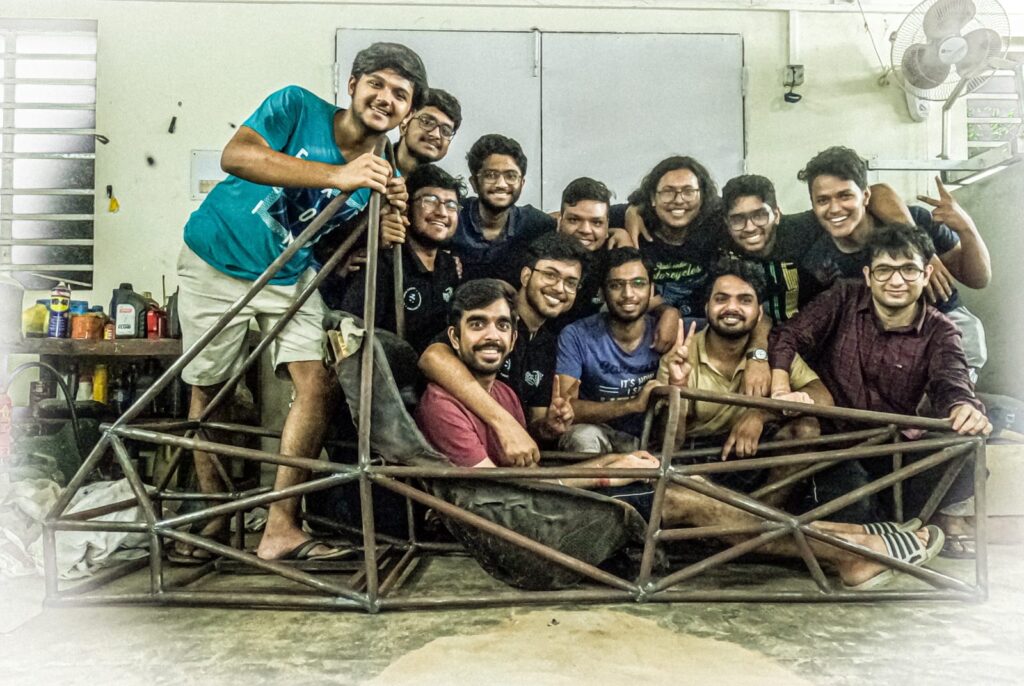
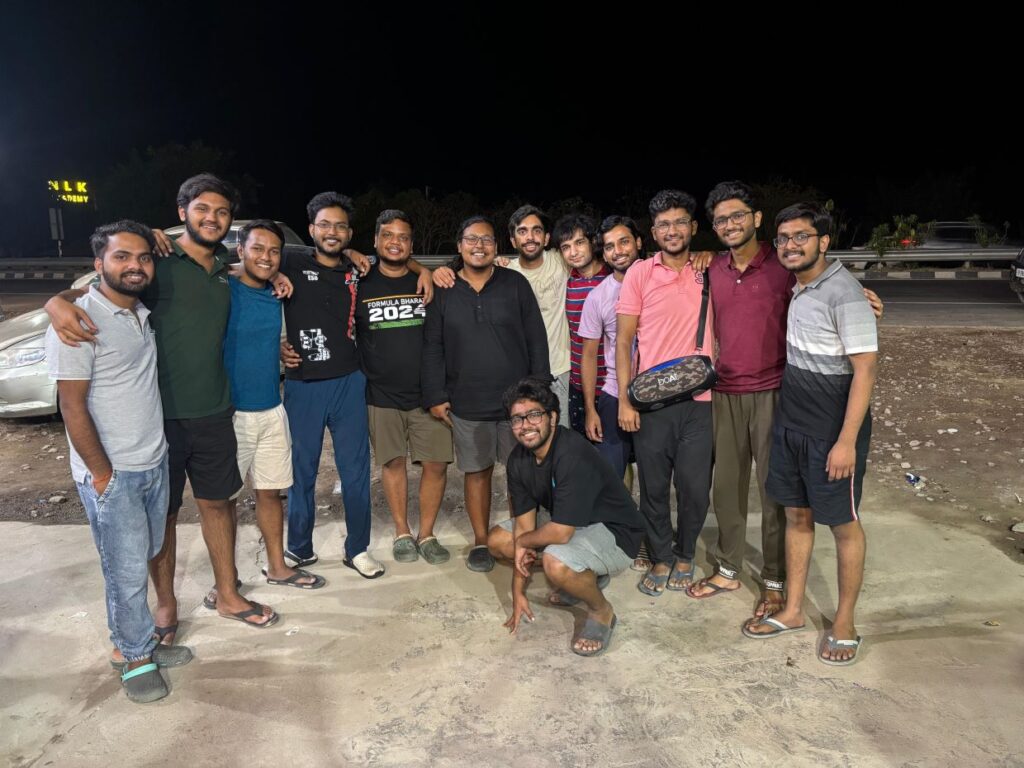
I know I haven’t touched much on my social life at IITK in this story, and for that I apologize. I truly did enjoy my time here—the friendships I’ve built, especially with my Motorsports team members, have been nothing short of family. We weren’t just building an electric vehicle; we were building trust, resilience, and a bond forged in the fire of shared struggle. From countless late-night discussions and long hours in the workshop, to pushing through moments of doubt, frustration, and exhaustion, we stood by each other like a real team, other times silently working through problems no textbook could solve. The energy of campus fests, the adrenaline of competition, and the quiet pride of seeing our car take shape—these are memories that will stay with me forever, etched not just in my mind, but in who I’ve become.
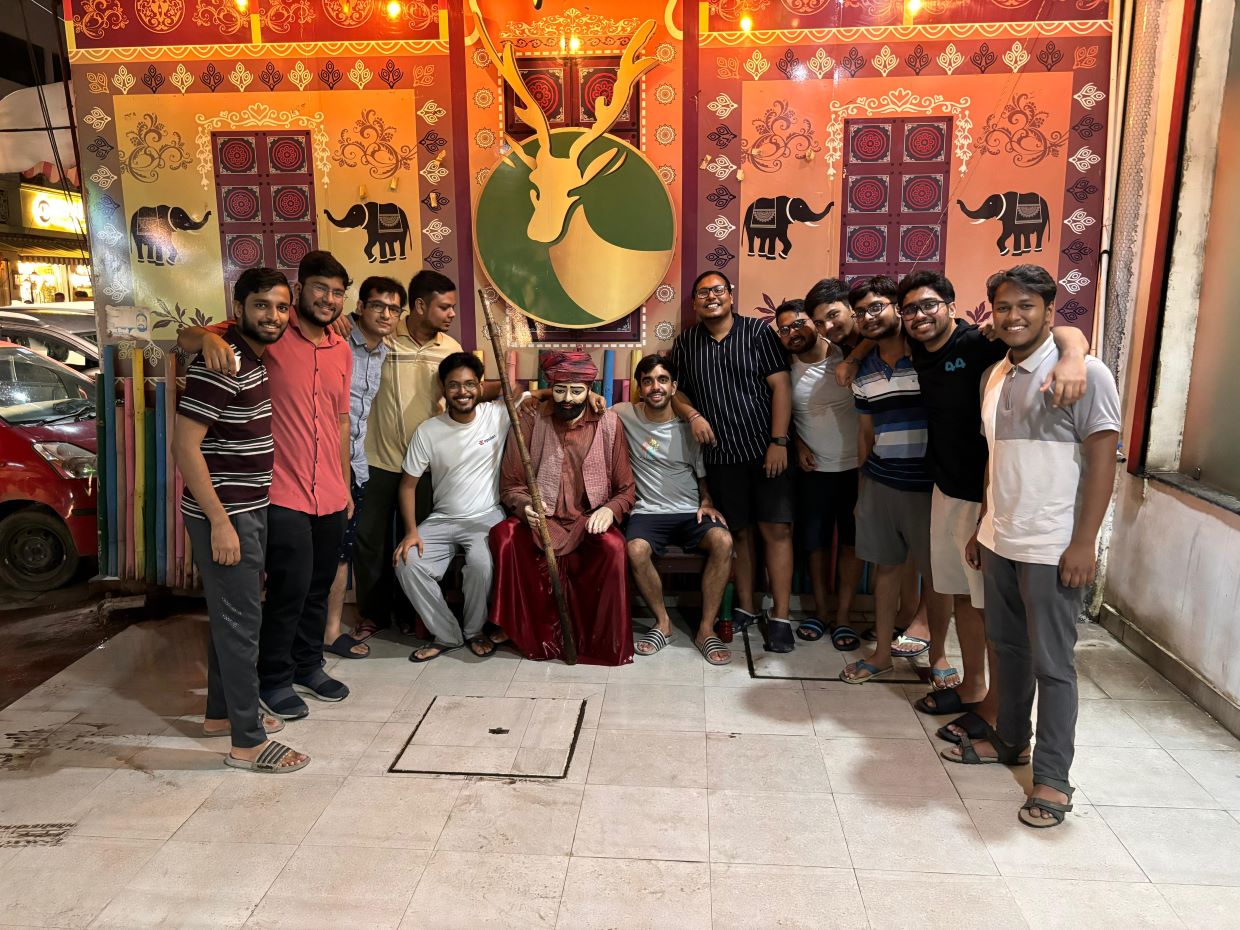
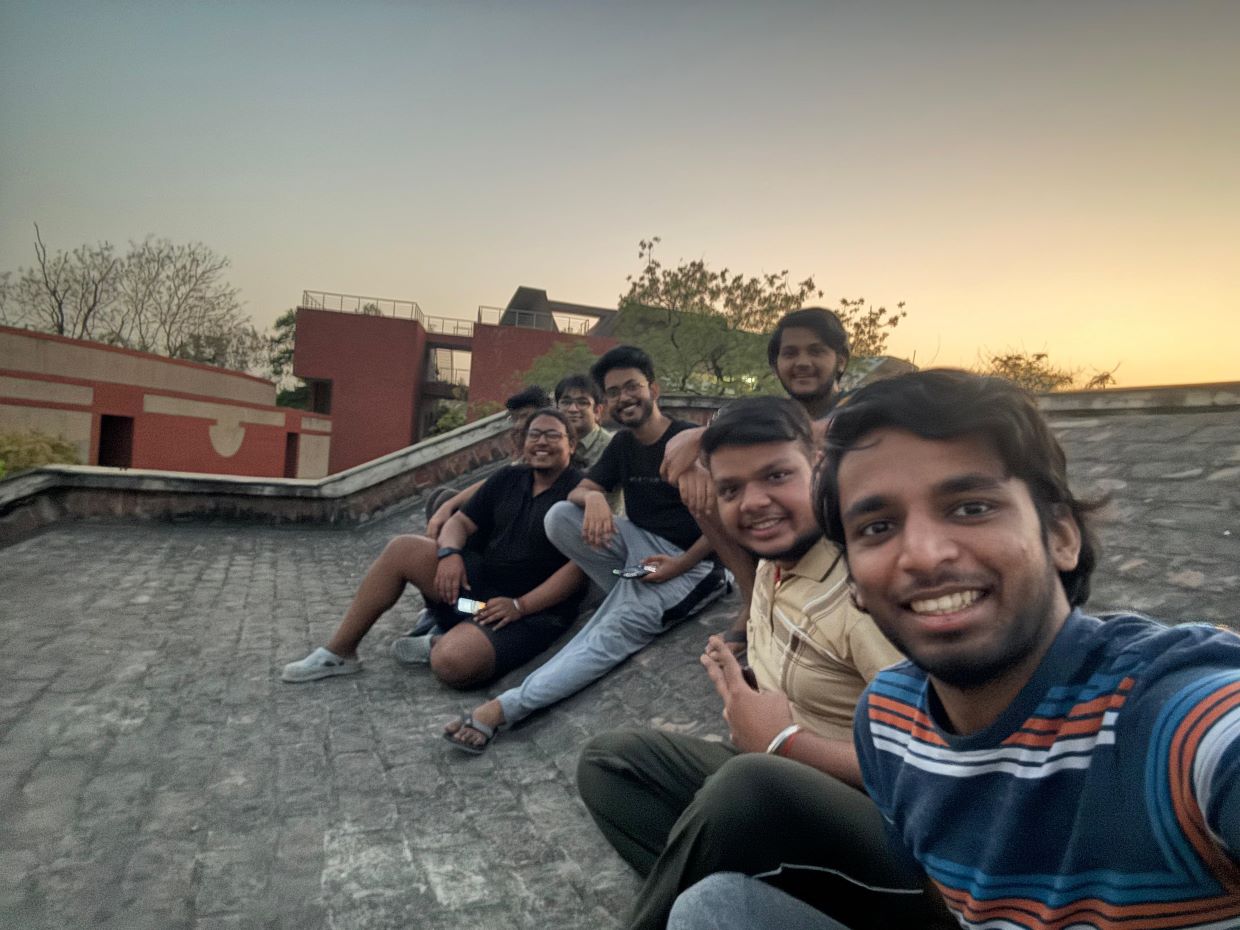
But the core of this story is about my academic journey, the research that shaped me, and the unforgettable adventure that was Motorsports. I hope it speaks to someone out there—someone who’s stumbled early in their college life, who feels like a rough beginning has slammed the door shut on future possibilities. If you’re in that place, let me tell you: it’s not over. You are not your GPA, your first few semesters, or the failures you think define you. What matters is how you rise, how you grow, and how fiercely you choose to move forward.
Because if there’s one thing this journey has taught me, it’s this: setbacks don’t define you—your response to them does. And sometimes, the most powerful comebacks are born quietly, one small step at a time, fueled by belief when no one else is watching.
And if I had to sum it all up, I’d turn to a line from The Dark Knight Trilogy, spoken by Alfred:
“Why do we fall, sir? So that we can learn to pick ourselves up.”
Written by: Ridhav Arora
Edited by: Anubha Jaiswal, Dhriti Barnwal
Designed by: Pankhuri Sachan, Pragya Puri