![[Not So] Little Women](https://voxiitk.com/wp-content/uploads/2026/09/WhatsApp-Image-2026-09-28-at-19.21.06-240x300.jpeg)


Disclaimer: Vox Populi, IIT Kanpur, is the exclusive owner of the information on this website. No part of this content may be duplicated, paraphrased, or interpreted in any other way without written consent from Vox Populi. If you want to reproduce any of the content on this page, please contact our chief editors directly or reach out to us by email at voxpopuli@iitk.ac.in.
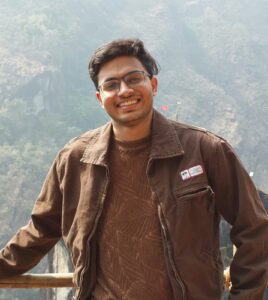
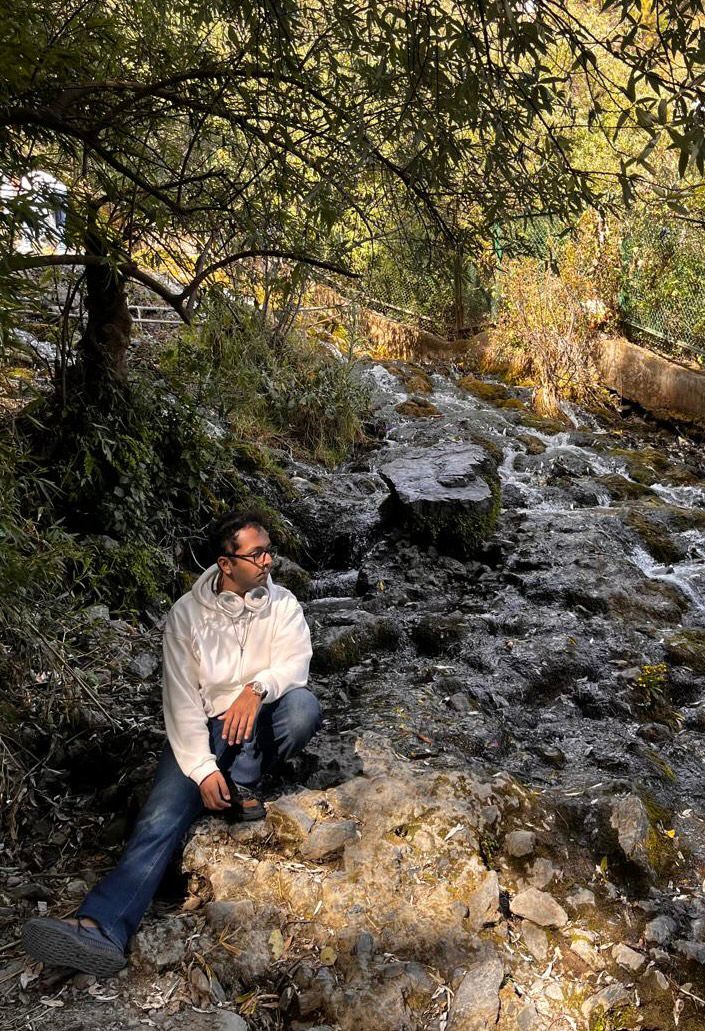
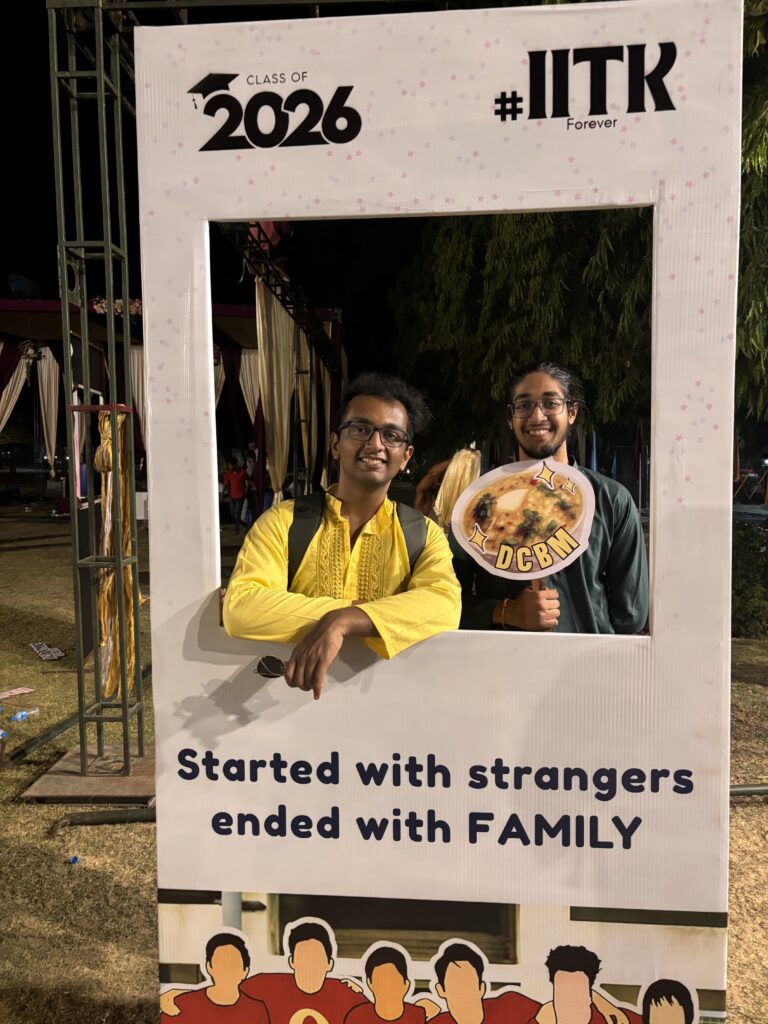
In this edition of As We Leave, Zehaan Naik, a Y22 student in the Department of Statistics and Data Science, shares a look back at his years at IITK. He reflects on a transformative journey, from a time when he kept people at arm’s length to protect himself, to finding a community through late-night debates and shared dorm life. It’s a story about learning to be vulnerable, embracing the messy beauty of close friendships, and discovering that, despite his initial reservations, he truly belonged.
Disclaimer:- The views presented below are the author’s own and are not in any manner representative of the views of Vox Populi as a body or IIT Kanpur in general. This is an informal account of the author’s experiences at IIT-K.
For overthinkers like me, different places have different silences. If you travel to my home city of Surat, I’ll take you with me to sit by the beach and listen. The breeze would follow us back home. When you are sitting quietly, she will chime in, add to your thoughts, and keep you company. I later found out she was a bit more homesick than I was. I left, and she stayed.
A lot has changed. Enough that I suspect the boy who arrived at IIT Kanpur and the person writing this now would struggle to hold a conversation for very long.
Back then, I liked familiar roads, familiar people, familiar versions of myself. New things carried an invisible tax: they required me to be bad at something, awkward around someone, uncertain about where I belonged. So I became very good at staying within the boundaries of what I already knew.
The same was true for people.
I loved conversations, but only the kind that ended before they became real. I was comfortable collecting acquaintances, exchanging stories, sharing laughs, and then retreating before anyone got close enough to see the parts of me I hadn’t figured out myself. Opening up felt risky. It invited judgment, misunderstanding, and disappointment. It meant surrendering control over how others saw me.
Most of all, it carried a possibility I tried very hard not to think about.
Because if I let people matter, they could leave.
I had already spent the first eighteen years of my life building a world that suddenly felt hundreds of kilometers away. Somewhere between leaving home and arriving at IIT Kanpur, I had convinced myself that distance was simply what happened to the things you loved. So I learned to keep people at arm’s length. Not because I disliked them, but because caring seemed expensive.
Unfortunately for my carefully constructed theory of human relationships, IIT Kanpur is a terrible place to be alone.
The hostels are designed such that help, friendship, and occasional unsolicited life advice are rarely more than a few meters away. Your wing knows when you have an exam, when you’ve had a bad day, and somehow, (ALWAYS) when you’ve ABSOLUTELY ANY FOOD ON YOU! Doors stay open. People wander in. Conversations begin accidentally and end three hours later. The campus conspires against isolation in other ways, too. There is always something happening. A club meeting, a competition, a practice session, the great bulla (which the newer batches have somehow convinced themselves is something to be planned!!). And if you spend enough time around people, something unexpected happens. The performance becomes exhausting. Sooner or later, the carefully rehearsed version of yourself misses a cue. A conversation goes deeper than planned. Someone notices that you’re not having a great week. Someone asks a question and waits for the real answer.
I was lucky with the people.
For reasons I still don’t entirely understand, they tolerated me long enough to see through all the defenses. They listened patiently to overthought problems, challenged ideas that deserved challenging, celebrated victories that probably didn’t deserve celebrating, and refused to let me disappear into the elaborate labyrinth of my own making. Little by little, they made caring seem less expensive. They made loving easy.
Looking back, the changes themselves were almost embarrassingly small.
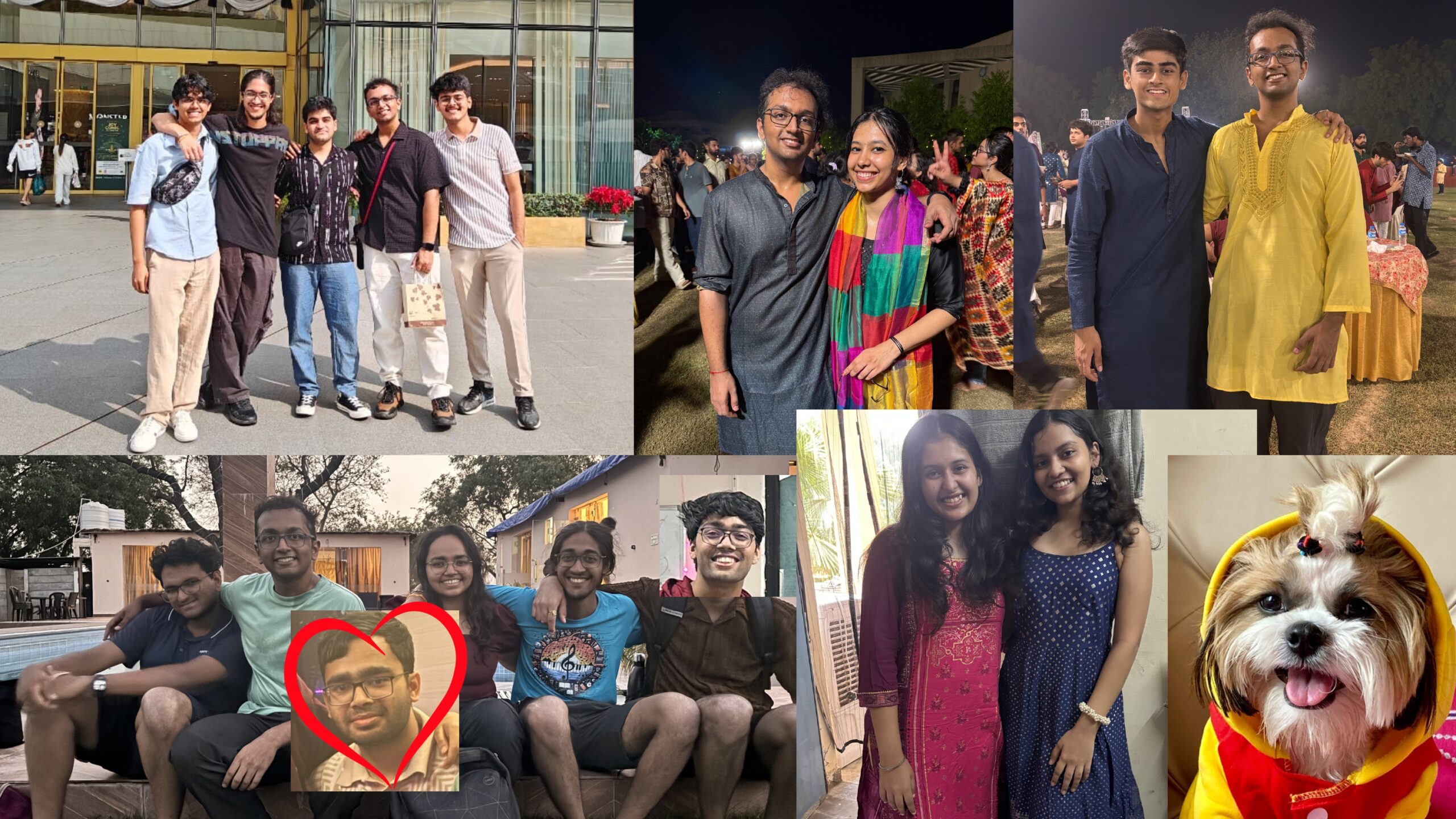
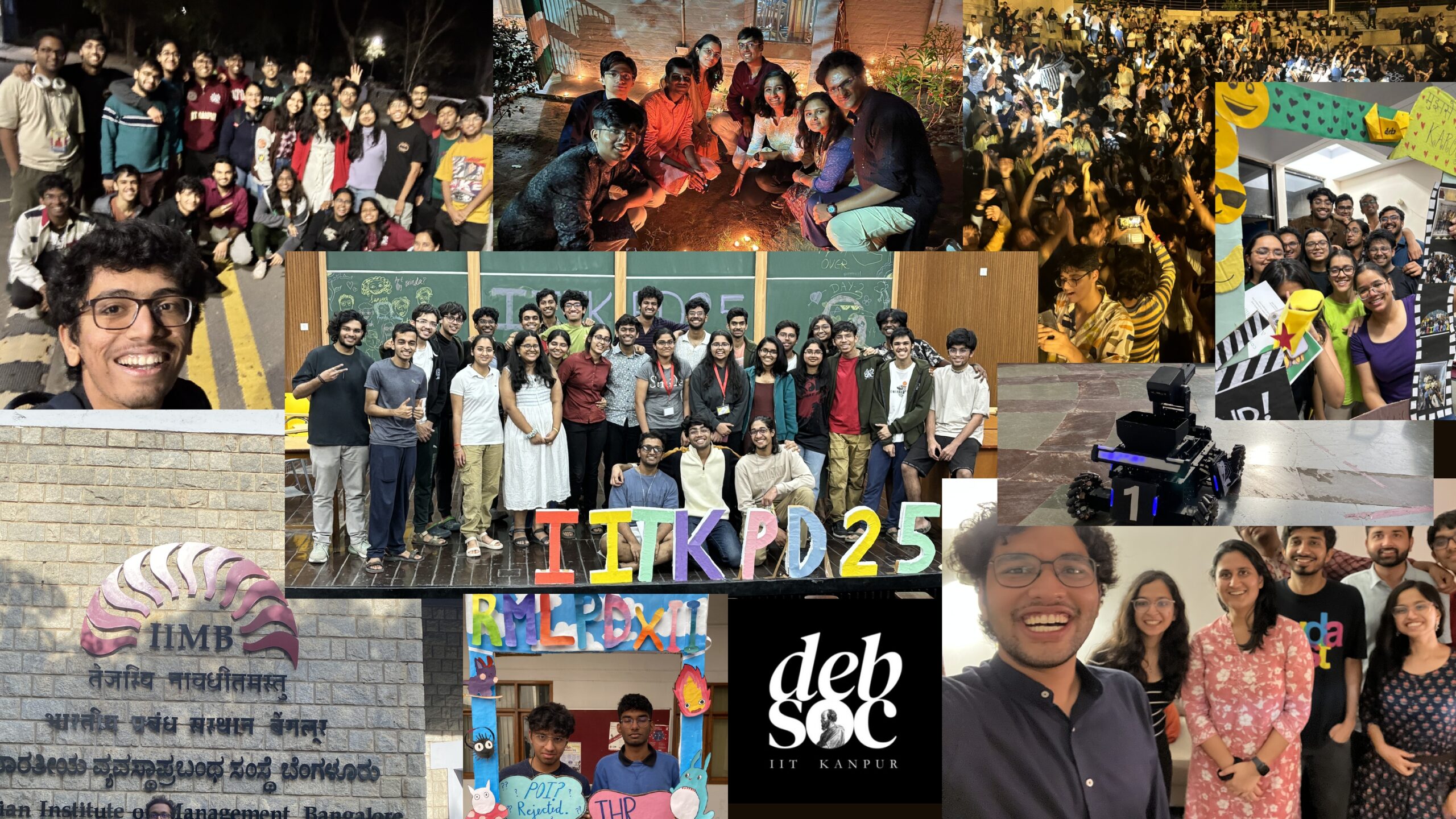
Second year, I decided to share a room with Aditya. We could not have been more different if we had tried. I liked my space. He treated personal space as an interesting suggestion. People came by, a new concept for me. People dropped by unannounced, stayed longer than intended, and somehow made themselves comfortable. One of them was Gupil, who contributed significantly to my character development by stealing an alarming number of KitKats. Somewhere down the line, this started feeling natural. I started waiting for the next time someone would drop by, the next banter, the next hilarious story.
Another time, I decided to stay up late.
For most of my life, I had considered sleep schedules a personality trait. Then debating happened. Suddenly, the day was ending when the best conversations were just beginning. Discussions stretched into midnight, midnight stretched into 2 a.m., and before I knew it, I was taking late-night walks with friends, discussing everything from existential crises to where we should eat next. Somehow, those walks led me to the gym. To this day, I cannot fully explain that transition, but my wing seemed to consider ever-increasing muscle pump as the natural conclusion to all philosophical inquiry.
And somewhere along the way, I learned to celebrate.
There were parties, questionable decisions, and enough alcohol to ensure my liver deserves an honorary degree from this institute. But what I remember most is not the drinking. It was the laughter. The stories that somehow become funnier every time they are retold. The feeling of belonging to a group of people who were happy simply because you were there. None of these felt important at the time. They were just trivial things. Yet somehow, those small decisions changed me more than any grand plan ever would’ve.
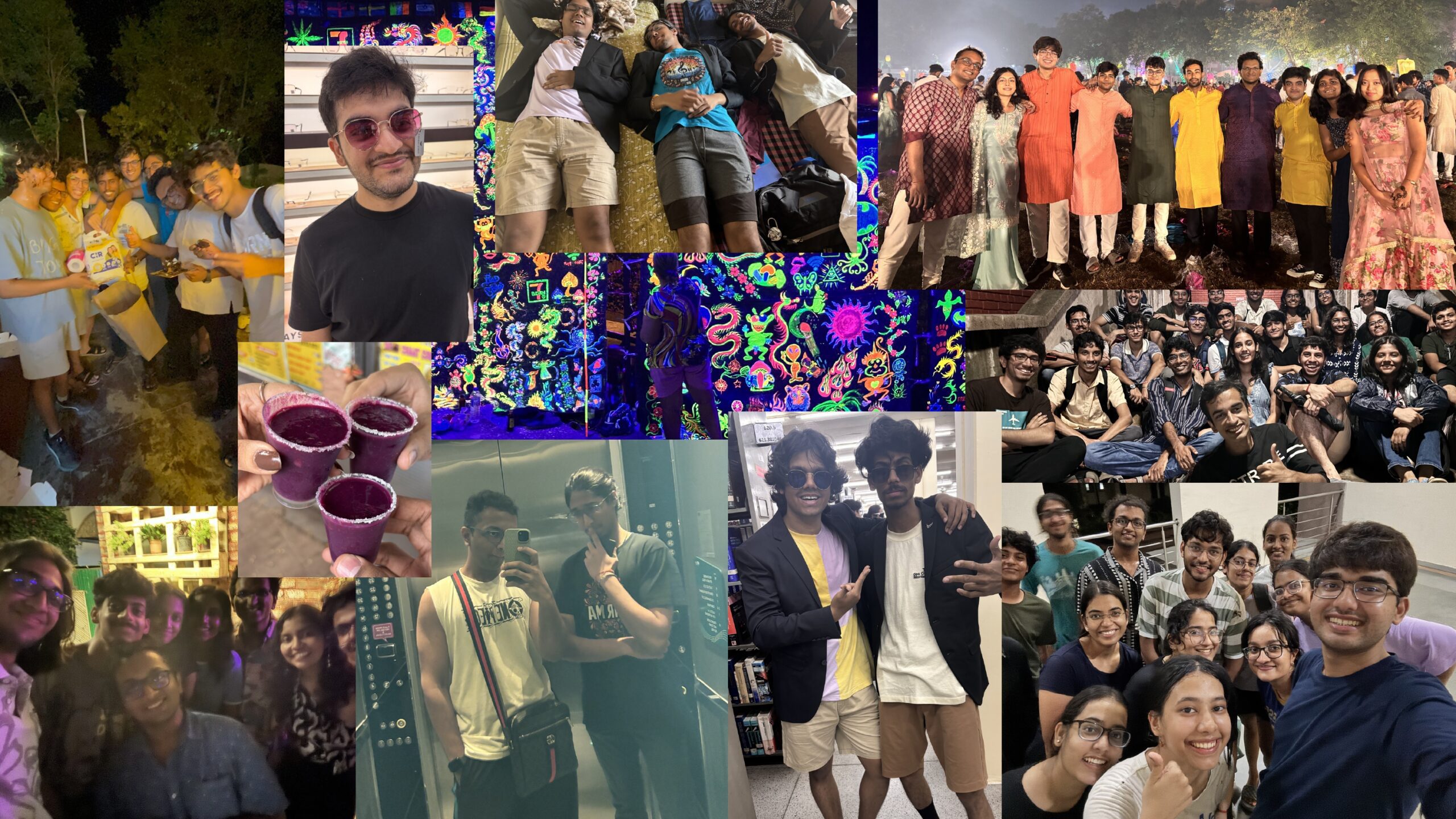
What followed was not some grand transformation. I simply started saying yes more often.
One thing led to another, and before I knew it, I had fallen deeply in love with research. A summer in Bengaluru working with professors from IIM, my first publication, and eventually an acceptance into the PhD program I had dreamed about for years. I went down a path of uncertainty that a few years ago I couldn’t even dream of.
The same thing happened with DebSoc. What began as a club became a home. I became its coordinator, traveled to more tournaments than I care to count, started a few initiatives that I am still proud of, and met some of the finest people I know. Somewhere along the way, juniors became friends, family really, and good conversations became some of the most valuable things I carried away from college.
I found myself writing more, too. Performing more. Speaking more. As an editor, I wrote a lot more about the topics I cared about, argued about academic policy, complained about academic policy, and occasionally convinced myself that the difference between those two activities was meaningful.
Of course, it wasn’t always sunshine and rainbows along the path.
For someone who once struggled to let people in, I occasionally overcorrected. I held on too tightly. I cared so deeply about certain people, projects, and ideas that I sometimes suffocated them – or myself. There were semesters where my academics suffered because I became obsessed with problems I could not solve and ambitions I could not put down.
I loved someone dearly and learned, unfortunately, that love does not come with guarantees. I lost friendships that I thought would last forever. I failed, (A LOT) more than once, to live up to the standards I had set for myself.
But somewhere along the way, I realized that these disappointments were not evidence that I had cared too much. They were evidence that I had cared at all.
The old version of me would have avoided many of those mistakes. He would have protected himself from some of the heartbreak, some of the embarrassment, some of the loss.
He also would have missed almost everything that made these years worth remembering.
Which brings me back to change.
For the longest time, I thought change was something you achieved through discipline, intention, or sheer force of will. Instead, I found it hiding in hostel corridors, club rooms, late-night walks, badly planned trips, and loooooong long conversations.
I was lucky.
Lucky to find friends who stayed long enough to challenge me, support me, laugh at me, and occasionally save me from myself. Lucky to find mentors who saw potential in me long before I did. Lucky to find people who rooted for me, looked after me, and reminded me, time and again, that I belonged here.
I owe far more of who I am today to those people than I could ever properly put into words.
And I owe a great deal of that to IIT Kanpur.
Not because it gave me answers, but because it gave me room to ask questions. Not because it made me into someone else, but because it gave me the freedom to become more fully myself.
I hope IIT Kanpur continues to be that kind of place. A home for curious people, ambitious people, confused people, and troubled souls. A place where someone can arrive carrying all their fears, all their uncertainties, and leave having discovered parts of themselves they never knew existed.
As for me, I think the breeze from Surat would quite like it here.
After all, she always did enjoy good company.
Written by: Zehaan Naik
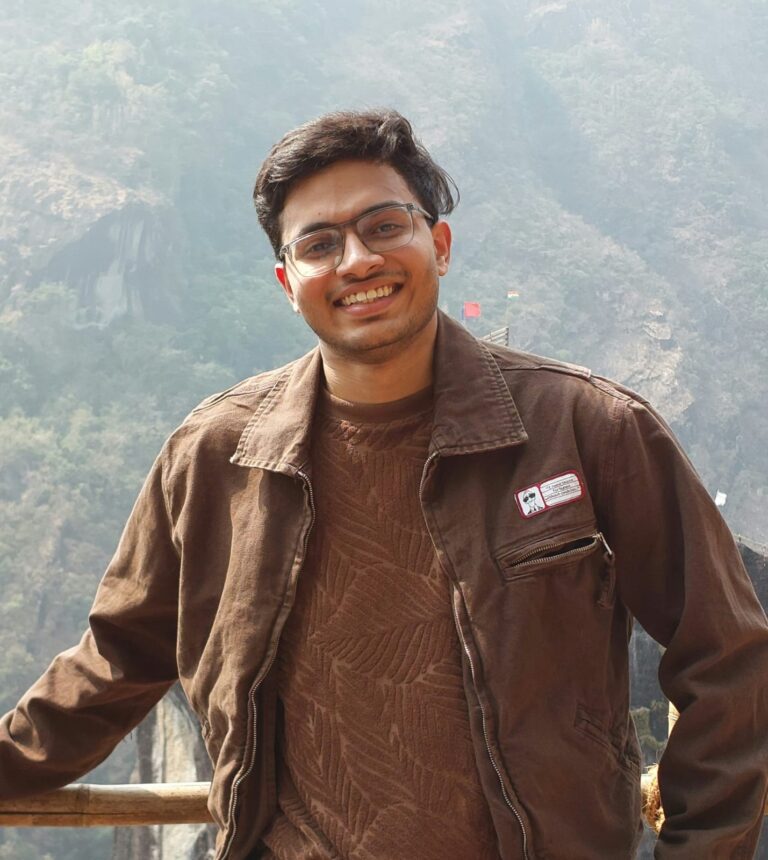
Edited by: Aditi Kesari, Krishna Khetre


![[Not So] Little Women](https://voxiitk.com/wp-content/uploads/2026/09/WhatsApp-Image-2026-09-28-at-19.21.06-768x960.jpeg)