![[Not So] Little Women](https://voxiitk.com/wp-content/uploads/2026/09/WhatsApp-Image-2026-09-28-at-19.21.06-240x300.jpeg)


Disclaimer: Vox Populi, IIT Kanpur, is the exclusive owner of the information on this website. No part of this content may be duplicated, paraphrased, or interpreted in any other way without written consent from Vox Populi. If you want to reproduce any of the content on this page, please contact our chief editors directly or reach out to us by email at voxpopuli@iitk.ac.in.
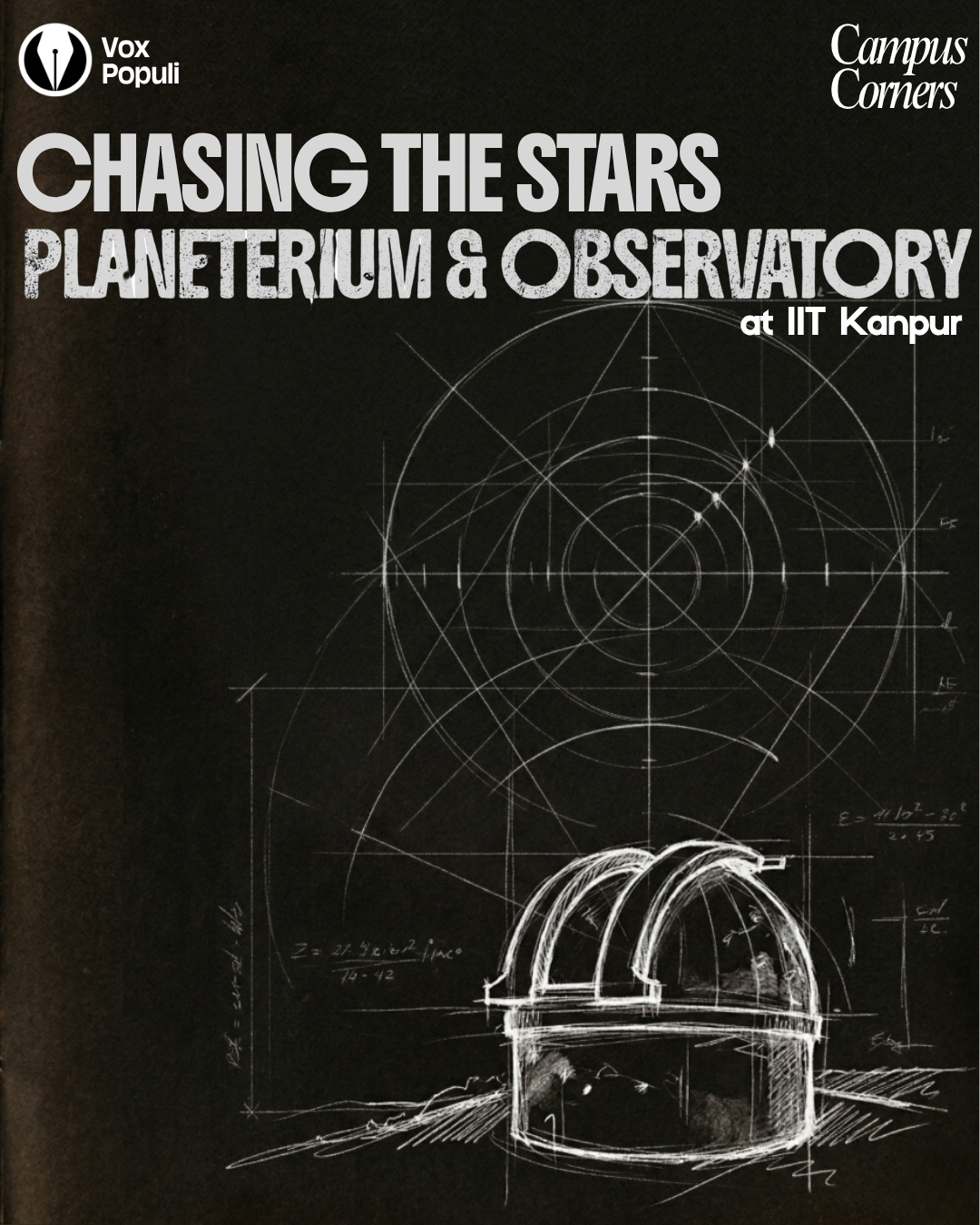
We have an observatory and a planetarium on campus, facilities that only a handful of institutions can claim, and fewer still can say were entirely student-built and student-operated. These are familiar but largely unexplored spaces for most of the campus community. Most of us walk past them without a second thought. How do they actually work? How did students pull them off on a shoestring budget? And how did any of this end up in the Asia Book of Records?
Planetarium
In the early 2010s, the technical clubs at IIT Kanpur showcased dynamic projects, such as moving robots or flying aircrafts. In contrast, the Astronomy Club operated in a very different space and had a visibility problem. Its achievements were often observational, such as tracking celestial objects like Saturn, which were less demonstrable in a conventional sense. Despite having members with strong interests, technical ability, and enthusiasm for the subject, it was challenging to present this work in a way that resonated widely on campus. This challenge was compounded by Kanpur’s environmental conditions, such as severe light and atmospheric pollution, which significantly restricted opportunities for meaningful sky observation.This was both frustrating and hindered their ability to attract new members. Faced with these challenges, the team arrived at a realization that they would have to “create their own sky” if they wanted to sustain and grow their work.
With this vision in mind, the Y9 batch students proposed a practical solution to construct a planetarium during the summer following their second year, at a time when online resources and technical documentation were scarce. The project involved multiple stakeholders but was led primarily by Akshat Singhal, Nidhi Pashine and Shubham Gupta, who were the club coordinators during that period. The proposal was initially pitched to the then Science and Technology General Secretary, Pulkit Agarwal, and received strong backing from Abhinav Pratik in the subsequent tenure. With much of the work carried out during his term, his support proved instrumental in securing both initial funding and institutional approval.
What was initially envisioned as a 15-day assembly project quickly evolved into a prolonged and demanding process of trial and error. The team counted every nut, bolt and PVC pipe, requesting a ₹20,000 budget, deliberately over-projected since they knew the institute might only approve a fraction of it.
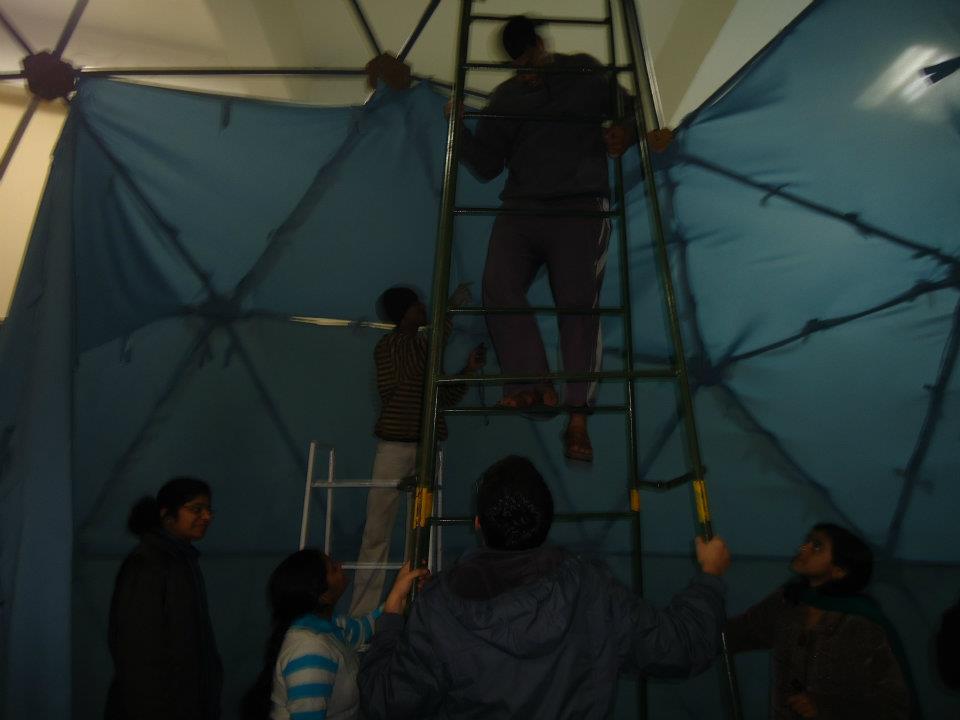
Early designs were riddled with flaws, often collapsing under their own weight during construction. The challenges extended beyond design. Translating theoretical engineering concepts into practical implementation in Kanpur’s local markets proved difficult. In the pre-smartphone era, sourcing specific components such as wing nuts required navigating language barriers and limited information access. Students eventually learned to abandon textbook terminology and adopted local descriptions to procure materials effectively. As the project progressed, they applied concepts from their TA101 Engineering Drawing course in a real-world setting for the first time, using it to transform failing prototypes into a stable structure. The local carpenter used to have no clue what a planetarium was; they had to show him the design using front, top, and side views.
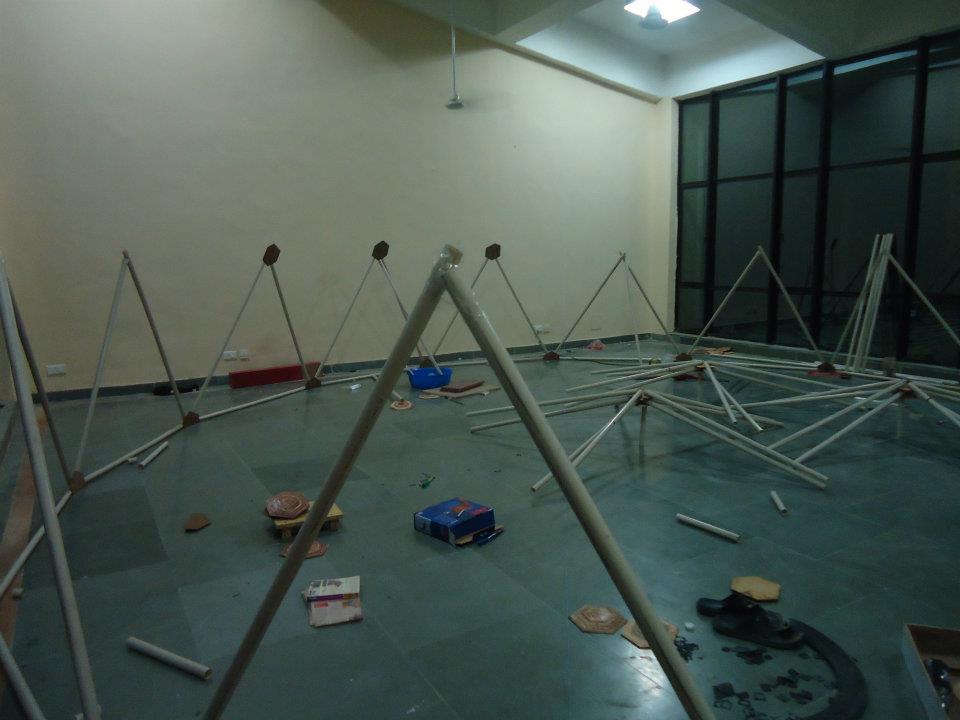
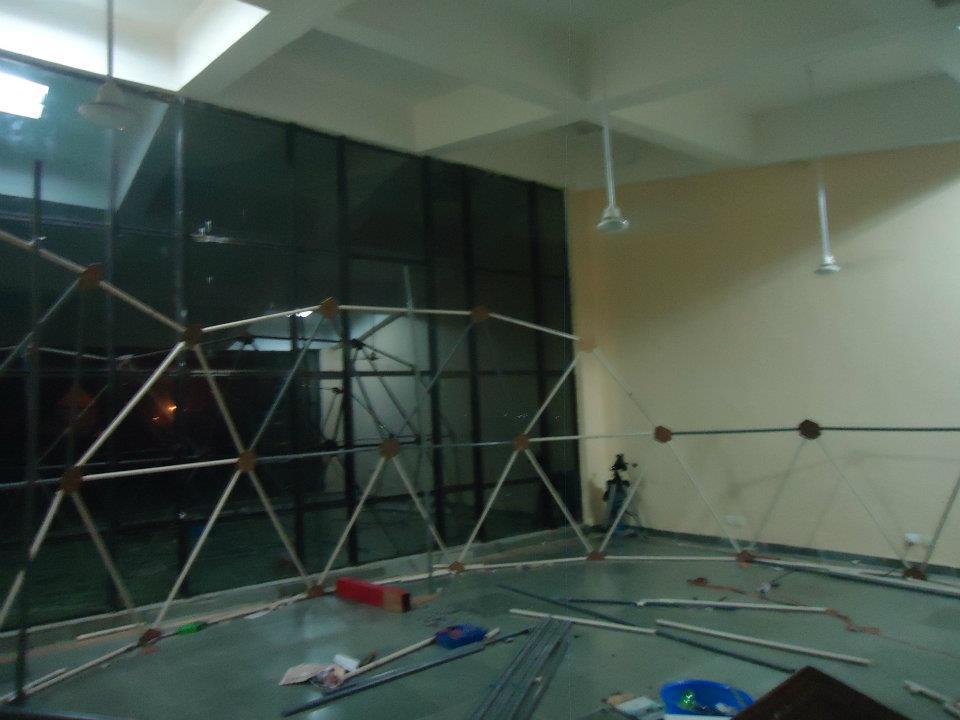
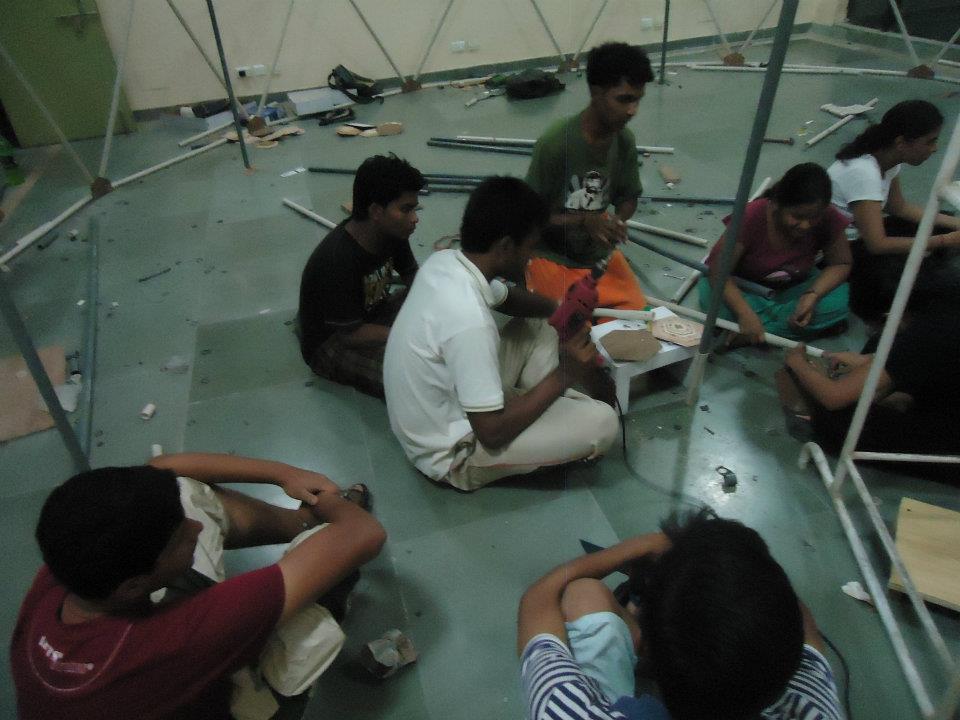
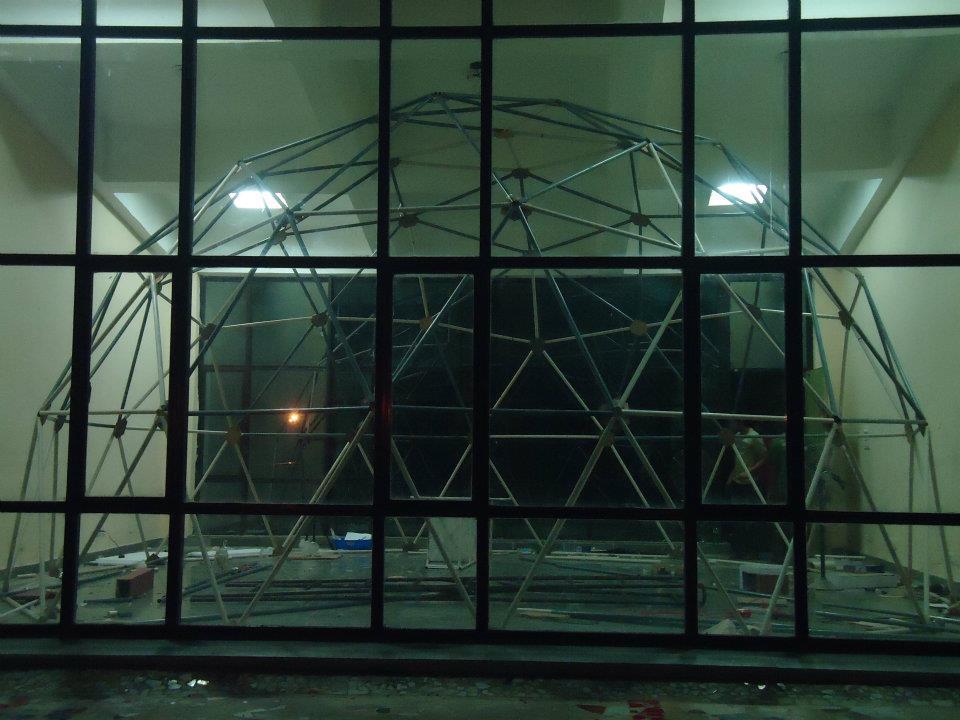
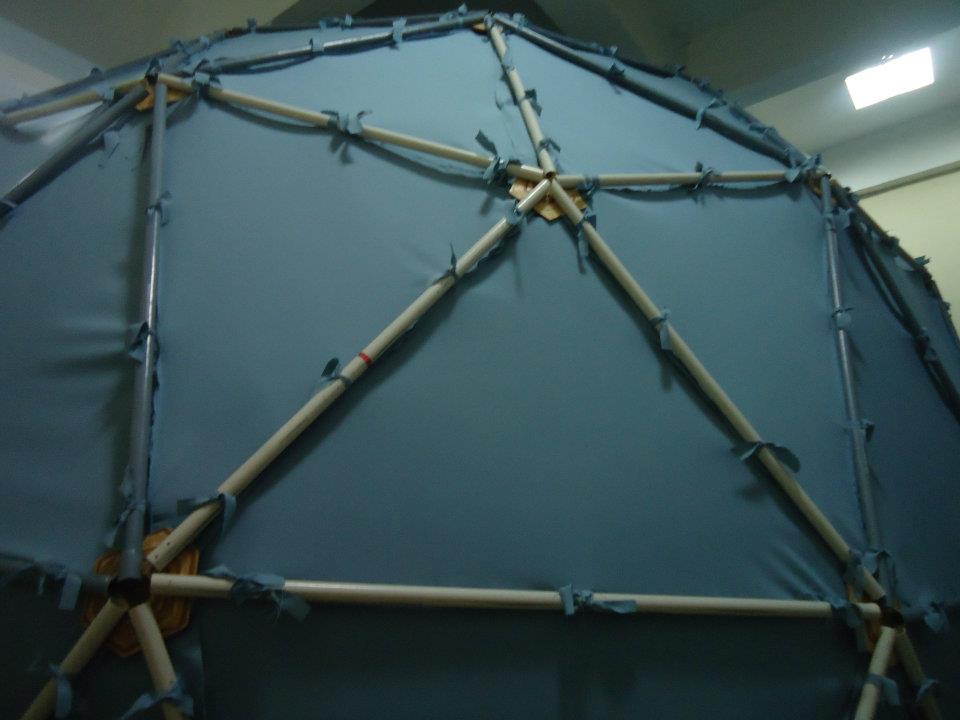
For the structure of the planetarium, the team drew inspiration from the massive, stable bamboo structures built by Hall 3 for the Galaxy competition. Initially envisioned as a 15-day effort, the project quickly expanded in scope. Over the course of the summer, they experimented with PVC pipes and plywood connectors, eventually managing to assemble a stable skeletal framework. However, stability still remained a challenge. The geodesic design only achieved structural integrity upon full assembly, leading to frequent collapses during intermediate stages. To solve this without an increase in budget, the team used “jugaad” techniques, such as cutting up used bicycle tyre tubes to serve as flexible washers for the PVC pipe joints.
By the beginning of the new semester, the team had expanded to around twenty members, and what was once a short-term plan had evolved into an 11-month-long effort. Construction shifted to the New SAC club room, which soon proved to be a difficult workspace. The enclosed space became excessively hot as the ceiling fans were removed to accommodate the dome’s height, forcing the team to work under physically demanding conditions. The club was surviving on a ₹5,000 annual budget. When IIT Kanpur’s Golden Jubilee came around, the team saw an opening. They pitched to the Dean of Research & Development, deliberately inflating their budget request and asking for the best projector in Kanpur, eventually securing an approval of ₹3 lakh. Dr. Pankaj Jain, who was the faculty advisor of the club at the time, also helped them secure this. While this funding provided a major boost, it also introduced significant pressure to deliver results commensurate with the investment.
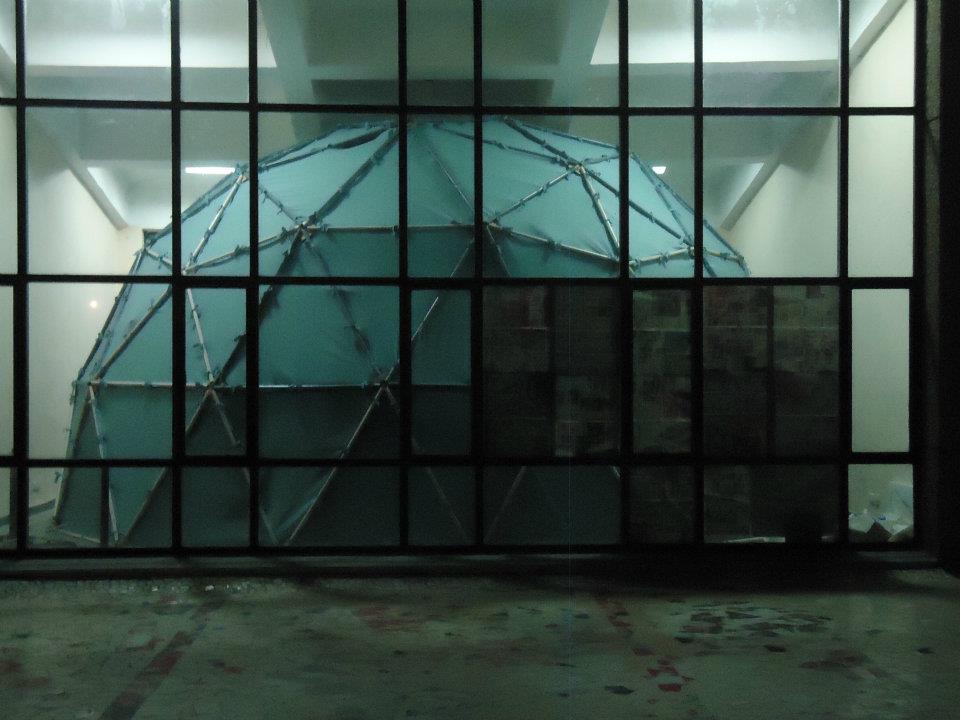
After nearly a year of sustained effort and a total expenditure of around ₹90,000, the planetarium was finally completed in time for Techkriti 2012. Its inauguration coincided with a campus-wide Guinness World Record attempt, and the project subsequently earned recognition in the India Book of Records as well as the Asia Book of Records. The success demonstrated that a student-led initiative, driven by ingenuity and persistence, could achieve outcomes comparable to professional efforts.
Observatory
Building on this achievement, the team successfully pushed for a ₹35 lakh grant for a new observatory project, arguing that they had outgrown their current instruments and required a professional facility; they ultimately secured ₹23 lakh. Unlike the planetarium, this endeavour was heavier on navigating complex administrative and logistical challenges. The equipment was too expensive for simple reimbursement, so the team had to work through government tenders. In an era before unboxing videos, researching telescope mounts, domes, and lenses meant coordinating across time zones with US-based manufacturers. Students across Y9, Y10 and Y11 batches spent years managing approvals, with even minor clerical errors resulting in significant delays.
Site selection for the observatory introduced a new set of challenges. Initial considerations within the campus proved unsuitable due to light pollution and environmental constraints. After extensive scouting, which included informal assessments of restricted locations, the team identified the Airstrip as a viable site. However, this location came with its own complications, including aviation safety regulations which forbid obstacles near runways and environmental hazards such as wildlife presence.
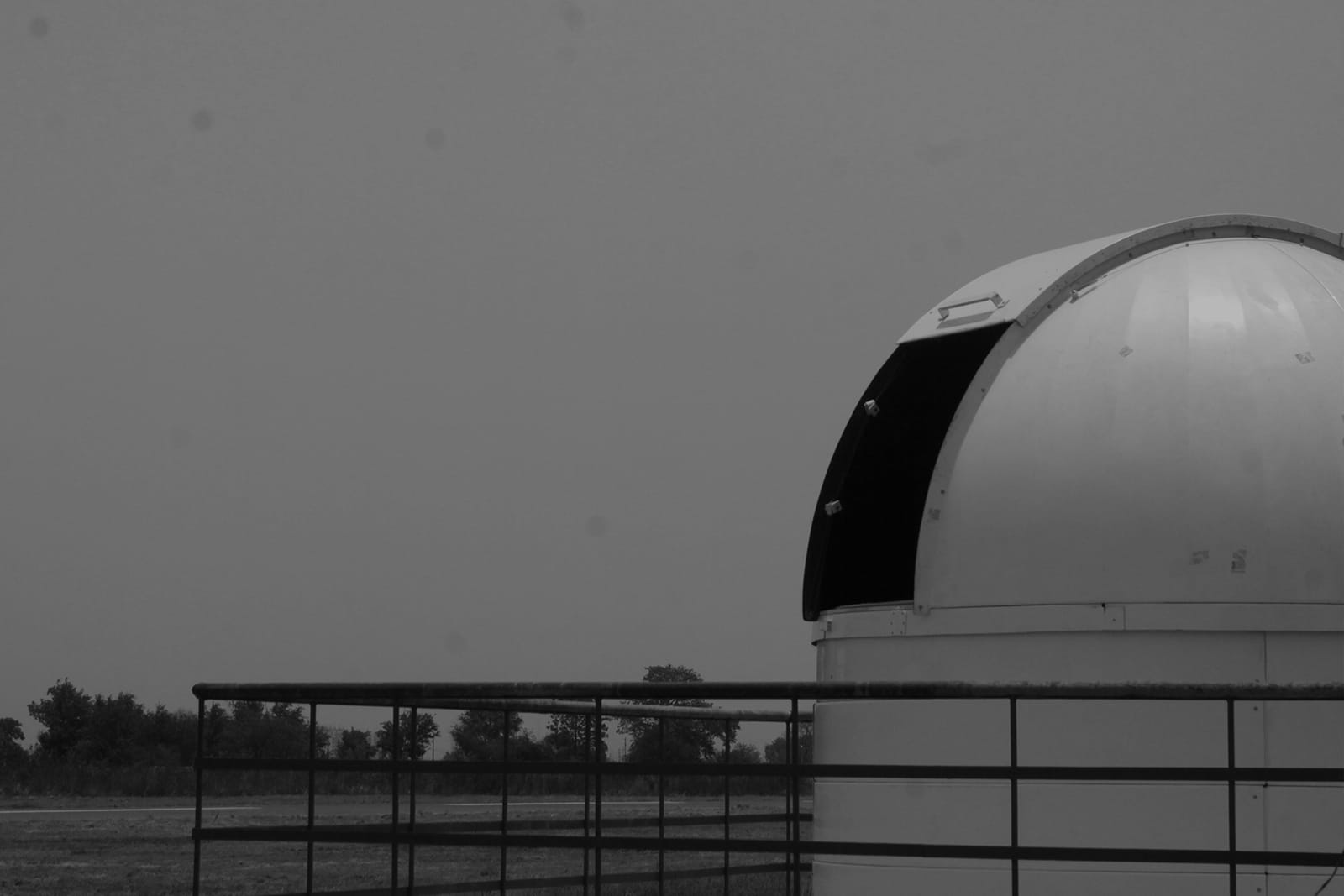
The construction phase required students to assume multidisciplinary roles, effectively functioning as civil, electrical, and mechanical engineers. Coordination with the Institute Works Department (IWD) was necessary to develop infrastructure, including a reinforced platform and electrical connections. Equipment selection involved extensive deliberation, ultimately leading to the acquisition of a 14-inch Schmidt-Cassegrain telescope. Due to limited domestic availability, key components, including the observatory dome, had to be imported from the United States, managing shipping and time-zone-shifted communications between the U.S. manufacturers and the office hours of the Dean’s office.
As the project neared completion, it became a race against graduation for the senior team members. Managing high-value equipment and coordinating final installations demanded technical precision and persistence. They managed the high-stakes pressure of handling a ₹14 lakh imported telescope, a territory where a single mistake could have been catastrophic. With the inauguration scheduled just two days before convocation and since senior officials couldn’t stay late, the team had to pray for a clear sky; fortunately, Mars was visible exactly at sunset.
The impact of these efforts was transformative. From modest gatherings of fewer than twenty participants, the Astronomy Club began attracting hundreds of students to its events, with a single lunar eclipse drawing over 800 attendees. Collaborations with other campus bodies further expanded the scope of activities, including the development of customised planetarium shows. Over time, the club transitioned from improvised setups to more refined and professional systems.
Journey Afterwards
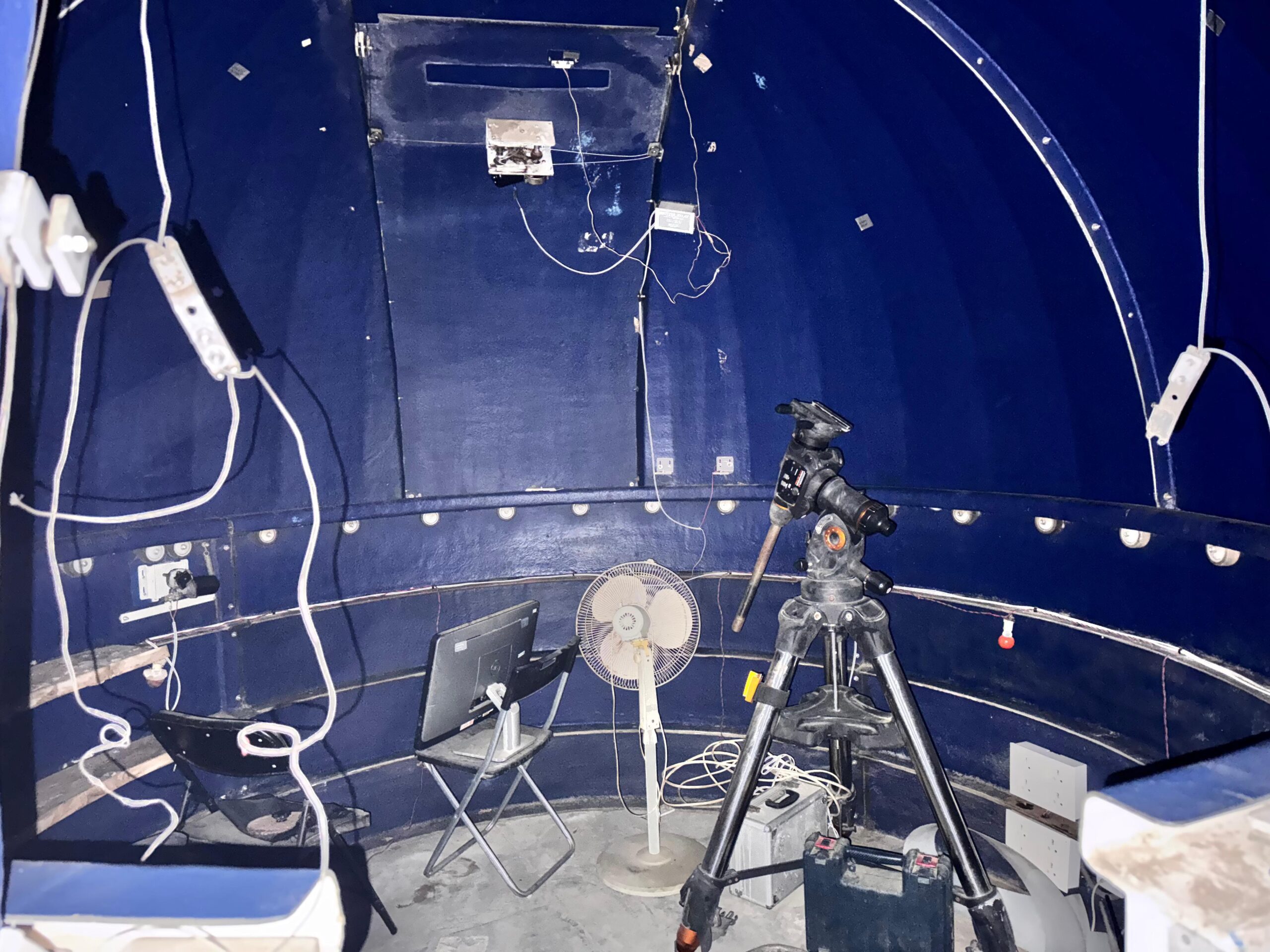
Following its completion in 2014, the observatory at IIT Kanpur functioned effectively during its initial years, remaining active and well-maintained until around 2015-16. However, over time, its momentum began to decline. By 2018, a critical challenge of the absence of a structured system for knowledge transfer between successive student batches became evident. Operational expertise and technical know-how were not consistently passed on as the experienced members graduated, leading to a gradual deterioration in both usage and maintenance.
Recognising these issues, a new team in 2019 undertook efforts to revive the facility. The process of repair became an opportunity for learning, as students developed a deeper understanding of the observatory’s instruments and systems. Much of their summer was spent working out of the club room, trying to troubleshoot technical problems and restoring functionality.
These revival efforts, however, were soon disrupted by the COVID-19 pandemic in 2020. The observatory remained closed for an extended period, during which maintenance issues accumulated. Prolonged inactivity led to problems such as pest infestations and mechanical wear, which further complicated the restoration efforts.
With the reopening of campus post-pandemic, the club renewed its focus on repairing and upgrading the facility. Significant time, effort, and financial resources were directed toward restoring critical components, particularly the dome and telescope. The process was often hands-on and unconventional. By the end of 2022, the observatory had been brought back into considerably improved condition, although some technical challenges continued to persist.
Impact
The planetarium and observatory together bridge the gap between introductory engagement with astronomy and more advanced observational capabilities. The planetarium serves as a gateway for incoming students, offering their first immersive exposure to the night sky, while the observatory represents a significant step forward in technical capability. Equipped with a high-end telescope, the facility enables detailed observation of deep-sky objects, including nebulae, comets, asteroids, star clusters, and distant galaxies that remain inaccessible through basic instruments.
The observatory can be integrated into high-level research programs and under optimal conditions, it can produce observations on par with what astronomers achieve elsewhere; however, limitations in equipment maintenance and prevailing environmental conditions have prevented it.
In addition to visual observation, the observatory has the potential to redefine astrophotography on campus. It introduces the possibility of high-resolution imaging, moving beyond the current reliance on smartphone cameras and post-processing applications, opening new avenues for astrophotography and documentation.
Going forward, the immediate focus of the club is to restore and upgrade the facility. Planned developments include expanding observational capabilities across multiple wavelengths, particularly in the infrared spectrum to cut across the light pollution due to the surrounding settlements and to see the objects sometimes unseen in the visible range.
The long-term goal is to reinstate and enhance remote operation capabilities that were functional before the COVID-19 pandemic. This would allow users to access and control the telescope digitally, book observation slots, and capture astronomical data directly from their personal devices. The goal, in essence, is to make the night sky accessible from anywhere on campus.
Despite its technical capabilities, the observatory’s defining strength lies in its governance model. Since its inception, the facility has been entirely student-driven, operating under the Students’ Gymkhana. This autonomy has been preserved despite interest from institutional departments, allowing the observatory to remain accessible, flexible and open to anyone curious enough to show up.
Conclusion
Ultimately, the planetarium and observatory stand as a testament to what student-led initiative can achieve when driven by persistence and vision. These projects illustrate how sustained initiative can overcome structural, financial, and administrative constraints. Their continued relevance, despite cycles of decline and revival, underscores the strength of decentralised ownership and peer-led continuity. More importantly, they show that with autonomy, students can create systems that continue to function and endure over time.
Written By: Lakshmi Harika G, Moksh Dalal, Riddhi Shingte
Design by: Abhinav Kumar
Editor : Himanshu Mahale




![[Not So] Little Women](https://voxiitk.com/wp-content/uploads/2026/09/WhatsApp-Image-2026-09-28-at-19.21.06-768x960.jpeg)